Sensex, a key Indian stock market index, experienced a notable decline on April 7, 2025 trading at approximately 72,348.87 by 10:36 AM IST. This represents a drop of about 3,015 points or 4% from its previous close of 75,364.69 on April 4, 2025, indicating significant market turbulence.

Current Market Overview:
Sensex nosedived 3,939.68 points or 5.22 percent to touch an intraday low of 71,425.01, while the NSE Nifty tanked 1,160.80 points or 5 percent to 21,743.65 — its worst opening since March 2020, at the height of the COVID-19 pandemic. This marked the sharpest single day fall since June 4, 2024, when the indices had plunged more than 8 percent.
| Metric | Value |
| Current Sensex Value | 72,348.87 |
| Change | -3,015.82 |
| Percentage Change | -4.00% |
| Previous Close | 75,364.69 |
| Open (April 7, 10:18 am) | 71,449.94 |
| Day High | 73,149.12 |
| Day Low | 71,425.01 |
| 52 Week High | 85,978.25 |
| 52 Week Low | 70,234.43 |
This table, sourced from [BSE India] highlights the extent of the fall and market volatility on the day.
Global Tariff Announcements:
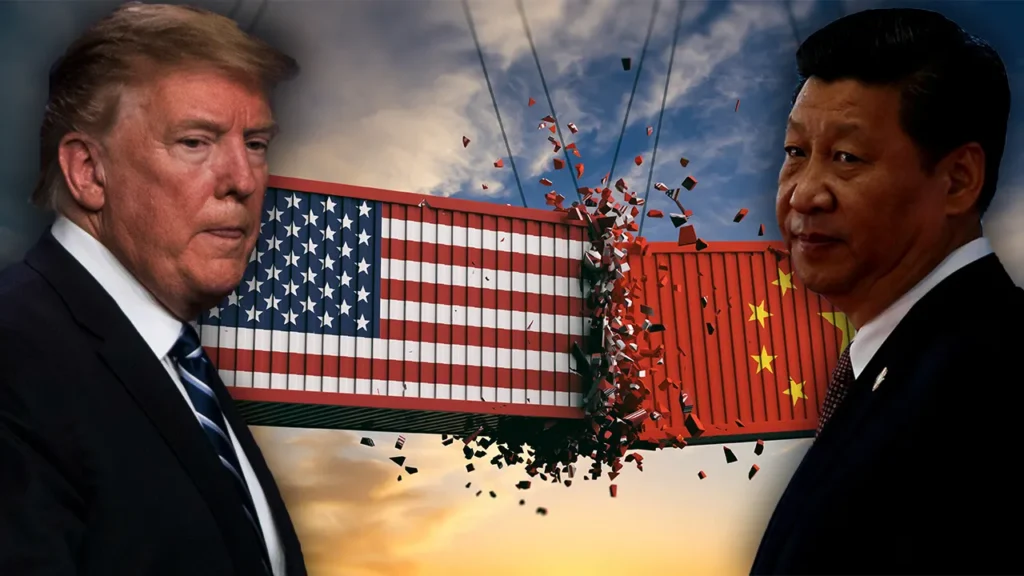
Fears of a global trade war intensified after China announced retaliatory tariffs on a broad range of U.S. goods, following sweeping U.S. tariff hikes earlier in the week. The escalating tit-for-tat measures have raised concerns about a slowdown in global trade and economic growth.
The primary driver appears to be global market reactions to U.S. President Donald Trump’s recent tariff announcements, imposing reciprocal tariffs on imports from various countries, including India. Overnight in the US, President Trump announced retaliatory tariffs on 180 countries on April 2. The new tariff features a baseline 10 per cent tax on all US imports, with additional higher tariffs imposed on countries with a trade surplus. India faces a 27 per cent tariff on US exports.
These tariffs have caused a global trade war, leading to sell-offs in major markets like the U.S. and Japan, which have likely spilled over to India. Indian sectors with high U.S. exposure, such as IT and auto, are particularly affected, with companies like TCS and Infosys seeing stock price declines. Additionally, The Indian rupee’s depreciation against the U.S. dollar is adding to inflationary pressures and impacting import costs., as reported by this article.
Investors worry that prolonged trade tensions between the world’s two largest economies could disrupt supply chains, dampen corporate earnings, and further weaken already fragile global demand—contributing to the sharp selloff in equities worldwide.
Impact on Global Markets:
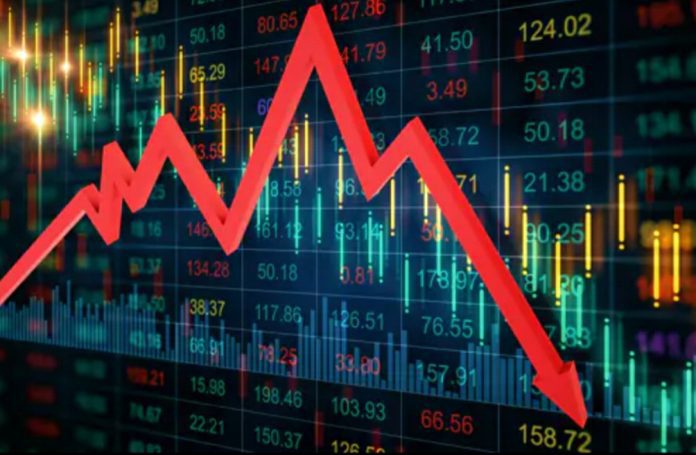
Global commodity prices tumbled amid mounting fears of weakening demand and a looming economic slowdown. Brent crude fell 6.5%, WTI dropped 7.4%, while gold slipped 2.4% and silver plunged 7.3%. Base metals also saw steep declines, with copper down 6.5%, zinc 2%, and aluminum 3.2%, as escalating trade tensions and recession concerns rattled investor confidence.
Tokyo’s Nikkei 225 index plunged nearly 8% shortly after opening, and by midday had declined 6% to 31,758.28. Trading of Topix futures was temporarily halted by a circuit breaker following a steep drop in U.S. futures.
Although Chinese markets don’t always move in line with global trends, they too experienced sharp declines. Hong Kong’s Hang Seng index fell 9.4% to 20,703.30, while the Shanghai Composite dropped 6.2% to 3,134.98. In other Asia-Pacific markets, South Korea’s Kospi slid 4.1% to 2,363.82, and Australia’s S&P/ASX 200 dipped 3.8% to 7,377.70, after rebounding slightly from an earlier loss of over 6%.
The IT sector in India, including major players like Tata Consultancy Services (TCS), Infosys, and HCL Technologies, has seen heavy selling pressure due to growth concerns, as noted in. The auto sector is also affected, with potential supply chain disruptions and reduced demand from key markets, Additionally, the Indian rupee’s depreciation, influenced by capital outflows and domestic inflation, is adding to market pressures.
Foreign institutional investors (FIIs) have withdrawn significant amounts, with reports indicating outflows of Rs 10,355 crore in the first week of April 2025, aggravating the sell-off. This is partly due to attractive U.S. bond yields and a strong dollar, further pressuring the Indian market.
Analysts Review:
Analysts have provided varied perspectives on the future trajectory. Short-term volatility is expected to persist until clarity emerges on trade negotiations, with some suggesting a focus on domestic fundamentals. Nimesh Chandan from Bajaj Finserv MF advises sticking to the Indian market, highlighting its resilience, as per Moneycontrol. Others, like Stefan Hof from LGT, note that while the tariff on India is relatively high, the pharma sector’s exemption offers some relief.
Risk management strategies, including diversification and hedging, are recommended to mitigate uncertainties. Some analysts see buying opportunities in sectors like pharma and PSU banks, which have shown resilience,
Goldman Sachs has recently increased the likelihood of a recession in the United States from 35% to 45% over the next 12 months and reduced its GDP growth forecast for the fourth quarter of 2025 to 0.05%. According to Goldman, if most of the April 9 tariffs are implemented, a recession is expected.
Conclusion & Some Investor Guidance
The Sensex fall on April 7, 2025, is predominantly driven by global market jitters following U.S. tariff announcements, with domestic sectors like IT and auto bearing the brunt. While the immediate future may remain uncertain, investors are encouraged to stay informed, focus on domestic strengths, and consider risk management strategies.
For more such news & stock updates, Follow Notifier on Instagram and Facebook to stay tuned.