AI Agents Create 450% More Network Traffic
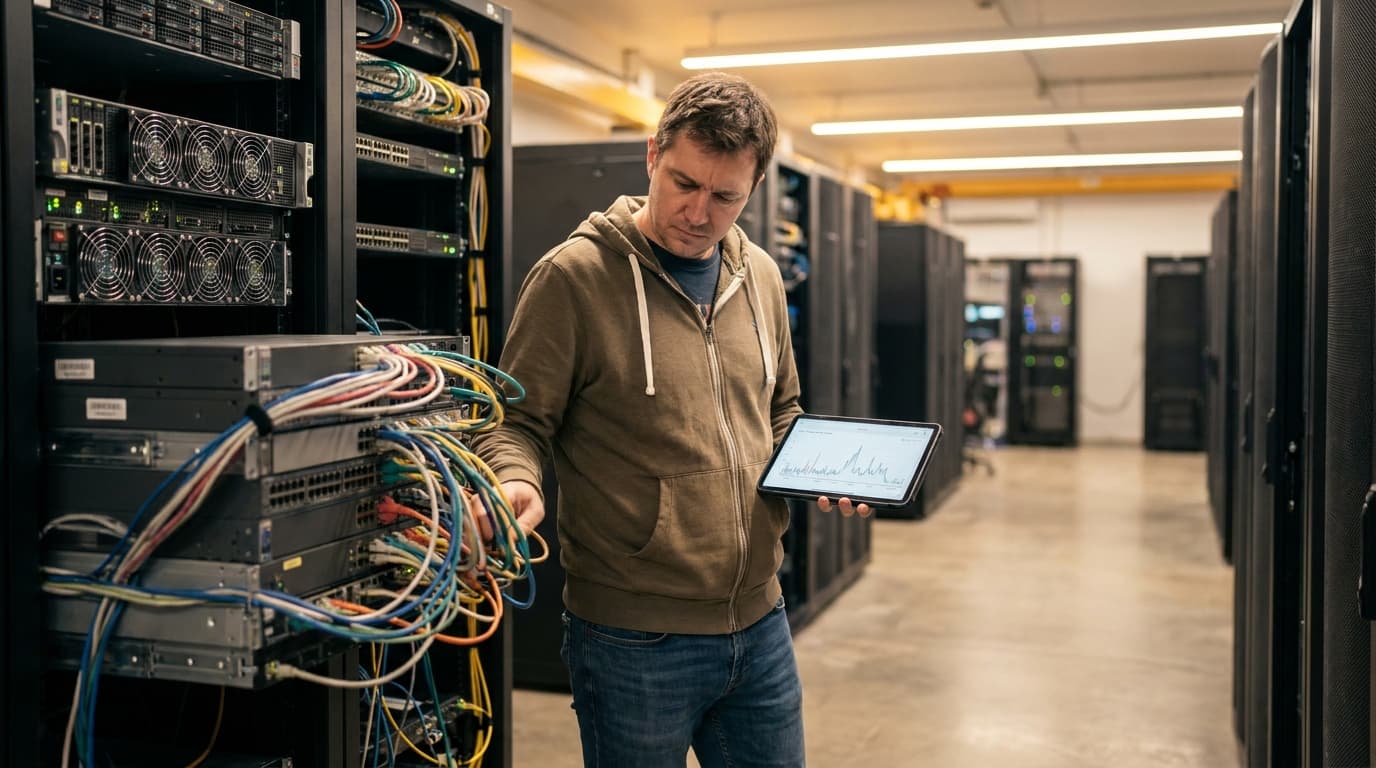
TL;DR: New research shows AI agents generate 450% more network traffic than humans doing the same tasks. This massive increase is putting enterprise networks under severe strain, creating a critical infrastructure challenge for companies adopting AI.
Key facts
- Category
- AI
- Impact
- High
- Published
- Source
- MIT Technology Review
Full summary
AI agents generate 450% more network traffic than humans, putting unprepared enterprise networks under severe strain and creating a critical bottleneck.
Enterprise networks are facing an unprecedented challenge as companies accelerate their adoption of artificial intelligence. According to a recent report from MIT Technology Review, the rise of a new class of "agentic AI" is set to dramatically increase network demand. The report highlights a startling statistic: tasks performed by AI agents can generate approximately 450% more network traffic compared to the same tasks when completed by a human employee. This surge in data flow is placing already strained corporate networks under severe pressure. As organizations race to leverage AI for a competitive advantage, many are discovering that their underlying infrastructure is not prepared for the massive data loads that these advanced systems require, creating a critical bottleneck that could hinder innovation and operational efficiency. The warning is clear for technology leaders: the AI revolution requires an equally revolutionary approach to network capacity and management, as the assumptions that governed network architecture for the past decade are quickly becoming obsolete in the face of this new, intensive demand.
The source of this dramatic traffic increase lies in the fundamental nature of how agentic AI operates. Unlike traditional AI models that respond to a single prompt, an AI agent is designed to be autonomous. It can take a complex goal, such as "research competitors' pricing for our new product and summarize the findings," and independently break it down into a series of smaller, sequential tasks. To accomplish this, the agent might make dozens or even hundreds of automated queries in rapid succession. This could involve searching internal databases, scraping public websites, calling multiple APIs, and accessing various files across the network. Each of these sub-tasks generates its own network request and response. A human performing the same research would work at a much slower pace, thinking between steps and likely consolidating their queries. The AI agent, however, executes its plan at machine speed, creating a dense and sustained burst of traffic that is fundamentally different from the more predictable patterns of human network usage. This high-frequency, multi-step process is what multiplies the data load so significantly.
This emerging network crisis is compounded by a broader industry trend: the shift of AI workloads from the cloud to on-premise and edge environments. For years, the most intensive AI tasks, particularly model training, were confined to massive, purpose-built data centers operated by hyperscale cloud providers like AWS, Google, and Microsoft. These providers have networks engineered to handle immense data flows. However, for reasons of data privacy, security, and the need for real-time responsiveness, many companies are now bringing AI inference—the process of using a trained model to make predictions or generate outputs—in-house. This means the intense, chatty traffic generated by AI agents is no longer contained within a cloud provider's ecosystem. Instead, it now traverses the company's own local area networks (LANs) and wide area networks (WANs), which were often designed for far less demanding applications like email, file sharing, and video conferencing. The internal corporate network is now on the front line, forced to handle a type of workload it was never built for, creating a perfect storm of high demand hitting unprepared infrastructure.
For CTOs, IT leaders, and network engineers, this data serves as an urgent call to action. Simply increasing bandwidth is a short-sighted and likely insufficient solution. The challenge requires a more strategic re-evaluation of the entire network architecture, from the data center core to the campus and branch edge. The first practical step is to establish a baseline by investing in sophisticated network observability and monitoring tools. Teams need visibility to distinguish AI-generated traffic from other network activity, model the impact of new AI deployments, and proactively identify potential bottlenecks before they cause system-wide slowdowns or outages. Looking ahead, organizations must begin planning for network modernization projects that prioritize low-latency, high-throughput capabilities. This may involve adopting technologies like AI/ML networking fabrics, which are specifically designed to handle the unique patterns of distributed AI workloads. Companies that proactively assess and upgrade their networks will be positioned to fully capitalize on the promise of agentic AI, while those who neglect their infrastructure will find their AI ambitions crippled by a foundation that cannot support their goals.
Why it matters
The massive traffic increase from agentic AI means existing network infrastructure is likely insufficient for future AI deployments. Engineering and IT leaders must now re-evaluate their network capacity, architecture, and monitoring tools to avoid performance bottlenecks that could cripple critical AI-driven business operations.
Business impact
Companies investing heavily in AI without upgrading their underlying network infrastructure risk failed deployments and wasted investment. This readiness gap creates a significant operational risk and a competitive disadvantage, forcing unplanned, costly upgrades to support AI initiatives and avoid service degradation.
Tags
Related on Notifire
Related stories
Primary source: MIT Technology Review