AI is rewriting software development
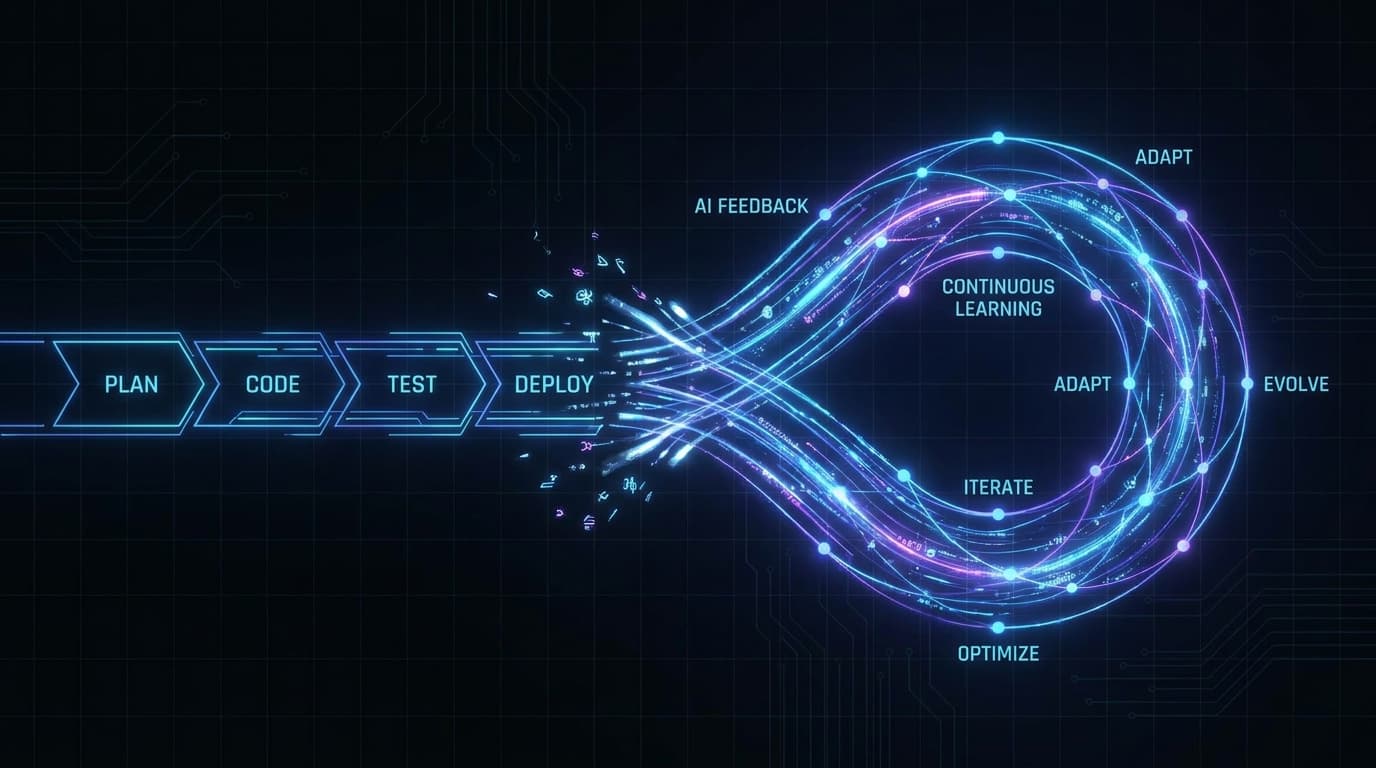
TL;DR: AI is making software development faster by generating code and enabling continuous testing. However, this increased speed isn't leading to better business results. The traditional, step-by-step development process is becoming obsolete, replaced by a more compressed, continuous learning model that needs a new approach.
Key facts
- Category
- AI
- Impact
- Low
- Published
- Source
- CIO.com
Full summary
AI is accelerating software development, but productivity gains are not yet translating into better business outcomes, forcing a rethink of old workflows.
For decades, building software followed a rigid, sequential process: defining requirements, designing, coding, testing, and finally deploying. This traditional lifecycle was designed for a time when coding was expensive and feedback arrived late. The introduction of AI is fundamentally changing this model. AI tools can now generate code in seconds, automate testing continuously, and provide real-time feedback, creating a much faster development loop. This surge in speed and productivity, however, is not automatically leading to better business results. While developers are building faster than ever, the overall impact on business outcomes has not seen a corresponding improvement, highlighting a critical disconnect between technical speed and strategic value.
The core issue is that simply adding AI tools to an outdated workflow is not enough. The real shift required is a move away from the linear software development lifecycle (SDLC) towards a more integrated and compressed model. This new approach functions as a continuous learning system, where all stages of development happen in a tighter, more iterative loop. For CTOs, developers, and business leaders, this means rethinking entire workflows, not just adopting new tools or measuring lines of code. The focus must shift from celebrating raw development speed to ensuring that AI-driven productivity is directly tied to achieving specific business goals and delivering tangible value.
Why it matters
AI is changing the fundamental process of how software is built. Teams that don't adapt their entire workflow, not just their tools, will see productivity gains without a corresponding improvement in business outcomes.
Business impact
Companies are investing heavily in AI development tools. This analysis suggests that without a corresponding strategic shift in development processes, the ROI on these tools may be limited to speed metrics rather than actual business value.
Tags
Related on Notifire
Related stories
Primary source: CIO.com