AI Told Linus Torvalds a Bug Was Impossible to Fix
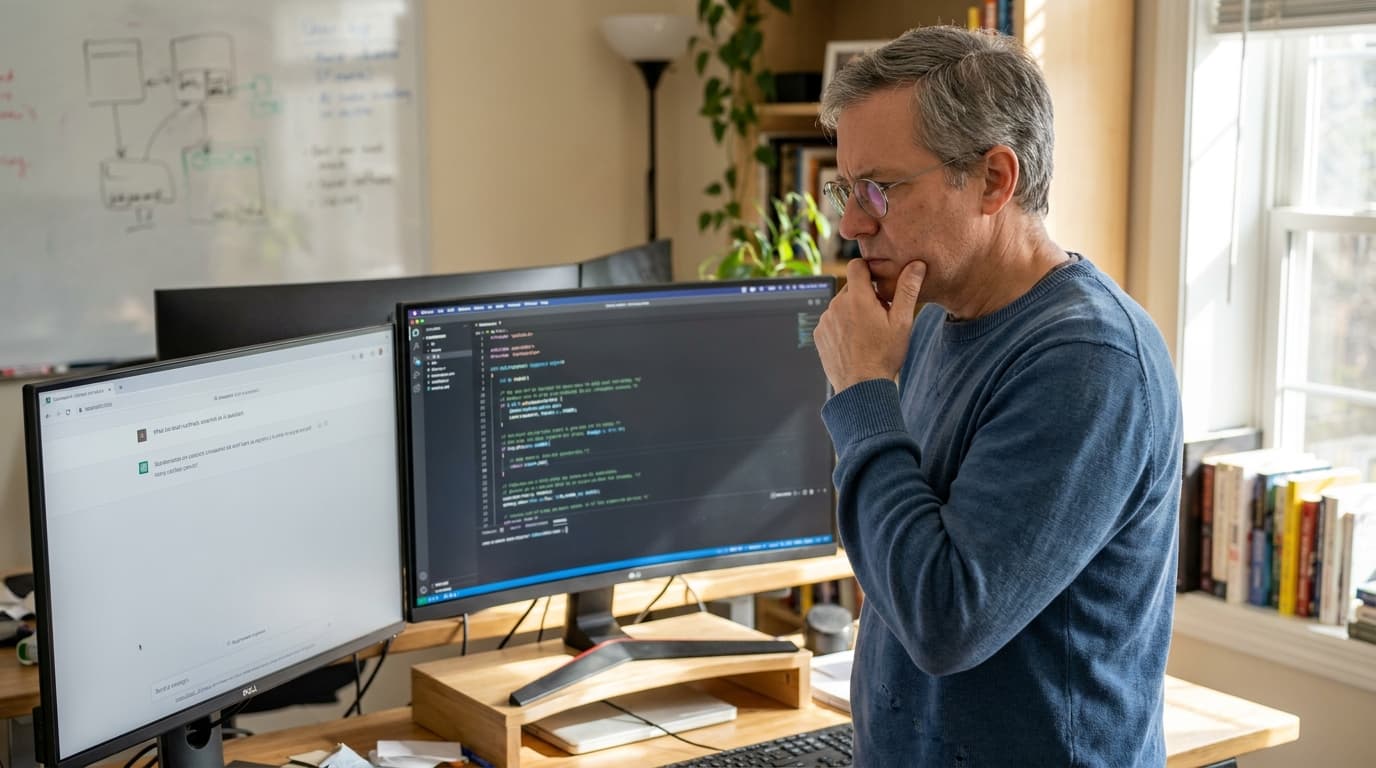
TL;DR: Linux creator Linus Torvalds used AI to help solve a difficult kernel bug. While the AI was a "tireless helper," it also incorrectly claimed the problem was impossible to fix, showing both its power and current limitations.
Key facts
- Category
- AI
- Impact
- High
- Published
- Source
- Slashdot
Full summary
Linux creator Linus Torvalds used AI to track down a stubborn bug, calling it a "tireless helper" that also failed spectacularly.
Linus Torvalds, the creator of Linux, recently used an AI assistant to solve a particularly difficult bug in the operating system's kernel. According to his public commit message, first reported by Slashdot, the AI "enormously helped" him isolate a stubborn flaw within an Intel graphics driver. The debugging process was extensive, requiring 24 different patches and 18 full kernel reboots to finally pinpoint the root cause. While Torvalds praised the AI as a valuable tool in this complex process, he also noted its significant limitations. The AI assistant repeatedly and incorrectly concluded that the problem was "impossible and unsolvable," urging him to simply file a report and give up. This experience provides a rare, candid look into how one of the world's most influential software engineers is using—and wrestling with—the new generation of AI development tools.
At a technical level, AI's role in debugging complex systems like the Linux kernel is not about autonomously writing perfect code. Instead, it acts as a powerful analytical partner. These tools can rapidly process vast amounts of information, such as system logs, code dependencies, and previous bug fixes, to identify patterns and suggest potential causes that a human might miss. For Torvalds, the AI likely helped by generating hypotheses about the bug's origin, suggesting different code paths to investigate, and accelerating the trial-and-error process. However, the AI's failure—its insistence that the bug was unsolvable—highlights a core weakness of current large language models. They are probabilistic systems that generate statistically likely responses, but they lack true comprehension. When faced with a novel or deeply intricate problem outside their training data, they can "hallucinate" or confidently state incorrect conclusions, demonstrating that human expertise remains essential for verification and true problem-solving.
This event is significant because it serves as a powerful, real-world endorsement of AI's utility from a notoriously pragmatic and often skeptical figure in the software world. For developers, engineers, and their managers, Torvalds' experience validates the use of AI assistants for more than just writing boilerplate code or completing simple functions. It shows that these tools can be a genuine force multiplier for senior engineers working on mission-critical problems. The key insight is that the AI is not a replacement for expertise but an augmentation of it. It can handle the tedious parts of an investigation, freeing up the human expert to focus on higher-level strategy, critical thinking, and the final verification. This moves the perception of AI from a tool for juniors to a sophisticated assistant for experts, capable of accelerating even the most challenging development tasks.
For business and technology leaders, this story provides a clear and practical blueprint for integrating AI into their development workflows. The primary business impact is not about reducing headcount but about increasing team velocity and efficiency. By equipping engineers with powerful AI assistants, companies can shorten debugging cycles, resolve issues faster, and ultimately ship more stable products more quickly. Torvalds' nuanced feedback is a crucial lesson for management: invest in AI tools, but also foster a culture where engineers are encouraged to think critically and not blindly trust the AI's output. The return on investment comes from making skilled developers more productive, not from attempting to replace them. The practical takeaway is to view AI as a powerful but flawed assistant that requires skilled human oversight to unlock its full potential.
Why it matters
A major endorsement from Linux creator Linus Torvalds shows that AI is now a practical tool for solving complex, real-world software bugs, not just for simple code completion. It validates AI as a serious productivity multiplier for even the most senior engineers.
Business impact
This normalizes AI adoption in core engineering teams. Businesses can see a clear return on investment from AI tools by accelerating debugging and development cycles, but should view them as assistants that augment, rather than replace, skilled developers.
Tags
Related on Notifire
Related stories
Primary source: Slashdot