An AI Just Cut Microsoft's Quantum Timeline in Half
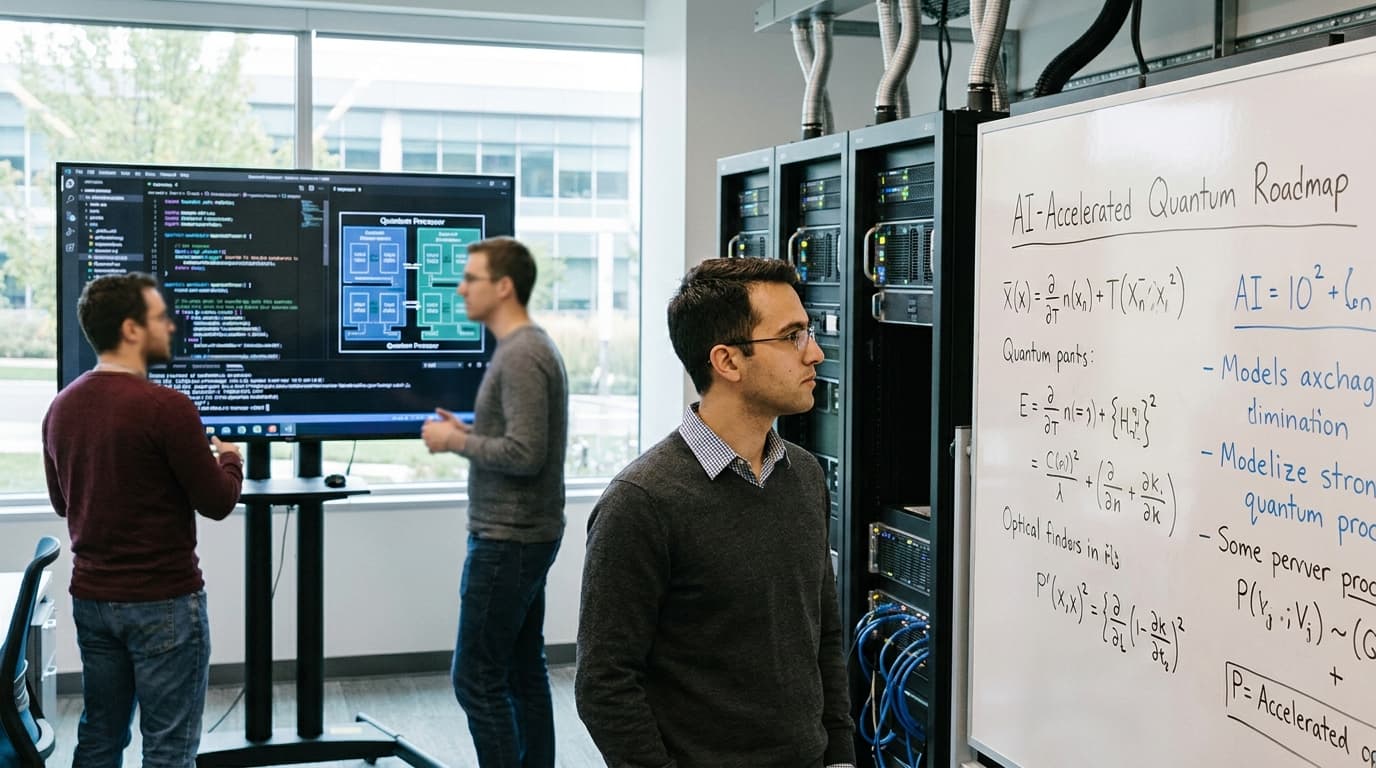
TL;DR: Microsoft's new AI platform, Microsoft Discovery, is now available on Azure. It helped develop a new quantum chip that is 1,000x more reliable, halving the company's timeline for a scalable quantum computer to just 2029.
Key facts
- Category
- AI
- Impact
- Critical
- Published
- Source
- InfoQ
Full summary
Microsoft's new AI agent platform helped develop a breakthrough quantum chip, cutting its timeline for a scalable quantum computer in half.
Microsoft has announced the general availability of Microsoft Discovery, its new platform for deploying autonomous AI agent teams on Azure. The platform is designed to accelerate scientific research and development by automating complex workflows. Its first major success story is the development of Majorana 2, a breakthrough topological quantum chip. This new chip boasts a 1,000x improvement in reliability over previous designs and achieves qubit lifetimes of 20 seconds, a critical step toward stable quantum computation. The AI agents within the Discovery platform were instrumental in this achievement, effectively managing the research process that led to the chip's creation. This demonstrates a powerful new application for AI, moving beyond content generation to actively participating in fundamental scientific discovery. The platform's release makes these advanced AI capabilities accessible to a wider range of researchers and engineers using the Azure cloud.
This development is significant because it merges two of the most transformative technologies today: AI and quantum computing. The success of Microsoft Discovery in creating the Majorana 2 chip has allowed Microsoft to drastically shorten its timeline for building a scalable quantum computer. The company has halved its original estimate and now aims to deliver a functional machine by 2029. This new timeline intensifies the global race for quantum supremacy and positions Microsoft as a leading contender. For businesses, CTOs, and developers, this news has two key implications. First, the prospect of a usable quantum computer is now much closer, promising to unlock solutions to problems currently unsolvable in fields like medicine, finance, and materials science. Second, the availability of an agentic AI platform like Discovery on a major cloud provider offers a new tool for tackling complex R&D challenges, potentially accelerating innovation across many different industries.
The release of Microsoft Discovery marks a shift toward more practical and powerful applications of AI agents. Unlike single-purpose AI models, this platform enables teams of specialized agents to collaborate on long-term, multi-stage projects. This approach could be adapted to solve a wide array of complex problems, from designing new drugs to discovering novel materials for batteries and semiconductors. As organizations gain access to these tools on Azure, the immediate focus will be on exploring their potential to streamline research and automate discovery in their own domains. The success with quantum computing serves as a powerful case study, suggesting that AI-driven research teams could soon become a standard tool for innovation, fundamentally changing how scientific and engineering challenges are addressed.
Why it matters
An AI platform just cut the timeline for a scalable quantum computer in half. This makes practical quantum computing a much nearer reality and provides a powerful new tool on Azure for businesses to solve their own complex R&D problems.
Business impact
Microsoft's new 2029 target for a scalable quantum computer accelerates the timeline for quantum-driven disruption in fields like finance, medicine, and logistics. The availability of the Discovery AI platform on Azure gives businesses a new way to speed up their own R&D and innovation cycles.
Tags
Related on Notifire
Related stories
Primary source: InfoQ