An AI Just Commanded a Swarm of Drone Boats
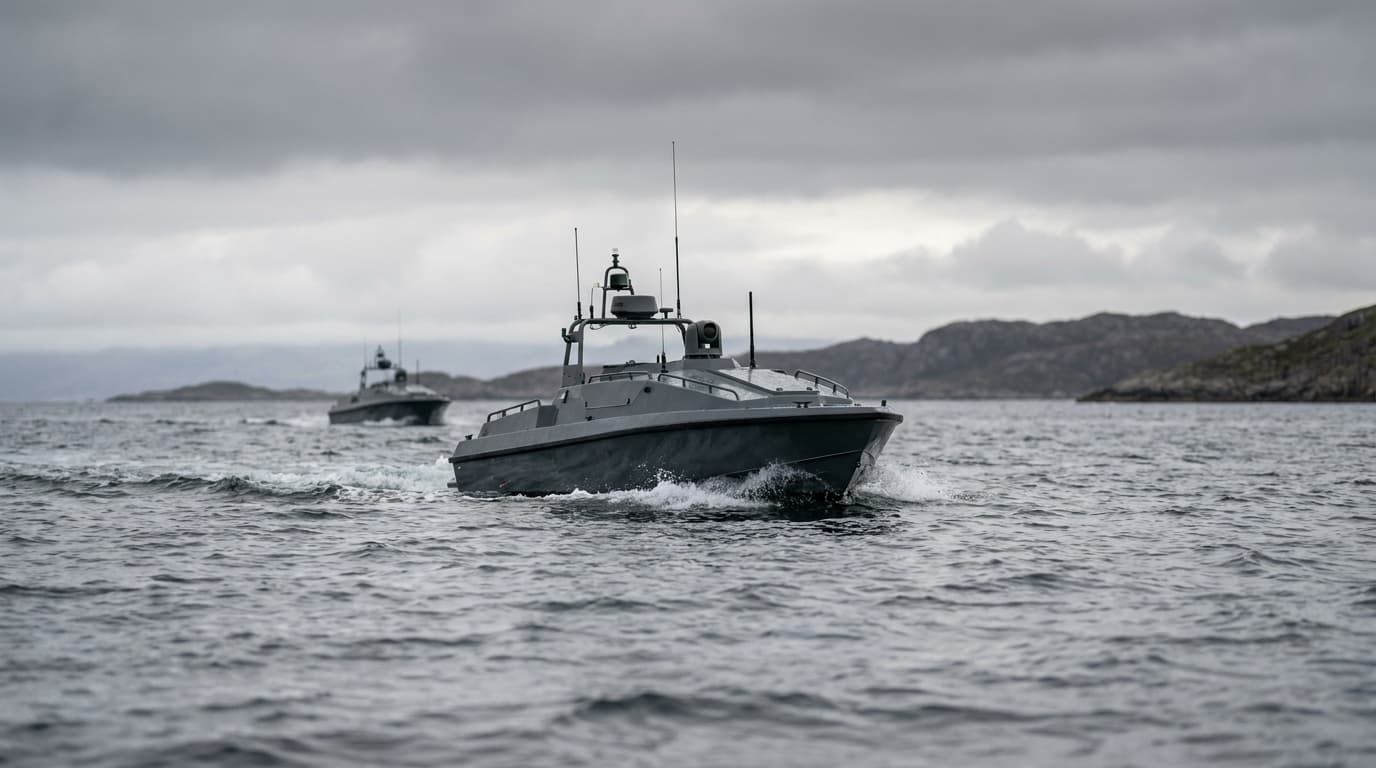
TL;DR: An AI system named Hivemind has successfully commanded a swarm of unmanned boats on open water for the first time. The test in Taiwan demonstrates a major advance in autonomous, coordinated surveillance and defense capabilities.
Key facts
- Category
- AI
- Impact
- High
- Published
- Source
- TechRadar
Full summary
An AI system has commanded a swarm of unmanned drone boats in a live surveillance mission on open water for the first time.
An artificial intelligence system has successfully commanded a group of unmanned boats in a coordinated, live mission on open water for the first time. According to reporting from TechRadar, the AI software, known as Hivemind, directed a swarm of SeaShark 600 and 800 unmanned surface vessels (USVs) during a surveillance exercise in Taiwan. The autonomous boats worked together under a single command system to identify and escort another vessel, completing their objective without direct, moment-to-moment human intervention. This event marks a significant milestone, moving the concept of AI-driven swarming from controlled simulations and aerial tests into the complex and unpredictable maritime environment. The successful demonstration proves the viability of using a single AI to manage multiple autonomous assets for sophisticated, collaborative tasks.
The core technology enabling this feat is the Hivemind software, which acts as a centralized brain for the distributed group of drones. Unlike simple remote-controlled boats, these vessels operate as a true swarm. The AI processes data from all units simultaneously, assigns roles, and coordinates their movements to achieve a collective goal. For example, one boat might be tasked with initial identification while others move to flanking positions to maintain surveillance or provide escort. This distributed intelligence allows the swarm to adapt to changing conditions in real time, making decisions collectively without a human operator needing to micromanage each vessel. The system handles complex pathfinding, collision avoidance, and tactical positioning, translating high-level mission objectives into synchronized, low-level actions for each boat in the fleet.
This development is highly relevant for technology leaders, developers, and security professionals. For CTOs and engineers, it serves as a powerful case study in the real-world application of distributed AI and autonomous command-and-control systems. It highlights the progress made in creating AI that can manage complex, multi-agent systems in dynamic environments. For security teams, particularly in the defense and maritime sectors, the implications are profound. Autonomous swarms can provide persistent, wide-area surveillance, patrol critical waterways, and inspect suspicious vessels without endangering human personnel. This capability could fundamentally change naval tactics, port security, and the monitoring of exclusive economic zones, offering a scalable and cost-effective alternative to traditional manned patrols.
The business and industrial impact extends far beyond military applications. The successful test validates the core principles of autonomous swarming, which can be applied to various commercial sectors. In logistics, swarms of autonomous vessels could revolutionize port operations and short-sea shipping. In the energy sector, they could perform inspections and maintenance on offshore wind farms and oil rigs. For environmental science, drone boat swarms could track oil spills, monitor marine ecosystems, or collect oceanographic data with unprecedented scale and efficiency. The key takeaway for business leaders is that the era of coordinated, multi-unit autonomy is arriving. The focus is shifting from optimizing a single robot to orchestrating an intelligent, collaborative team of them.
Looking ahead, the next steps will likely involve increasing the scale and complexity of these swarming operations. We can expect to see tests involving larger numbers of vessels, the integration of different types of drones—such as aerial and underwater vehicles working in concert with surface boats—and missions with more dynamic and adversarial objectives. This progress will also accelerate the critical conversation around the ethics and regulation of autonomous systems, especially those with potential defense applications. As the technology matures, establishing clear rules of engagement and ensuring robust human oversight will become paramount. The industry will be closely watching for the emergence of counter-swarm technologies and the development of international norms governing the use of autonomous maritime fleets.
Why it matters
This is the first time an AI has successfully commanded a swarm of unmanned boats in a live, on-water mission. It marks a major step forward for autonomous systems, with significant implications for defense, surveillance, and commercial maritime operations.
Business impact
The successful test validates autonomous swarming technology, opening up commercial applications in logistics, energy, and environmental monitoring. It signals a market shift from single-unit automation to coordinated, multi-agent systems, creating opportunities for AI software, robotics hardware, and sensor developers.
Tags
Related on Notifire
Related stories
Primary source: TechRadar