This AI Learns From Buildings, Not Text
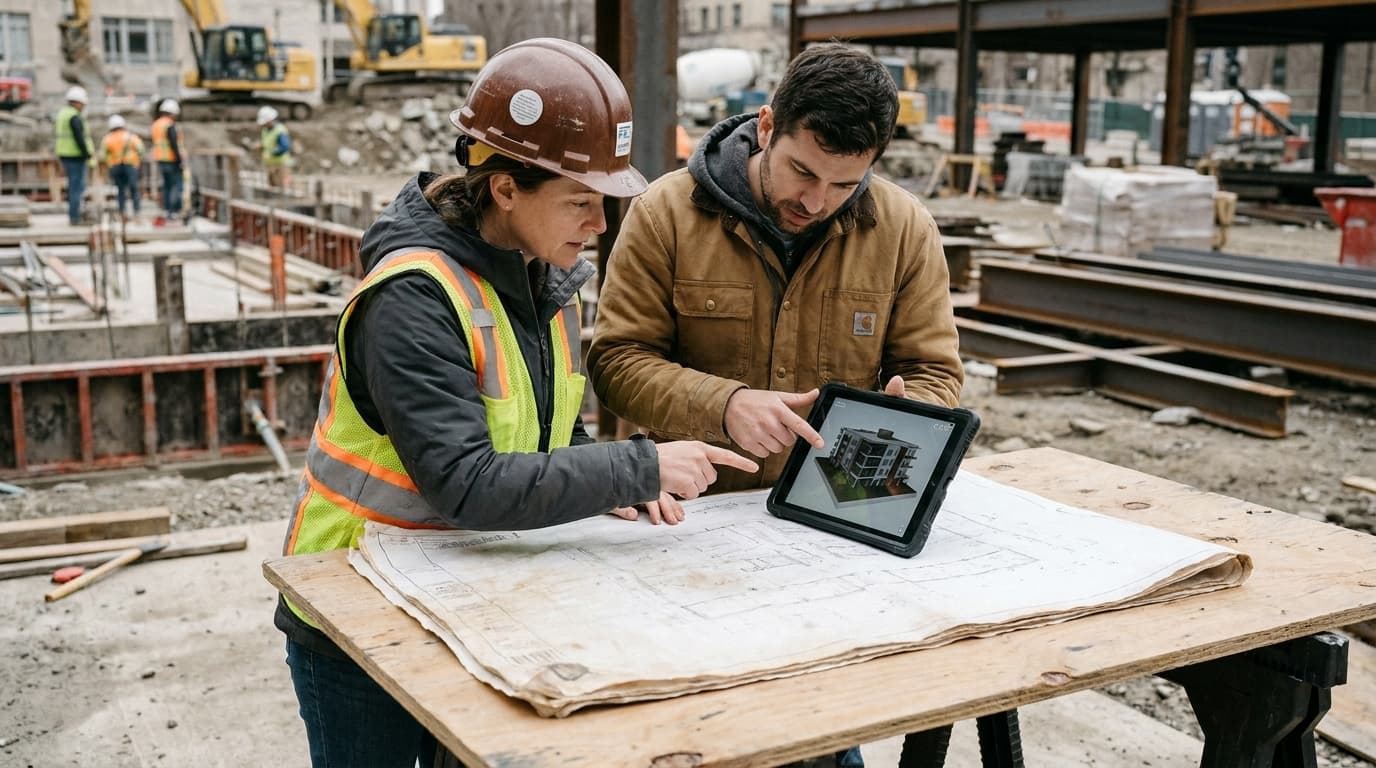
TL;DR: Ex-Palantir executives have raised $17M from a16z for their new startup, Dream. The company is building an 'AI world model' trained on building data to help automate construction planning and design, grounded in real-world physics.
Key facts
- Category
- AI
- Impact
- High
- Published
- Source
- TechCrunch Startups
Full summary
Ex-Palantir founders raised $17M from a16z to build an 'AI world model' that learns from millions of square feet of building data.
A new startup founded by former Palantir executives has secured $17 million in funding to apply a novel AI concept to the construction industry. According to TechCrunch, the company, named Dream, raised the capital in a round led by venture capital firm Andreessen Horowitz (a16z). Dream’s mission is to build what it calls an “AI world model” specifically for construction, aiming to automate and optimize the complex processes of building design, planning, and compliance. This significant investment from a top-tier firm underscores growing investor confidence in specialized AI applications that target massive, traditionally slow-moving industries. The founders' background at Palantir, a company known for wrangling complex data for governments and large enterprises, suggests a deep understanding of the challenges involved in building systems that can navigate intricate, rule-based environments.
Unlike large language models (LLMs) like GPT-4 that learn from the vast expanse of text and images on the internet, Dream’s AI world model is trained on a highly specific and structured dataset. The model ingests data from over 100 million square feet of building projects, sourced from permit archives across the United States. This means the AI is not learning to predict the next word in a sentence, but rather to understand the fundamental principles of construction, including physics, material properties, and building codes. By training on successful, permitted projects, the model learns the explicit and implicit rules that govern safe and compliant construction. This approach grounds the AI in physical reality, forcing it to generate outputs that are not just plausible but are also practical, buildable, and legally sound within a given jurisdiction. It represents a shift from generative AI that creates content to a simulative AI that understands and operates within real-world constraints.
The emergence of Dream fits into a broader trend of vertical AI, where specialized models are being developed to solve specific, high-value problems in individual industries. While general-purpose AI has demonstrated impressive capabilities, its effectiveness can be limited in fields that require deep domain knowledge and adherence to strict regulatory frameworks. The construction industry, with its complex web of local building codes, zoning laws, and engineering standards, is a prime example of a sector where a generic model would fail. By creating a purpose-built model, Dream is betting that a deep, narrow focus will outperform a broad, shallow one. This strategy mirrors the success of specialized AI in other fields like legal tech, drug discovery, and financial fraud detection, where tailored datasets and model architectures provide a distinct competitive advantage. It also reflects a maturation of the AI market, moving beyond horizontal platforms to deliver tangible ROI in specific business contexts.
For founders, developers, and CTOs, Dream’s approach serves as a powerful case study in the future of applied AI. It highlights the immense opportunity that lies in identifying industries burdened by complex, data-intensive processes and building targeted AI solutions. The key takeaway is that the value is not just in the model itself, but in the unique, proprietary data used to train it. As the industry moves forward, the focus will likely shift from building ever-larger general models to creating smaller, more efficient models that master the physics and regulations of a specific domain. The next steps for Dream will be critical to watch. The company will need to prove its model can handle the immense regional variation in building codes and successfully integrate into the existing workflows of architects, engineers, and contractors. Its initial product offerings and early customer partnerships will reveal whether this ambitious vision for an AI-powered construction process can become a reality.
Why it matters
This signals a shift from language-based AI to models grounded in physical reality and complex regulations. For developers and engineers, Dream's 'world model' approach showcases a new frontier for AI that can simulate and optimize real-world systems, moving beyond text and image generation into structured, physics-based domains.
Business impact
Dream's model aims to automate complex design and compliance checks in construction, a massive industry ripe for disruption. This could dramatically reduce project timelines and costs. For businesses, it highlights the growing trend of vertical AI solutions that tackle specific, high-value industry problems with specialized data.
Tags
Related on Notifire
Related stories
Primary source: TechCrunch Startups