Deepfakes Threaten Business Identity Verification
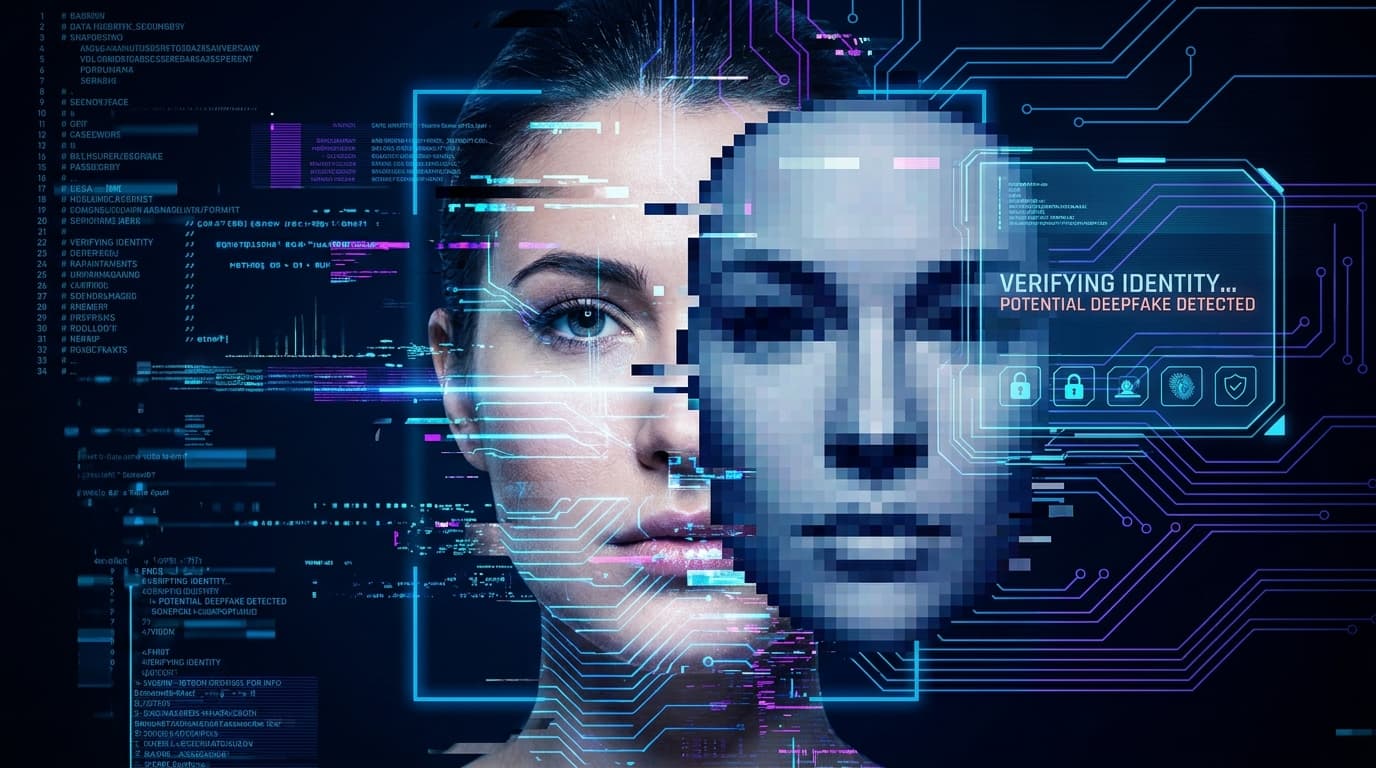
TL;DR: New research shows people struggle to distinguish AI-generated deepfakes from real content, with accuracy barely better than chance. This isn't just a media literacy issue; it poses a significant threat to businesses that rely on online identity verification for security and customer onboarding.
Key facts
- Category
- AI
- Impact
- High
- Published
- Source
- VentureBeat
Full summary
People struggle to distinguish AI-generated deepfakes from real content, creating a significant new security threat for businesses relying on online identity verification.
A recent survey reveals that most people cannot reliably distinguish between real content and AI-generated deepfakes. Research from Veriff and Kantar found that participants' accuracy in spotting fakes was only slightly better than a random guess. This highlights a critical gap between public awareness of deepfake technology and the practical skill to identify it. As the technology advances, the subtle cues that once signaled a fake are becoming nearly impossible for humans to detect, making manual checks ineffective.
This inability to detect deepfakes poses a direct threat to businesses, especially those relying on digital identity verification. Industries like finance and e-commerce use photo or video verification for customer onboarding and secure access. Sophisticated deepfakes can bypass these systems, enabling fraud, unauthorized account takeovers, and financial theft. The risk also extends to internal operations, where deepfakes can be used in social engineering attacks to impersonate executives, creating a serious security challenge.
As AI generation tools become more powerful, this problem is expected to grow. The trend is pushing companies beyond human review toward advanced, multi-layered security solutions. Businesses are turning to technologies that incorporate liveness detection and biometric analysis to automatically spot the subtle artifacts deepfakes leave behind. For security teams, this means re-evaluating identity verification workflows to keep pace with the evolving threat.
Tags
Related on Notifire
Related stories
Primary source: VentureBeat