Figma Slashes Security Response Time with AI Agents
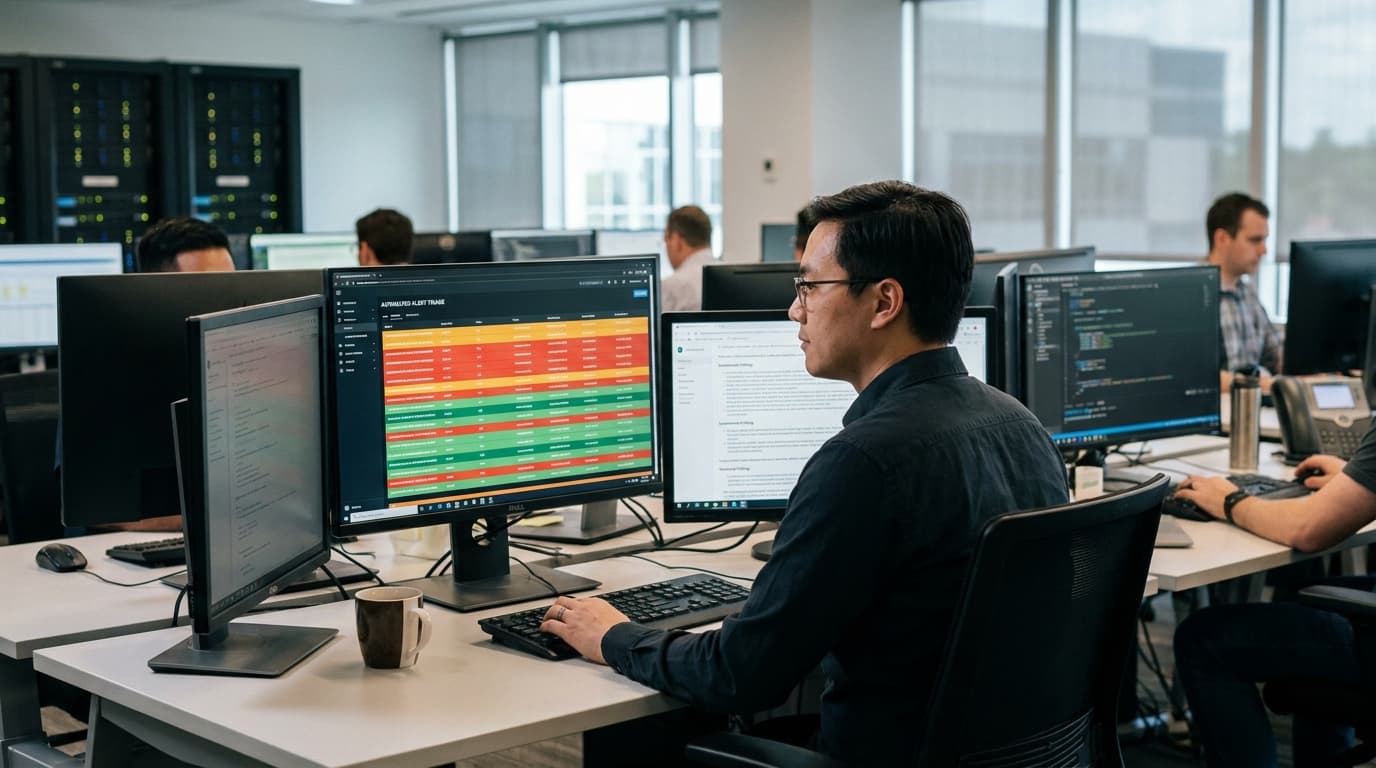
TL;DR: Figma has successfully deployed AI agents in its security operations, reducing incident resolution time by a remarkable 70%. The move showcases a practical, high-impact use case for AI in enterprise security, setting a new industry benchmark.
Key facts
- Category
- AI
- Impact
- High
- Published
- Source
- TechRadar
Full summary
Figma is now resolving security incidents 70% faster by using autonomous AI agents in its security operations.
In a significant real-world application of artificial intelligence, design software company Figma has integrated AI agents into its security operations, achieving a 70% reduction in the time it takes to resolve security incidents. This development marks a pivotal moment for enterprise security, demonstrating a tangible and highly effective use case for autonomous AI systems beyond theoretical applications. By automating critical aspects of its security workflow, Figma has created a powerful case study for how technology companies can leverage AI to dramatically improve efficiency and strengthen their defensive posture. The 70% improvement in Mean Time to Resolution (MTTR) is not an incremental gain but a transformative leap, providing a compelling benchmark for security teams and technology leaders evaluating their own AI strategies.
At its core, this initiative involves deploying AI agents to automate the laborious and time-consuming initial stages of incident response. When a security alert is triggered, instead of a human analyst manually gathering data, an AI agent instantly takes over. The agent can query logs from dozens of disparate systems—such as cloud infrastructure, endpoint detection tools, and identity management platforms—in a matter of seconds. It then correlates this information, enriches it with external threat intelligence, and analyzes the patterns to determine the potential severity and scope of the threat. The final output is a concise, context-rich summary delivered to a human analyst, who can then make a faster, more informed decision. This process effectively eliminates the manual toil of data collection and initial triage, which often consumes the majority of an analyst's time during an incident.
This matters immensely for any organization running a Security Operations Center (SOC). The cybersecurity industry has long struggled with two persistent problems: a chronic shortage of skilled analysts and the overwhelming volume of alerts, leading to widespread burnout and alert fatigue. Figma's approach directly addresses both issues. By delegating repetitive tasks to AI, it multiplies the effectiveness of its existing human team, allowing skilled analysts to focus their expertise on complex threat hunting, strategic analysis, and final remediation. For CTOs and business leaders, the implications are clear: a 70% faster response time directly translates to reduced business risk. It means potential breaches can be contained more quickly, minimizing potential data loss, financial impact, and reputational damage, all while running a more efficient and scalable security function.
The business impact of this success extends beyond Figma, signaling a major shift in the cybersecurity landscape. This case study provides the proof that other companies have been waiting for, likely accelerating the adoption of AI-native security tools across the industry. We can expect to see a surge in demand for platforms that offer autonomous investigation and response capabilities. This will also reshape the role of the security analyst, moving them from data gatherers to supervisors of AI systems, where skills in prompt engineering, AI model validation, and strategic oversight become paramount. Companies that successfully integrate these technologies will gain a significant competitive advantage, not just in security but in overall operational resilience.
Why it matters
Figma's 70% reduction in incident response time is a powerful proof-of-concept for using AI in security. It shows how automation can solve the chronic issues of analyst burnout and alert fatigue, allowing human experts to focus on high-value strategic work.
Business impact
This sets a new benchmark for operational efficiency in security. Businesses can now see a clear path to reducing risk and containing threats faster by investing in AI-driven security automation, potentially leading to a major shift in cybersecurity tooling and talent requirements.
Tags
Related on Notifire
Primary source: TechRadar