Google AI Simulates World with Street View
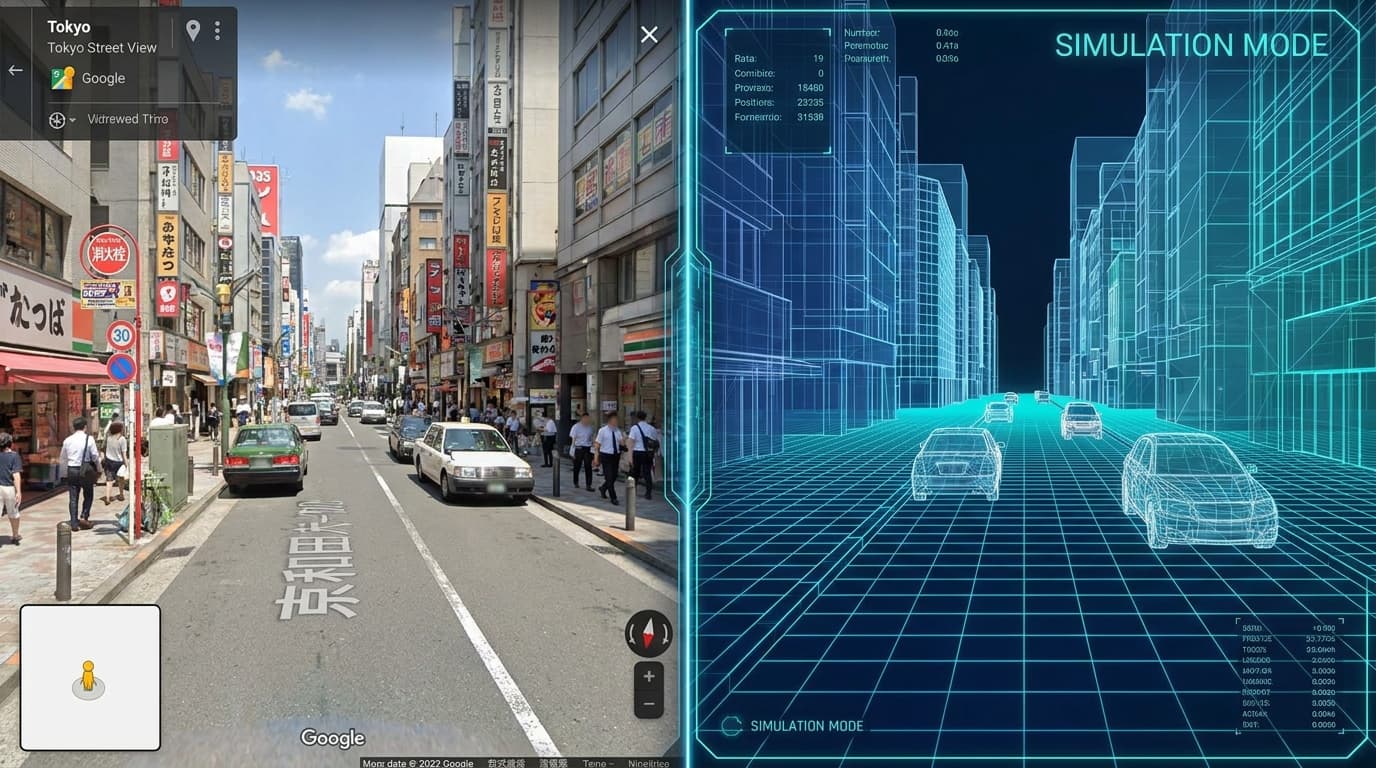
TL;DR: Google DeepMind has enhanced its Genie world model by integrating it with Street View. This allows the AI to create interactive, explorable simulations of real-world environments, aiming to advance applications in robotics, gaming, and virtual travel by simulating various conditions and scenarios.
Key facts
- Category
- AI
- Impact
- High
- Published
- Source
- TechCrunch
Full summary
Google DeepMind's Genie model now uses Street View to create interactive simulations of real-world environments for robotics, gaming, and virtual travel.
Google DeepMind has integrated its Genie world model with Google Street View, enabling it to create interactive simulations based on real-world locations. This advancement allows the AI to generate playable, explorable digital versions of actual streets and environments. Unlike static images, these generated worlds are dynamic, allowing for user interaction and exploration. The model can also simulate various conditions, such as different weather patterns or times of day, providing a flexible and realistic platform. This marks a significant step from generating purely fictional worlds to simulating ones grounded in real photographic data.
This development has significant implications for developers and researchers in robotics, gaming, and autonomous systems. For robotics, it offers a safe and scalable environment to train agents on complex navigation tasks and rare scenarios without the risks of real-world deployment. In the gaming industry, it could dramatically accelerate the creation of realistic open-world maps based on actual cities. Furthermore, it opens new avenues for immersive virtual travel and advanced training simulations, allowing users to experience and interact with accurate digital twins of physical places. This fusion of real-world data and generative AI provides a powerful new tool for building and testing systems designed to operate in the physical world.
Why it matters
This technology provides a scalable and safe way to train robots and autonomous systems in realistic environments. For game developers, it could significantly speed up the creation of open-world maps. It represents a major step toward creating AI that can understand and interact with the real world.
Business impact
Companies in robotics, autonomous vehicles, and gaming can leverage this to reduce R&D costs and accelerate development cycles. It creates new opportunities for products in virtual tourism, architectural visualization, and specialized training simulations, potentially opening up new revenue streams.
Tags
Related on Notifire
Related stories
Primary source: TechCrunch