Google AI Teaches Robots to See and Collaborate
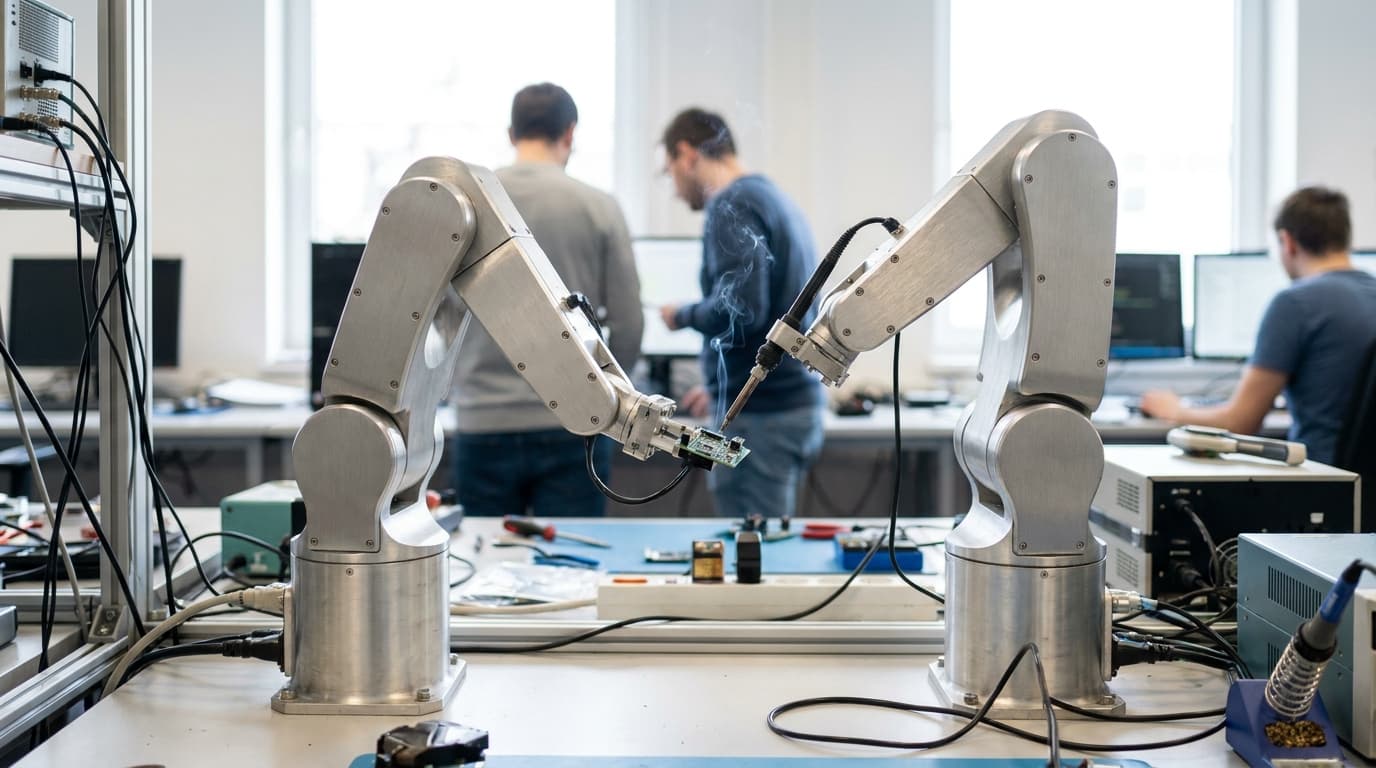
TL;DR: Google DeepMind has released Gemini Robotics ER 2, a new AI model that allows robots to understand video, reason about tasks, and collaborate with each other. This could significantly accelerate automation in complex, real-world environments.
Key facts
- Category
- AI
- Impact
- Critical
- Published
- Source
- Google DeepMind
Full summary
Google's new AI model, Gemini Robotics ER 2, enables robots to understand video and work together to solve complex real-world tasks.
Google DeepMind has introduced Gemini Robotics ER 2, a new AI model designed to significantly advance how robots operate in the real world. According to the company, the model gives robots sophisticated new abilities to reason about their surroundings, orchestrate complex tasks, and collaborate with other robots. This release marks a major development under the Gemini brand, focusing specifically on the challenges of physical automation. The core advancements highlighted by Google are in video understanding and multi-robot coordination, suggesting a move away from single, pre-programmed machines toward more dynamic and intelligent robotic systems.
The key technical innovation in Gemini Robotics ER 2 lies in its enhanced ability to process and interpret video streams. Unlike systems that rely on static images, this model can understand context, motion, and the cause-and-effect relationships within a live video feed. This allows a robot to learn from observing actions and adapt its behavior accordingly. The multi-robot collaboration feature builds on this, enabling a network of robots to share this understanding, divide labor, and coordinate their movements to achieve a common objective. This system acts as a central brain, breaking down a high-level command into synchronized, executable steps for an entire team of robots, a process Google calls task orchestration.
This development is particularly significant for developers and engineers in the robotics and automation sectors. It provides a powerful foundation model that can handle the complex perception and coordination logic that previously had to be custom-built for each application. For founders and CTOs, Gemini Robotics ER 2 lowers the barrier to entry for creating solutions in environments that have historically been too unpredictable for automation, such as busy warehouses, dynamic manufacturing floors, or even domestic assistance. By providing the core intelligence as a service, it allows companies to focus on hardware design and application-specific tasks rather than reinventing the underlying AI.
The business implications are substantial, potentially accelerating the deployment of autonomous systems across multiple industries. In logistics, a fleet of robots powered by this model could work together to unload trucks, sort packages, and manage inventory with minimal human oversight. In manufacturing, it could enable more flexible production lines where robots collaborate on assembling complex products. This technology represents a shift toward more general-purpose robotics, moving the industry away from expensive, single-task machines. The practical takeaway for business leaders is that the feasibility of automating complex, multi-step physical processes has taken a significant leap forward, opening up new avenues for efficiency and innovation.
Looking ahead, the next critical step will be observing how Gemini Robotics ER 2 performs outside of controlled laboratory settings. Real-world deployments will test its robustness, safety, and reliability in unpredictable environments. Industry watchers should look for pilot programs and case studies from Google and its partners to gauge the model's practical impact. Furthermore, this release will likely intensify competition among major AI labs to create the definitive "operating system" for general-purpose robotics. The industry's focus will now shift to how effectively this powerful new intelligence can be integrated with diverse physical hardware to solve tangible business problems.
Why it matters
Gemini Robotics ER 2 moves beyond single-task robots by enabling them to understand their environment through video and coordinate actions as a team. This could unlock automation in complex, dynamic settings previously too difficult for machines.
Business impact
For companies in logistics, manufacturing, and automation, this technology could significantly reduce the cost and complexity of deploying robotic solutions. It opens up new markets for automation in less structured environments, creating opportunities for new products and services.
Tags
Related on Notifire
Related stories
Primary source: Google DeepMind