Google DeepMind Finds a Way to Watermark Biology
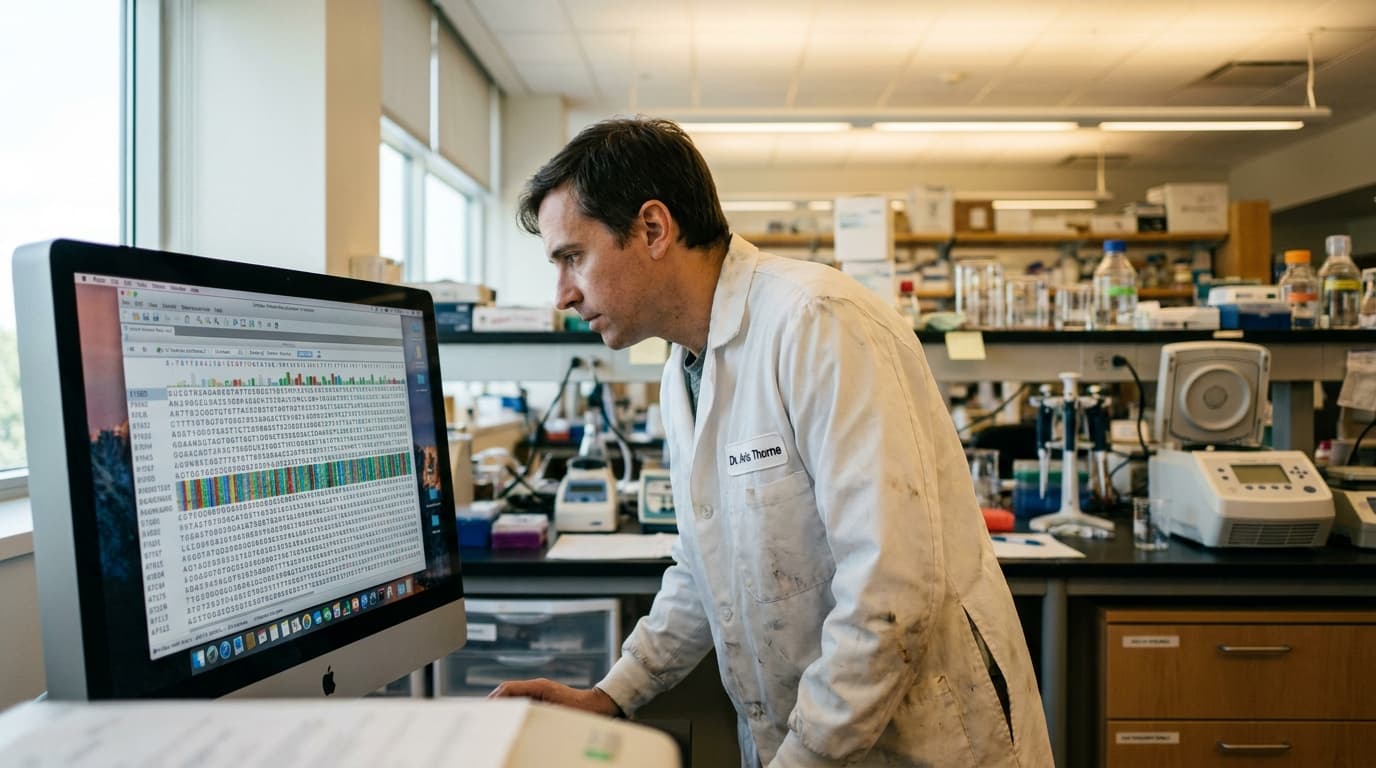
TL;DR: Google DeepMind can now embed a hidden signature in AI-generated biological data, like DNA. This could help track AI-created organisms, while new 'swarm scaling' methods are making AI systems more powerful by combining smaller models.
Key facts
- Category
- AI
- Impact
- High
- Published
- Source
- Import AI
Full summary
Google DeepMind can now watermark AI-generated biological data. Meanwhile, 'swarm scaling' is accelerating AI problem-solving by using multiple models together.
Two significant developments in artificial intelligence are poised to change how AI systems are built and controlled, according to the latest Import AI newsletter. The first is a novel technique from Google DeepMind for watermarking AI-generated biological data, a crucial step for safety and intellectual property in the growing field of synthetic biology. The second is the rise of 'swarm scaling,' a new method for improving AI capabilities by using multiple models in concert rather than relying on a single, massive one. These advancements highlight a dual trend in the industry: as AI models become more powerful and capable of operating in sensitive domains like biology, researchers are simultaneously developing new architectures to scale that power and new safeguards to manage the associated risks. For technical leaders and developers, these concepts represent both a new set of tools and a new set of responsibilities.
AI watermarking for biology works by embedding a hidden, digital signature directly into the code of life. When an AI generates a new protein or DNA sequence, the system can make subtle, non-functional changes to that sequence. These alterations are statistically meaningless to a biological system—they do not change the protein's function or the organism's viability—but they create a unique pattern that can be identified with the right computational tools. This effectively proves the sequence's synthetic origin. It is conceptually similar to how a watermark is hidden in a digital image or audio file, but applied to the fundamental building blocks of biology. This allows for reliable provenance tracking, making it possible to distinguish between a naturally occurring sequence and one designed by a specific AI model, which has profound implications for safety and research integrity.
In parallel, swarm scaling offers a different approach to building powerful AI. For years, the dominant strategy has been to build ever-larger, monolithic models, a resource-intensive race that favors only the largest tech companies. Swarm scaling challenges this paradigm. Instead of one giant brain, it uses a 'swarm' of multiple, often smaller and more specialized, AI agents that collaborate to solve a problem. These agents can work together, dividing a complex task and each contributing its unique expertise. For example, one agent might be skilled at data analysis, another at creative brainstorming, and a third at logical reasoning. By coordinating their efforts, the swarm can often arrive at a solution faster, more efficiently, and with greater robustness than a single model working alone, demonstrating that system design can be as important as raw model size.
The emergence of these techniques is deeply connected to broader industry trends. The development of reliable AI watermarking for biology is a direct response to the urgent, global conversation around AI safety and governance. As generative AI for biology becomes more accessible, the ability to trace the origin of synthetic biological materials is paramount for preventing their accidental or malicious misuse. Meanwhile, swarm scaling aligns with the industry's pivot towards AI agents and multi-agent systems. This architectural shift could democratize access to cutting-edge AI, allowing teams to achieve powerful results by cleverly composing smaller, open-source models rather than paying for access to a single, proprietary giant. Both trends point to a future of more distributed, manageable, and accountable AI.
For founders, CTOs, and developers, these concepts have immediate practical relevance. In the biotech sector, adopting AI watermarking techniques will become a critical strategy for protecting intellectual property and ensuring regulatory compliance. For those building AI applications, swarm scaling presents a new and powerful architectural pattern to explore. It offers a path to creating sophisticated systems that are potentially more flexible, scalable, and cost-effective than those built on monolithic models. Together, these innovations signal the maturation of an 'AI science economy,' where AI is not just an analytical tool but a creative partner in discovery. This new reality demands that we develop novel methods not only for scaling AI's immense power but also for wisely managing its profound impact.
Why it matters
For developers and CTOs in biotech, watermarking AI-generated biological data is a critical step for IP protection and biosafety. Swarm scaling presents a new architectural pattern for building more efficient and powerful AI systems, moving beyond the limitations of single, monolithic models.
Business impact
Watermarking biological data could create a new standard for provenance in the billion-dollar biotech industry, reducing risks of IP theft and misuse. Swarm scaling offers a potentially cheaper, faster path to high-end AI capabilities, allowing smaller companies to compete with those running massive, expensive models.
Tags
Related on Notifire
Related stories
Primary source: Import AI