Hugging Face Open-Sources Humanoid Legs
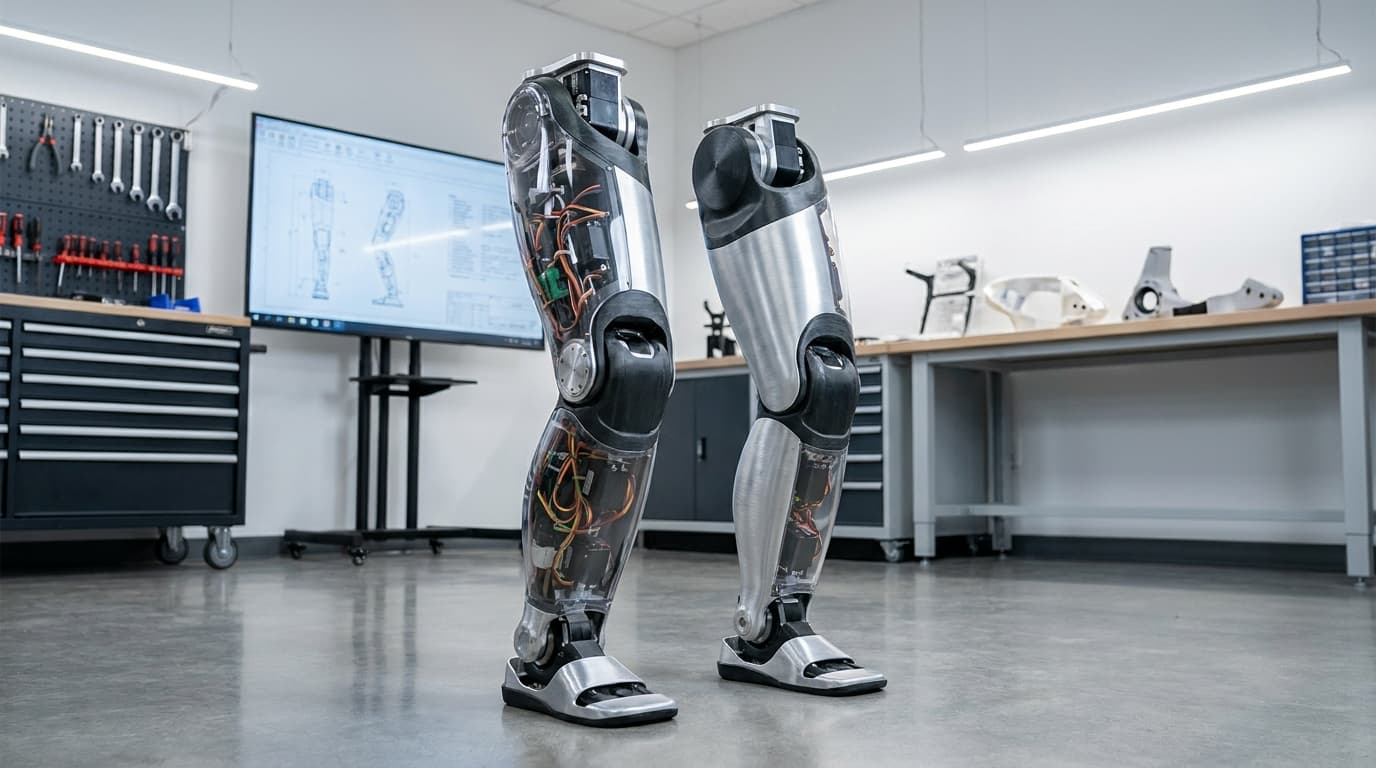
TL;DR: Hugging Face has released an open-source project for 3D-printable humanoid robot legs. The hardware and software stack costs around $2,500 to build, significantly lowering the barrier for researchers and developers to experiment with physical AI and robotics software in real-world environments.
Key facts
- Category
- AI
- Impact
- High
- Published
- Source
- Ars Technica
Full summary
Hugging Face has released an open-source project for low-cost, 3D-printable humanoid robot legs, aiming to accelerate research in physical AI.
Hugging Face has launched the LeRobot Humanoid project, an open-source initiative providing the designs and software for a pair of humanoid robot legs. The hardware can be constructed for approximately $2,500 using a combination of 3D-printed parts and readily available off-the-shelf components. This release includes the complete hardware specifications and the associated software stack required to operate the legs, creating an integrated package for robotics experimentation. The goal is to establish a standardized, low-cost platform that allows the AI and robotics community to move beyond purely digital simulations and begin training and testing models on physical hardware. This approach facilitates more realistic and effective development cycles for AI agents designed to interact with the physical world.
The primary significance of this release is the democratization of advanced robotics research. By drastically reducing the financial barrier to entry, Hugging Face enables a much broader range of participants—including startups, academic labs, and even individual developers—to engage in humanoid robotics. Previously, such work required access to expensive, proprietary systems, limiting experimentation to a few large corporate R&D departments. This new accessibility is expected to foster a more diverse and rapid pace of innovation in physical AI. It provides a crucial tool for testing and refining control algorithms, reinforcement learning models, and other AI software in real-world conditions, which could significantly accelerate progress toward more capable and versatile embodied AI systems.
Why it matters
This open-source project significantly lowers the cost of entry for humanoid robotics research, enabling more developers, startups, and researchers to experiment with physical AI.
Business impact
Startups and companies can now prototype and test physical AI applications with significantly lower capital investment, potentially accelerating product development cycles and opening new market opportunities in robotics.
Tags
Related on Notifire
Related stories
Primary source: Ars Technica