London Police Begin Live Face Scans on the Tube
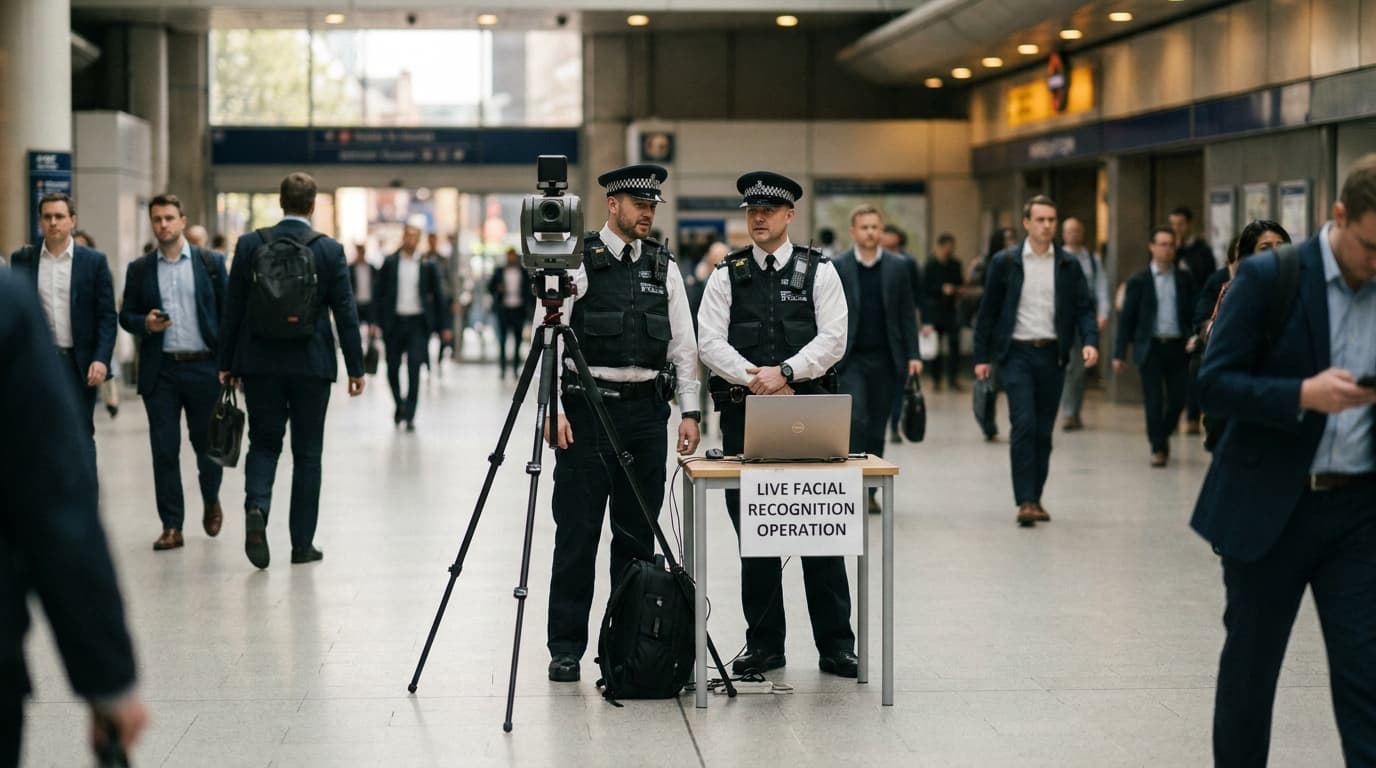
TL;DR: British Transport Police are now using live facial recognition on the London Underground. The system scans faces in real-time and checks them against a watchlist, raising significant privacy concerns from civil liberties groups.
Key facts
- Category
- AI
- Impact
- High
- Published
- Source
- TechRadar
Full summary
British Transport Police are trialing live facial recognition on the London Underground, scanning faces against a criminal watchlist.
Based on reporting from TechRadar, the British Transport Police (BTP) have initiated a new trial of Live Facial Recognition (LFR) technology within the London Underground. This deployment involves scanning the faces of the public in real-time and comparing them against a specific police watchlist. The move has immediately drawn sharp criticism from privacy advocacy groups, who argue that the technology is excessively intrusive and effectively treats all commuters like criminal suspects. This trial represents a significant expansion of AI-powered surveillance into one of the world's busiest public transit systems, escalating the ongoing public debate surrounding privacy, security, and the appropriate use of artificial intelligence in civic spaces. The BTP maintains that the system is intended to identify individuals on watchlists, but critics remain concerned about the broader implications for civil liberties and the potential for mass monitoring of the general population without their explicit consent.
The technology at the heart of this trial, Live Facial Recognition, operates by continuously analyzing video feeds from cameras positioned in public areas. As people pass by, an AI algorithm detects and isolates individual faces from the video stream. For each detected face, the system generates a unique biometric template—a numerical representation of distinct facial features, like the distance between the eyes or the shape of the nose. This digital signature is then instantly compared against a pre-existing database of templates derived from a police watchlist. This watchlist is typically composed of individuals wanted for serious offenses, vulnerable missing persons, or others of interest to law enforcement. If the system finds a match that exceeds a predetermined confidence score, it generates an alert for nearby officers to review and potentially intervene. This real-time process distinguishes LFR from retrospective facial recognition, which analyzes recorded footage after an event has occurred, making it a far more proactive and controversial surveillance tool.
For technology leaders, developers, and security professionals, this trial is more than just a UK-specific news story; it is a critical case study in the large-scale deployment of AI surveillance. The project forces difficult conversations about the ethical responsibilities of those who build and implement these systems. Key technical and ethical questions arise regarding the system's accuracy, its potential for inherent bias against non-white and female faces—a well-documented problem in many facial recognition models—and the security of the highly sensitive biometric data being collected. For CTOs and engineering leads, it highlights the need for robust ethical frameworks and transparent auditing of AI systems before they are deployed in the public sphere. Security teams, meanwhile, must consider the new attack vectors created by such a system, as a compromised LFR database could lead to a catastrophic breach of personal biometric information, far more sensitive than a stolen password. The public and regulatory response will directly shape the future legal landscape for any company operating in the AI and data processing space.
The expansion of LFR into public infrastructure like the London Underground signals a growing and potentially lucrative market for vendors of AI, camera hardware, and security software. However, this opportunity is fraught with significant business risks. Companies supplying this technology are placed directly in the public spotlight and face intense scrutiny from privacy advocates, regulators, and the media. Any reports of inaccuracy, misuse, or data breaches can cause severe reputational damage, impacting stock prices and customer trust. Furthermore, the growing "techlash" against surveillance can lead to employee activism and difficulty in attracting talent. The outcome of this London trial will serve as a bellwether for the industry. A successful and well-received deployment could accelerate adoption in other cities and sectors, such as retail loss prevention or event security. Conversely, a problematic trial plagued by errors or public outcry could lead to stricter regulations, moratoria on the technology, and a chilling effect on the market, forcing businesses to reassess the long-term viability of public-facing AI surveillance products.
Why it matters
This trial is a major real-world test for AI-powered public surveillance, raising critical questions for tech leaders about algorithmic bias, data security, and the ethics of deploying such systems at scale. The outcome will help shape future regulation.
Business impact
The deployment creates a market for surveillance tech but comes with significant legal and reputational risks. The public and regulatory response to this trial will signal the viability and potential pitfalls for companies in the AI and security sectors.
Related on Notifire
Related stories
Primary source: TechRadar