Most Companies Now Use Several AI Models
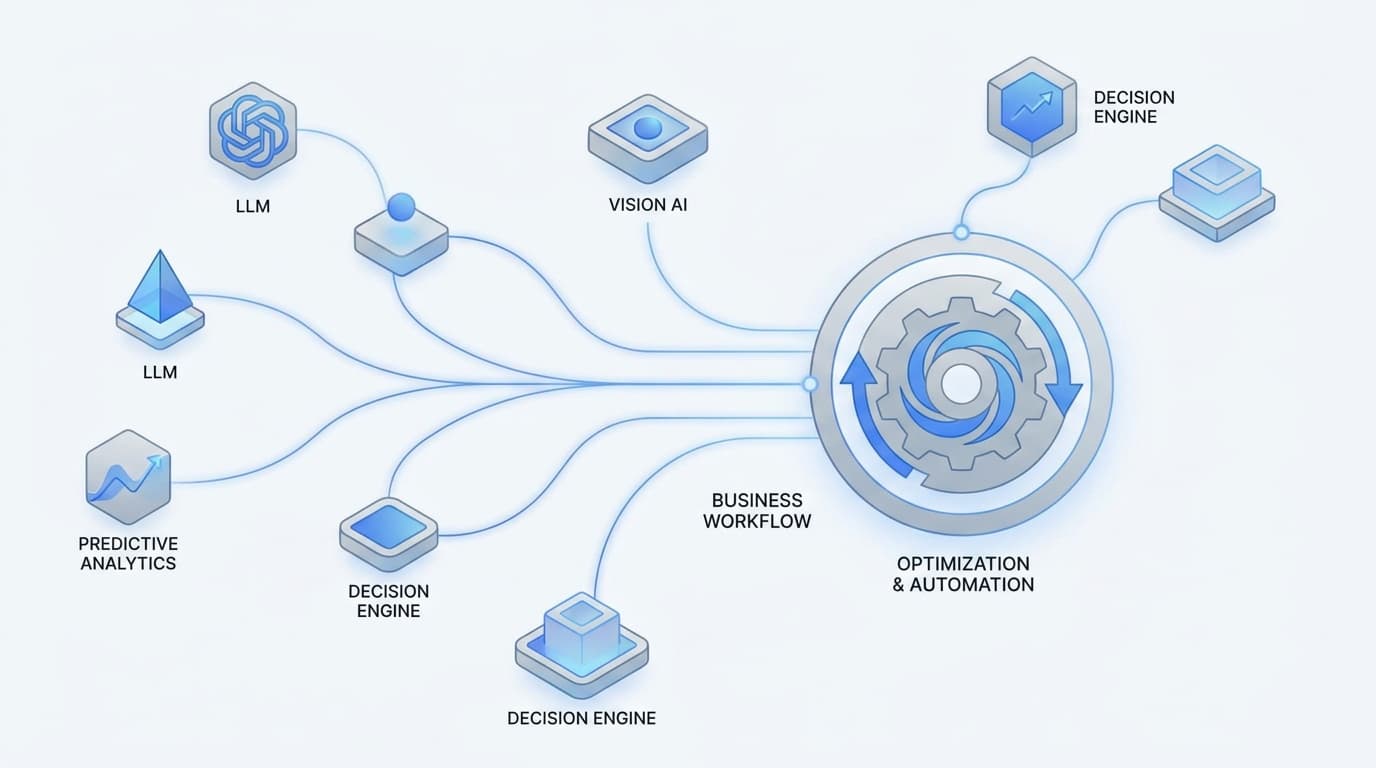
TL;DR: A new Datadog report finds nearly 70% of companies now use three or more AI models, a significant shift towards multi-model strategies. This approach allows teams to select the best model for specific tasks, optimizing for factors like cost, latency, and operational risk across different workloads.
Key facts
- Category
- AI
- Impact
- High
- Published
- Source
- CIO.com
Full summary
A new Datadog report reveals that nearly 70% of companies now operate three or more AI models, signaling a major shift to multi-model strategies.
A new report from Datadog, "The State of AI Engineering 2026," reveals a significant shift in how companies deploy AI. Based on data from thousands of organizations, the study found that nearly 70% (69%) now use three or more AI models in production. The number of companies operating six or more models has also nearly doubled over the past year. This marks a move away from relying on a single, default model. Instead, engineering teams are adopting multi-model strategies, selecting the best-suited model for each specific workload. This approach allows them to optimize for various factors, including latency, cost, operational risk, and the unique requirements of each task. Many of these organizations are also running complex, agent-based workflows in parallel with their multi-model deployments.
The widespread adoption of multi-model strategies introduces new layers of operational complexity for engineering and IT teams. Managing a diverse portfolio of AI models, each with its own performance profile, failure modes, and cost structure, presents a significant challenge. This trend directly impacts CTOs and developers, who must now implement more robust observability and management systems to maintain reliability and control costs across their entire AI stack. As AI systems become more sophisticated and integrated into core business functions, the need for specialized tooling to monitor these complex, distributed environments grows. This shift requires a more strategic approach to AI infrastructure, moving beyond simple API integrations to full lifecycle management of multiple models.
Why it matters
The shift to multi-model AI stacks increases operational complexity, requiring new strategies for management, observability, and cost control. It signals that AI infrastructure is maturing beyond single-provider solutions.
Business impact
Companies are moving from a one-size-fits-all AI model to a specialized, portfolio-based approach. This allows for better cost-performance optimization per task but requires greater investment in engineering resources and tooling to manage the increased complexity and operational risk.
Tags
Related on Notifire
Related stories
Primary source: CIO.com