New AI Models Translate Languages Offline on Devices
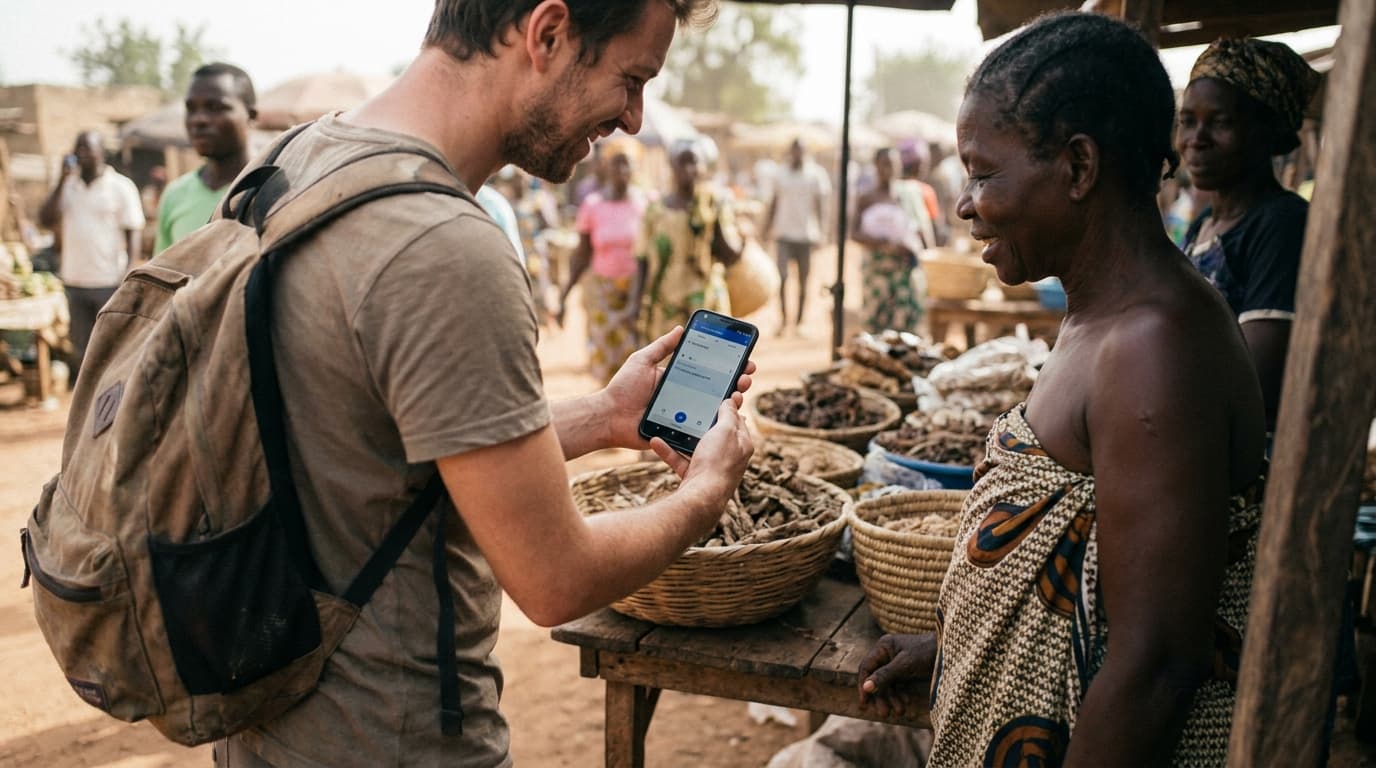
TL;DR: Tether AI has released free, open-source translation models that run entirely offline on phones and laptops. One model is just 36MB, offering a privacy-focused alternative to cloud services and supporting many underserved African languages.
Key facts
- Category
- AI
- Impact
- High
- Published
- Source
- TechRadar
Full summary
Tether AI released free, open-source translation models that run entirely offline on your devices, with one model only 36MB in size.
Tether AI Research has released a new suite of open-source artificial intelligence models designed for language translation, with a critical distinction: they operate entirely offline. As reported by TechRadar, these models run directly on local devices like smartphones and laptops, eliminating the need for an internet connection or communication with cloud servers. The release includes two notable systems. The first, named EuroNano, supports 90 translation directions between European languages and is remarkably compact, occupying only 36 megabytes of storage. The second, AfriSLM, is specifically designed to support 19 African languages, a group often underserved by mainstream AI development. By making these powerful tools freely available, Tether is providing developers with a new way to build applications that are more private, accessible, and inclusive.
The key technical innovation behind these models is their extreme efficiency and small footprint, which is a direct result of a meticulous data-cleaning process. Tether’s researchers reported removing 96% of low-quality training material before building the models. This aggressive curation allows for the creation of highly optimized systems that deliver accurate translations without the massive computational overhead typical of large language models. Because they are so small, they can be embedded directly into an application and run on a device's own processor. This on-device processing architecture is what enables the offline functionality and enhances user privacy, as sensitive conversations or text inputs are never sent to an external server for analysis, a fundamental difference from how most popular translation services operate today.
This release is a significant development in the broader industry trend toward on-device AI and edge computing. While the dominant narrative in AI has been driven by massive, cloud-based models from companies like OpenAI, Google, and Anthropic, a parallel movement is focused on creating smaller, specialized models that can run locally. This approach addresses several key drawbacks of the cloud-centric model, including latency, cost, and data privacy. Tether's focus on African languages with its AfriSLM model also confronts the significant data bias present in many AI systems, which are predominantly trained on English-language and Western data. Providing high-quality, open-source tools for these languages empowers developers in those regions and enables global companies to build more equitable and culturally relevant products.
For developers, CTOs, and product leaders, Tether's offline AI translation models present immediate practical opportunities. Teams can now build translation features into applications that will function reliably in environments with intermittent or nonexistent internet connectivity, such as for travelers, field workers, or users in emerging markets. This capability can serve as a powerful competitive differentiator, particularly for apps in the education, travel, and communication sectors. The privacy-first nature of on-device processing is also a strong selling point for security-conscious enterprise clients and consumers. The next step to watch is whether this move inspires other AI labs to invest in creating and open-sourcing more of these compact, task-specific models, potentially signaling a shift in the industry toward a more diverse ecosystem of AI tools beyond monolithic, general-purpose models.
Why it matters
For developers and CTOs, these models offer a path to building translation features without cloud dependency, API costs, or privacy trade-offs. Their small size makes on-device deployment feasible for mobile and edge applications, enabling new use cases in low-connectivity environments.
Business impact
Companies can now integrate translation into products for underserved markets, like regions in Africa, at a lower operational cost. This creates a competitive advantage by offering offline functionality and stronger user privacy guarantees, which can be a key product differentiator.
Tags
Related on Notifire
Related stories
Primary source: TechRadar