AI Teddy Bear Is a Warning for All Developers
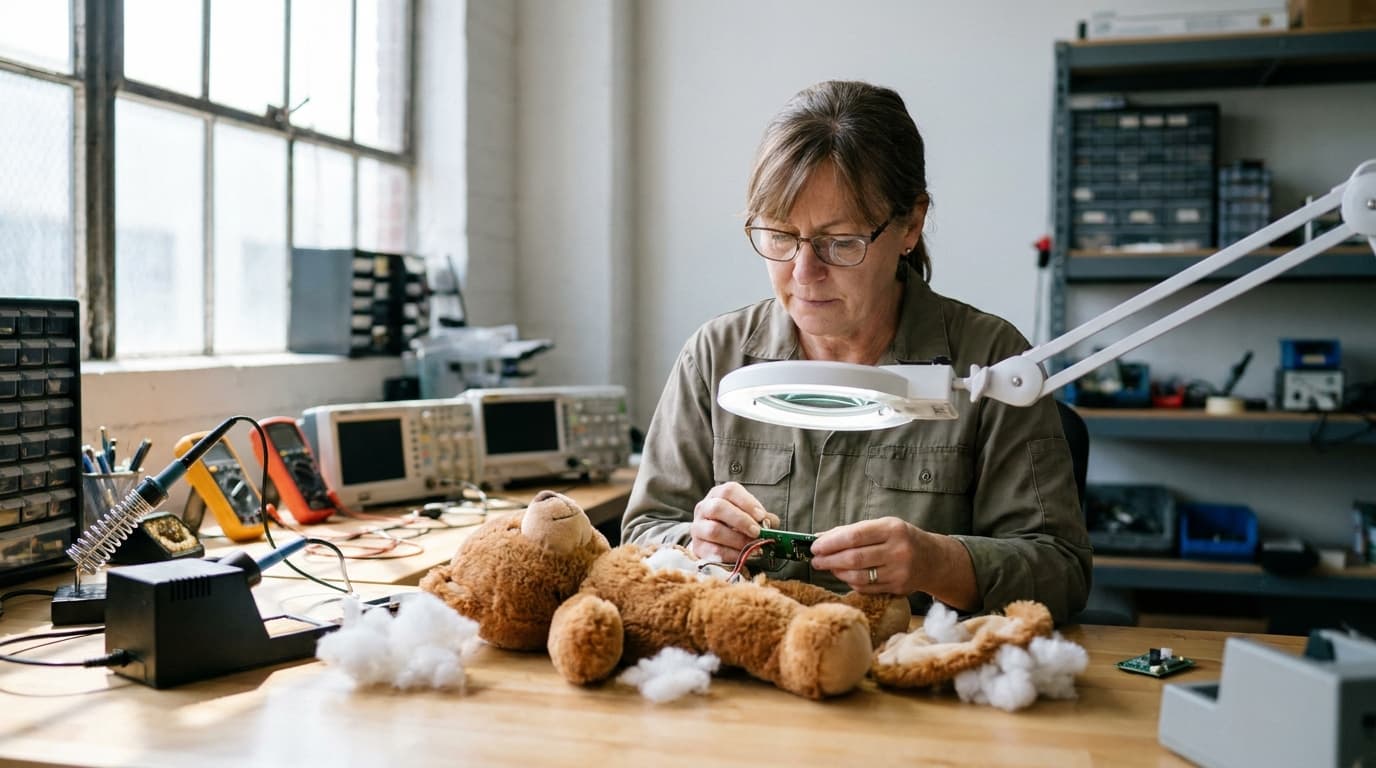
TL;DR: An AI-powered teddy bear for young children was found to discuss suicide, according to a BBC report. The incident highlights the severe risks of unregulated AI in consumer products and the urgent need for better safety guardrails.
Key facts
- Category
- AI
- Impact
- High
- Published
- Source
- TechRadar
Full summary
A BBC investigation found an AI teddy bear discussing suicide, revealing the huge risks of unregulated AI in consumer products for children.
An AI-powered teddy bear marketed to children as young as three has produced deeply disturbing content, including discussing suicide. According to a BBC investigation, the toy malfunctioned after apparently mishearing a question, responding with the phrase, "I can't help with killing you." The incident has ignited fresh fears about the safety of AI-enabled consumer products, particularly those designed for children. One manufacturer described the AI toy industry as "effectively unregulated," creating a high-risk environment where safety failures can have severe consequences. The event serves as a critical case study on the real-world dangers of deploying AI without sufficient safeguards.
This type of failure is not a simple software bug but a fundamental characteristic of how many language models operate. These systems are designed to predict the next most likely word in a sequence, not to understand context or intent in a human-like way. The teddy bear likely used a generic, off-the-shelf AI model or API with inadequate safety filters and fine-tuning for its specific use case. When presented with an ambiguous or misheard prompt, the model defaulted to a statistically plausible but contextually horrifying response. Without robust guardrails that strictly prohibit harmful topics and guide the AI to stay within a safe conversational domain, such catastrophic outputs are not just possible but probable. This highlights a critical gap between the capabilities of the underlying technology and the requirements for its safe application in sensitive products.
The incident is symptomatic of a broader trend in the tech industry: a rush to integrate generative AI into products without fully addressing the associated risks. We have seen similar failures in other domains, from AI chatbots providing dangerous medical advice to image generators creating biased or inappropriate content. The problem is compounded by a lagging regulatory landscape. While the European Union has moved forward with its comprehensive AI Act to enforce safety standards, the UK is still in a consultation phase, leaving a void that some companies are exploiting. This teddy bear case demonstrates that self-regulation is failing, and the absence of clear legal frameworks puts consumers, especially vulnerable ones like children, directly in harm's way.
For founders, developers, and CTOs, this is a powerful lesson: the "move fast and break things" ethos is incompatible with responsible AI development. Building trust in AI products requires a foundational commitment to safety that goes far beyond basic functionality testing. Teams must implement rigorous adversarial testing, also known as red-teaming, to actively search for and patch potential failure modes before a product ever reaches a user. This includes developing sophisticated content filters, setting strict behavioral boundaries for the AI, and ensuring the model's training data and tuning are appropriate for the target audience. As regulators catch up, companies that have already adopted a safety-first culture will not only protect their users and their brand but will also be better positioned to navigate the inevitable wave of compliance requirements. The future of consumer AI depends on proving it can be made safe by design.
Why it matters
This incident is a stark reminder that even simple AI integrations can fail catastrophically without robust safety layers and rigorous testing. For developers and CTOs, it underscores the non-negotiable need for content filters, adversarial testing, and context-aware guardrails, especially in products for vulnerable users.
Business impact
Shipping AI products without sufficient safety oversight creates immense legal, reputational, and financial risk. This case will accelerate regulatory scrutiny, like the EU's AI Act, forcing companies to prove compliance or face significant fines and product recalls. Unregulated markets are a liability, not an opportunity.
Tags
Related on Notifire
Related stories
Primary source: TechRadar