Rethinking AI in Software Testing
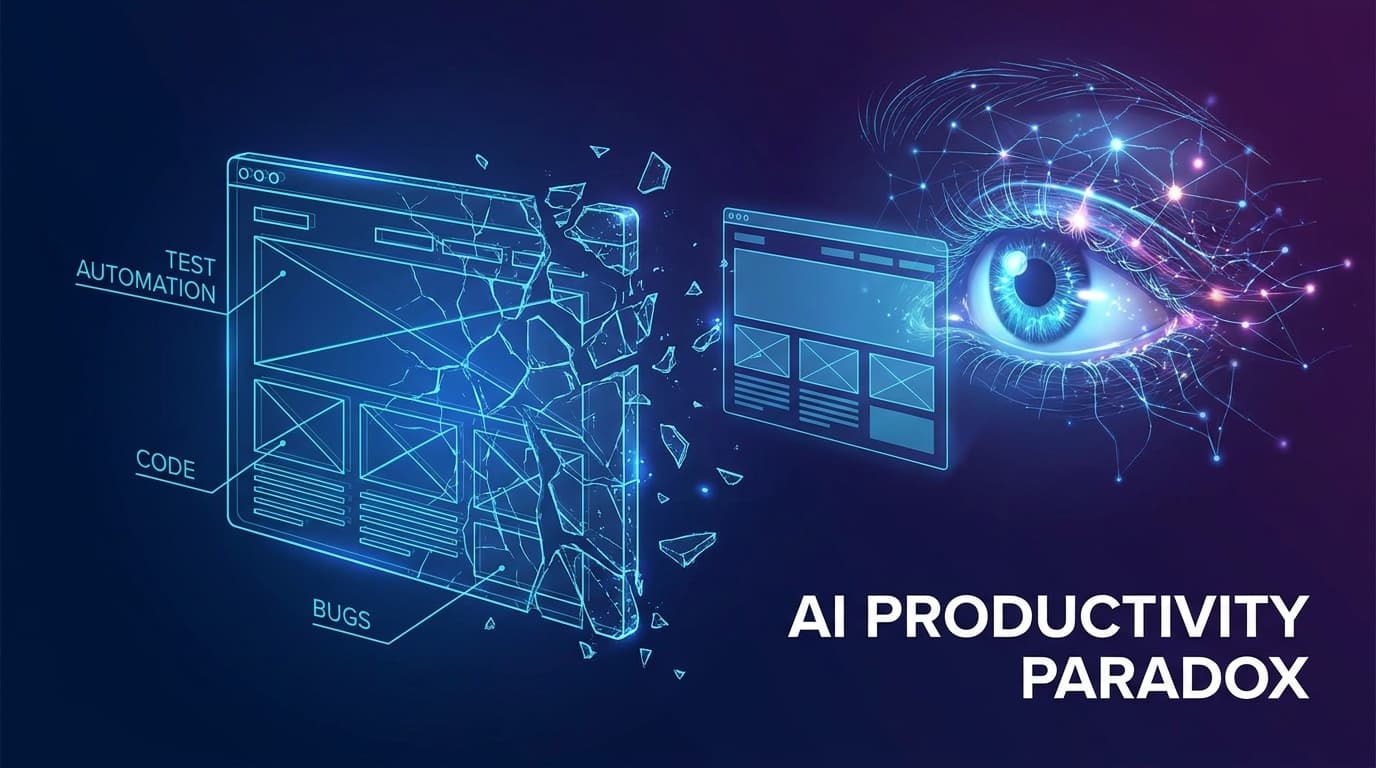
TL;DR: The 'AI productivity paradox' suggests current AI testing methods scale existing problems. Instead of relying on brittle, DOM-based structures, a new approach proposes building tests based on user perception and intent to create more reliable and resilient automation systems.
Key facts
- Category
- AI
- Impact
- High
- Published
- Source
- InfoQ
Full summary
Current AI testing methods often scale brittleness. A new paradigm focuses on user perception and intent for more reliable automation.
A new analysis highlights a key challenge in AI-driven software testing, termed the 'AI productivity paradox.' The problem is that AI scales the abstraction it’s built on. Current test automation largely relies on the Document Object Model (DOM), which is structurally brittle. Minor code changes to a user interface can break these tests, even if the user experience remains the same. When AI is used to generate more of these DOM-based tests, teams are simply accelerating the creation of fragile test suites, which increases maintenance overhead and undermines the promised productivity gains.
To solve this, experts propose a fundamental shift from DOM-centric validation to a new paradigm grounded in human perception and intent. This approach involves building AI models that understand what a user sees on the screen and what they are trying to accomplish, much like a human tester. For developers, QA leaders, and CTOs, this promises more resilient tests that validate the actual user experience rather than the underlying code. By focusing on user intent, tests become less prone to breaking from minor refactors, leading to more stable development cycles and ensuring AI genuinely enhances testing quality, not just quantity.
Tags
Related on Notifire
Related stories
Primary source: InfoQ