AI Just Killed a Student Coding Competition
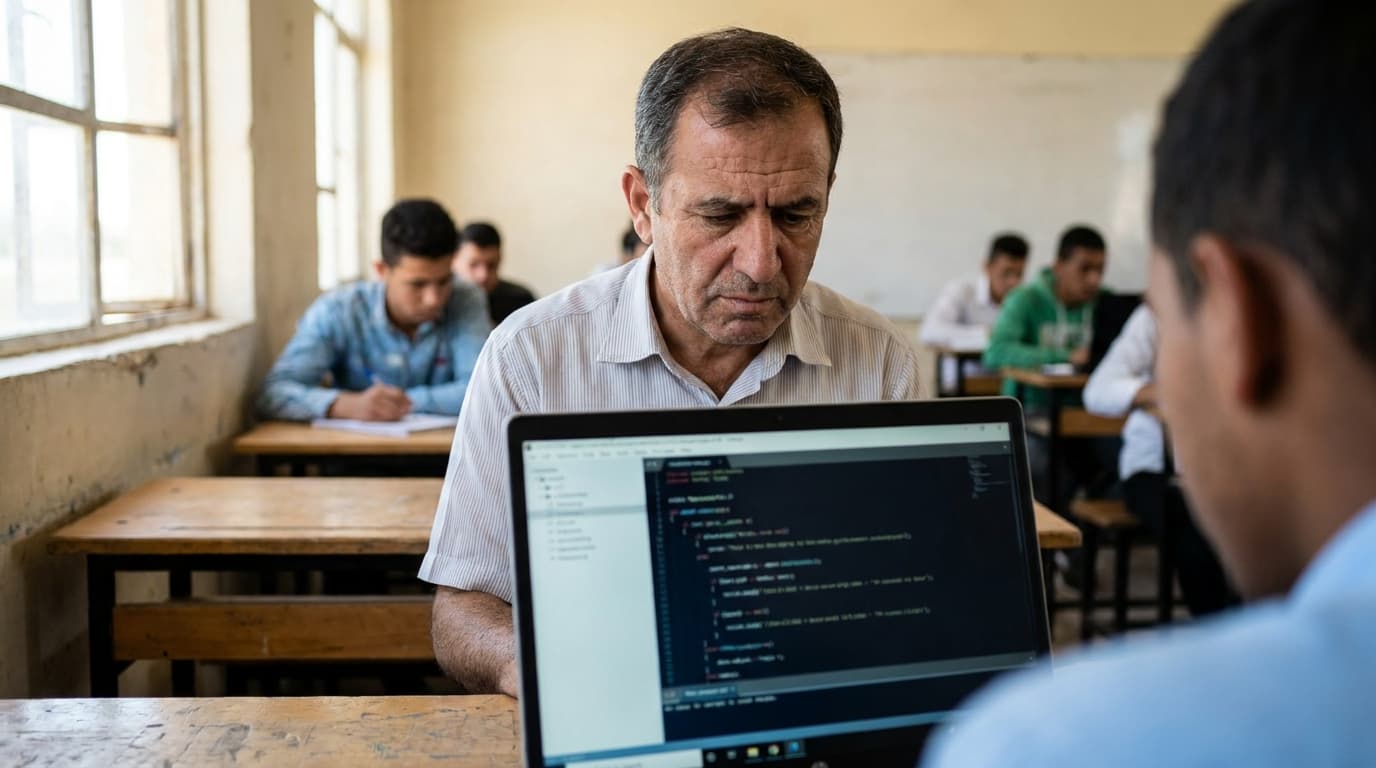
TL;DR: An Australian student videogame competition has been canceled permanently. Organizers can no longer reliably distinguish human-created work from AI-generated content, making fair evaluation impossible and raising questions for technical assessments everywhere.
Key facts
- Category
- AI
- Impact
- High
- Published
- Source
- Slashdot
Full summary
A national student coding competition is shutting down because judges can no longer tell if entries are made by humans or AI.
A prominent national competition for students in Australia is shutting down, citing the rise of generative AI as the primary reason. PC Gamer reports that the Australian STEM Videogame Challenge, an annual event encouraging students to develop their own games, will hold its final competition this year. The organizers concluded that they could no longer fairly and accurately judge submissions. According to speculation from judges involved in the program, the core issue is the inability to distinguish between work created by students and assets or code generated by AI tools. This decision marks one of the first high-profile instances of an educational program being canceled not because of funding or interest, but because technology has fundamentally broken its evaluation model.
The underlying problem is not simply the use of AI tools, but the sophistication and seamless integration of their output. Generative AI can now produce functional code, intricate 2D and 3D art, music, and narrative text that is difficult to trace back to a specific prompt or model. For a competition designed to assess a student's grasp of science, technology, engineering, and math principles through game development, this presents an insurmountable hurdle. Judges can no longer be certain if a clever game mechanic was the result of a student's problem-solving skills or a well-phrased query to a large language model. The challenge moves beyond simple plagiarism detection into a deeper crisis of attribution, making it impossible to measure the human skill the competition was created to foster.
This event serves as a critical warning for the entire technology industry, particularly in areas of education, training, and recruitment. For years, companies have relied on take-home coding challenges, portfolio reviews, and other unsupervised assessments to screen engineering and design candidates. The cancellation of the STEM Challenge demonstrates that these methods are now highly vulnerable to being gamed by AI. It highlights a growing gap between traditional evaluation techniques and the reality of modern, AI-assisted workflows. This is not a future problem; it is actively happening now, forcing a widespread re-evaluation of how we define and measure technical proficiency and originality in a world saturated with generative tools.
For founders, CTOs, and hiring managers, the immediate takeaway is the need to adapt assessment strategies. The focus must shift from evaluating the final product to understanding the creator's process and reasoning. This likely means a move away from asynchronous, take-home assignments and toward more interactive, synchronous evaluations. Live coding sessions, system design discussions, and in-depth portfolio walkthroughs where candidates must explain their choices and debug problems in real time will become more critical. The key is to test for skills that AI cannot easily replicate: critical thinking, architectural trade-off analysis, and collaborative problem-solving. This incident is a clear signal that proving human expertise now requires proving the human thought process behind the work.
Why it matters
This cancellation is a critical signal for technical leaders. It shows generative AI is already undermining traditional methods of evaluating skills, from student contests to technical interviews and take-home assignments. The ability to verify authorship and originality is now a major challenge for the industry.
Business impact
Companies that rely on code challenges, design portfolios, or other practical tests to hire talent must now question their validity. The rise of AI-assisted work requires rethinking recruitment processes to avoid mis-hiring, which can lead to significant project delays and increased costs.
Tags
Related on Notifire
Related stories
Primary source: Slashdot