US Air Force Wants AI to Manage Its Aging Nukes
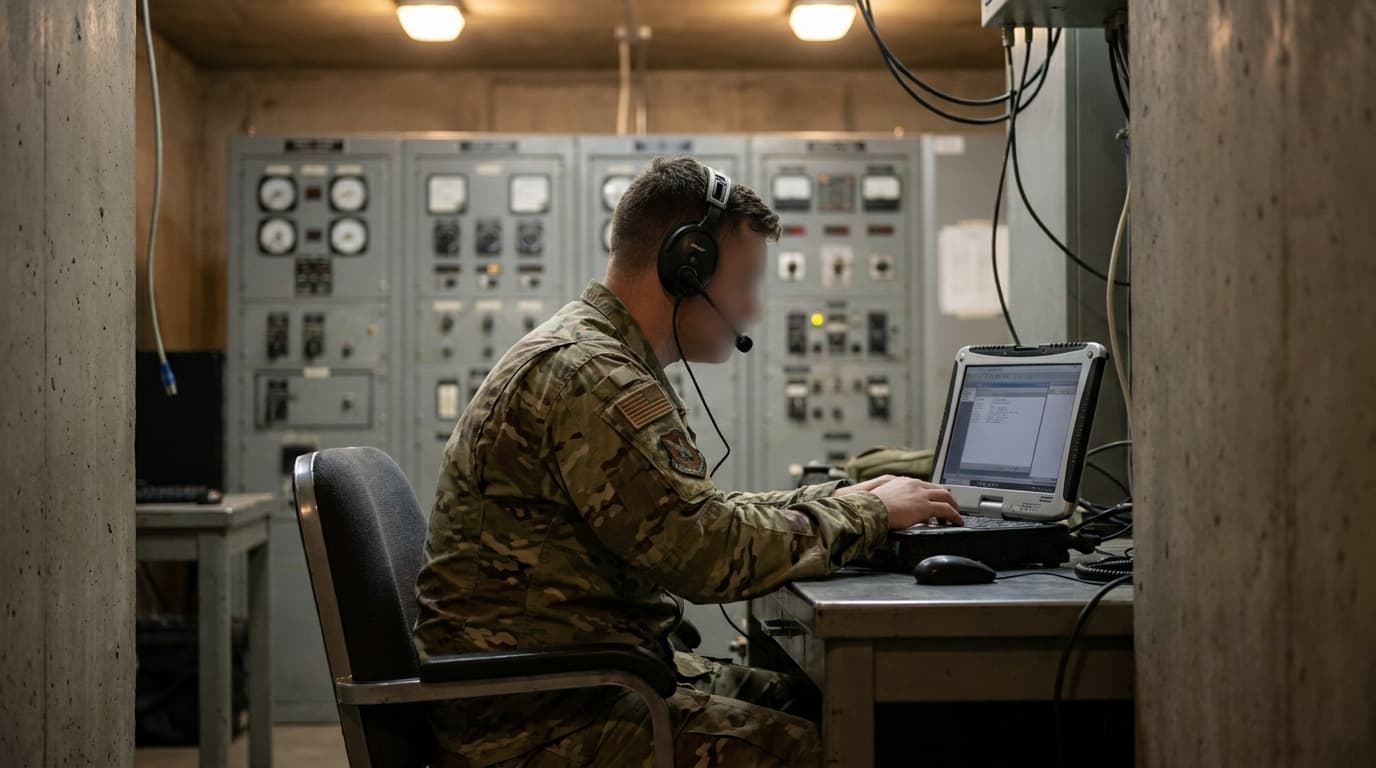
TL;DR: The US Air Force is seeking an AI agent to unify fragmented data for its aging Minuteman III nuclear missiles. The goal is to create a single interface to manage critical information currently scattered across dozens of legacy systems.
Key facts
- Category
- AI
- Impact
- High
- Published
- Source
- TechRadar
Full summary
The US Air Force is looking for an AI agent to centralize the fragmented data behind its aging Minuteman III nuclear missile fleet.
The US Air Force is seeking an artificial intelligence solution to manage its aging fleet of Minuteman III intercontinental ballistic missiles (ICBMs), as reported by TechRadar. The core problem is that critical data for the nuclear arsenal—spanning maintenance, logistics, and operational readiness—is fragmented across dozens of separate, often outdated systems. This data fragmentation makes it incredibly difficult to get a clear, unified view of the fleet's health and sustainment needs. The Air Force's goal is to use an AI-powered agent to create a single, centralized interface, allowing operators to query and analyze information efficiently. This initiative is part of a broader effort to extend the life of the Minuteman III, which first came online in 1970, potentially keeping it in service for decades beyond its originally planned retirement.
The proposed AI system is not a replacement for the underlying legacy infrastructure but rather an intelligent abstraction layer built on top of it. The technical challenge is immense, requiring the AI to ingest data from a wide variety of sources and formats, some of which may be unstructured or stored in archaic databases. The agent would need to normalize this disparate data, creating a coherent and unified model of the entire missile system. This involves sophisticated data engineering to build pipelines from legacy systems and advanced analytical capabilities to provide actionable insights. The end product would be a single pane of glass where personnel can ask complex questions about the fleet and receive consolidated, reliable answers, drastically simplifying a process that is currently manual and time-consuming.
For technology and security leaders, this project is a powerful case study in managing technical debt within a mission-critical environment. It demonstrates that even the nation's most sensitive defense systems are not immune to the problems of data silos and aging infrastructure. The turn to AI highlights a practical, high-stakes application focused on data integration and operational intelligence rather than generative content. For cybersecurity teams, the project presents a monumental challenge. Centralizing access to data about the nuclear arsenal creates an extraordinarily high-value target for nation-state adversaries. Securing this new AI interface will require state-of-the-art security protocols, potentially including air-gapped deployments and rigorous access controls, to prevent catastrophic breaches.
The initiative signals a significant business and industry trend: the use of modern AI to solve complex operational problems in government and defense. This creates a substantial market for defense contractors and specialized AI companies capable of navigating the unique security and reliability requirements of military systems. The project's success could serve as a blueprint for modernizing other pieces of critical national infrastructure, from power grids to financial networks, that face similar issues with data fragmentation. The key takeaway for businesses is the growing demand for solutions that can bridge the gap between legacy systems and the capabilities of modern data analytics, especially in highly regulated or secure sectors.
Looking ahead, this project will be a key indicator of how the US military adopts AI for its most sensitive operations. Its progress will be closely watched, as it will likely influence future defense spending and strategy on technology modernization. The initiative also touches on broader questions about the role of AI in the nuclear command and control chain. While this application is focused on logistics and maintenance, its proximity to strategic weapons systems will inevitably fuel discussions about the future integration of autonomous technology in national defense, balancing the promise of efficiency with the imperative of human control and absolute security.
Why it matters
This project highlights the immense challenge of modernizing critical legacy systems. For technical and security leaders, it's a case study in using AI for data integration in a high-stakes, high-security environment where failure is not an option.
Business impact
This initiative signals a massive opportunity for defense contractors and specialized AI firms. It demonstrates a clear government appetite for using AI to solve complex operational problems, setting a precedent for modernizing other critical national infrastructure.
Tags
Related on Notifire
Related stories
Primary source: TechRadar