Waymo Data Shows Its AI Is a Safer Driver
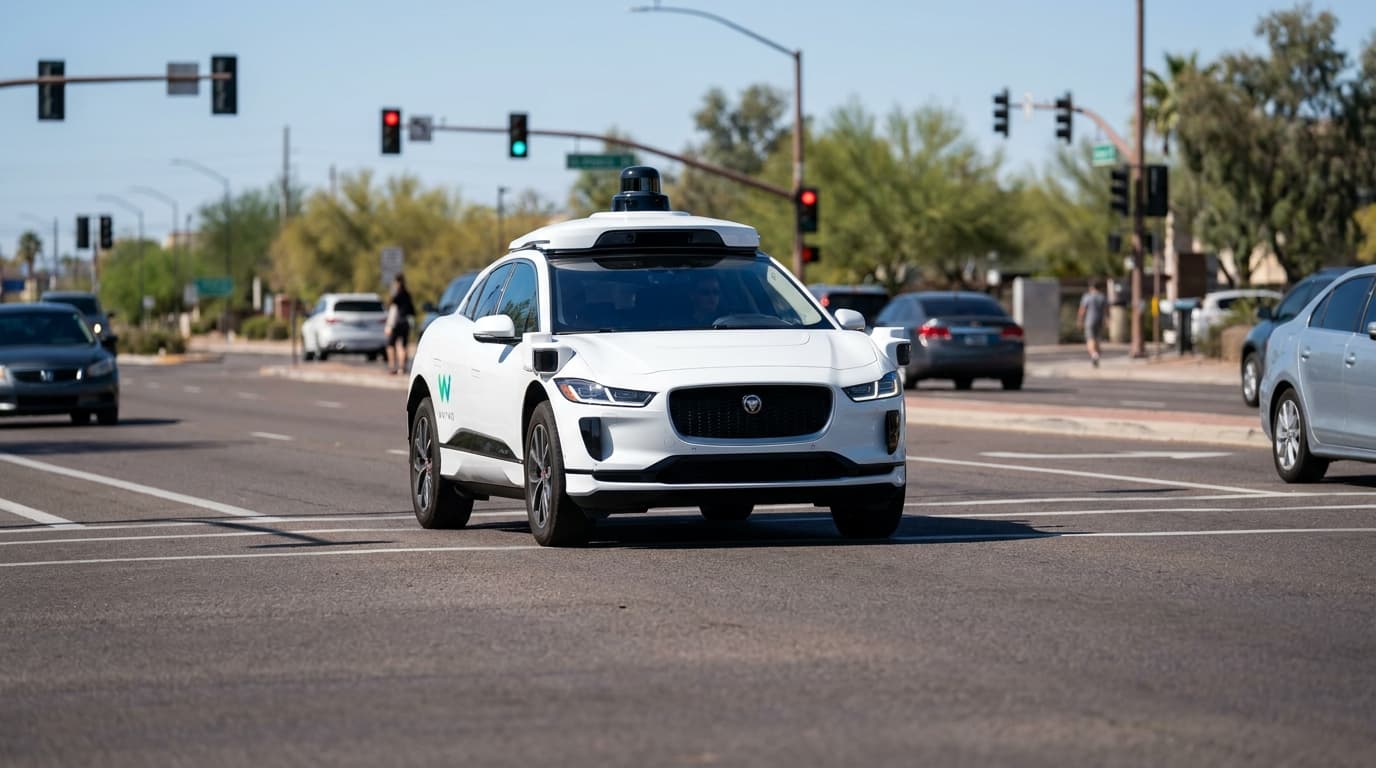
TL;DR: Waymo released data showing its autonomous vehicles have fewer injury-causing crashes than human drivers. This provides a major safety benchmark for the AI and robotics industry as regulators consider the future of driverless cars.
Key facts
- Category
- AI
- Impact
- High
- Published
- Source
- The Verge
Full summary
Waymo's latest data shows its driverless cars are involved in significantly fewer injury-causing crashes compared to human-driven vehicles in the same areas.
Waymo has released a new report detailing the safety performance of its autonomous vehicle fleet. Citing reporting from The Verge, the data covers millions of driverless miles and continues to support Waymo's claim that its AI-powered vehicles are safer than human drivers. The company's analysis focuses on comparing its crash rates, particularly those involving injuries, to human-driven vehicles in the same operational areas. This release comes as the autonomous vehicle industry faces intense scrutiny from regulators and the public, making verifiable safety data a critical asset for companies seeking to expand their services. Waymo is strategically using these metrics to build confidence and advocate for favorable policies, positioning its technology as a solution to human error on the road.
The core of Waymo's argument rests on a comparative analysis of police-reported and injury-causing crash rates. The company doesn't just track its own incidents; it creates a baseline by analyzing crash data from human drivers in its specific operating locations, such as Phoenix and San Francisco. This methodology aims to provide an apples-to-apples comparison, accounting for unique local driving conditions. The AI system, known as the Waymo Driver, processes a constant stream of data from a suite of sensors including lidar, radar, and cameras. This allows it to build a 360-degree view of its environment and predict the behavior of other road users. The system's ability to react faster and more consistently than a human, without distraction or impairment, is the fundamental technical advantage that underpins these safety statistics.
This data release is not happening in a vacuum. The autonomous vehicle industry is at a critical juncture, recovering from high-profile incidents and setbacks, such as the challenges faced by GM's Cruise. Public perception and regulatory trust are paramount. Waymo's consistent, data-driven approach to safety reporting contrasts with the strategies of some competitors, like Tesla, which have faced criticism over the marketing and capabilities of their driver-assist systems. By publishing its findings, Waymo is attempting to set an industry standard for transparency and establish itself as the leader in safe, scalable autonomous technology. This move also puts pressure on other companies to release similarly detailed performance data, potentially leading to more standardized safety benchmarks across the industry.
For CTOs and engineering leaders, this data serves as a powerful case study in deploying safety-critical AI systems at scale. It highlights the importance of rigorous, comparative data analysis and transparent reporting in building trust for complex technologies. The key takeaway is that achieving better-than-human performance is not just a theoretical goal but a measurable reality, albeit in controlled operational domains. However, the report also faces some criticism. Experts point out that the data doesn't fully capture non-crash events, such as unexpected stops or traffic disruptions, which can still impact public trust and traffic flow. Looking ahead, the industry will be watching how regulators respond to this data and whether it accelerates the approval process for wider commercial deployments. The next challenge for Waymo will be to maintain this safety record as it expands into more complex weather and urban environments.
Why it matters
This data provides a crucial, large-scale benchmark for the performance of autonomous driving systems in the real world. For developers and CTOs in AI and robotics, it validates the potential of complex AI systems to outperform humans in safety-critical tasks, influencing future investment and development priorities.
Business impact
Waymo's positive safety metrics strengthen its case for regulatory approval and commercial expansion, putting pressure on competitors like Cruise and Tesla. For businesses in logistics and transportation, this data accelerates the timeline for adopting autonomous vehicle technology, promising long-term operational cost reductions.
Tags
Related on Notifire
Related stories
Primary source: The Verge