Why AI Is No Silver Bullet for Climate Science
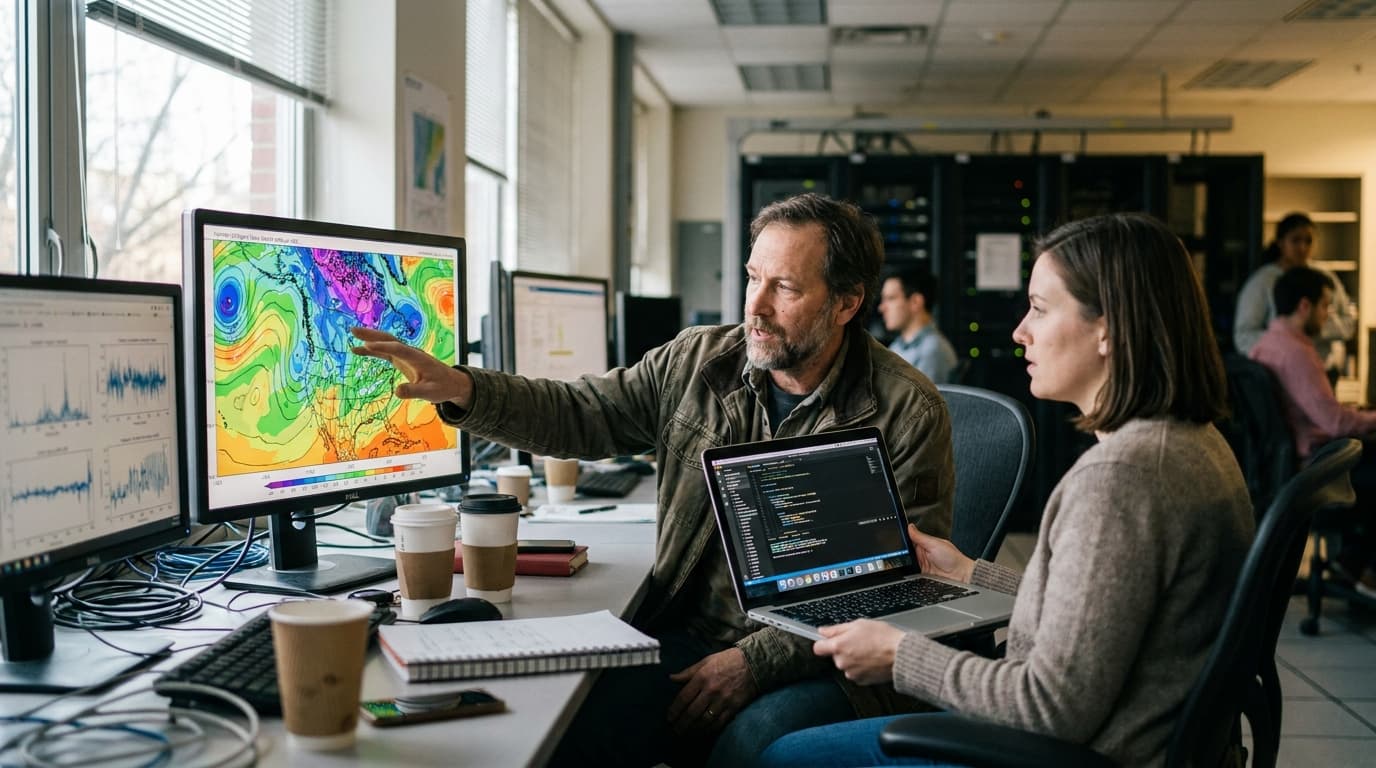
TL;DR: Despite the hype, AI is not revolutionizing weather and climate science. Experts say it's a useful tool for specific tasks, but its limitations mean it's far from replacing traditional, physics-based models for now.
Key facts
- Category
- AI
- Impact
- Medium
- Published
- Source
- Ars Technica
Full summary
Experts argue AI is a helpful tool for weather science, but it's not the revolutionary breakthrough many believe it to be.
Artificial intelligence is increasingly applied to weather and climate science, with many hailing it as a revolutionary leap. Tech companies are developing AI models that process vast datasets to predict weather patterns, often faster than traditional methods. However, experts in the field are pushing back against this narrative. They argue that while AI shows promise, it is not a silver bullet and the "revolution" is overstated. Critics point out that current AI models are powerful for specific tasks but cannot yet replace the complex, physics-based systems developed over decades. The progress is real but more incremental than the hype suggests.
This reality check is critical for tech leaders and developers. The gap between AI's potential and its practical application in complex domains like climate science is a cautionary tale. For businesses building AI solutions, it highlights the danger of underestimating the need for deep domain expertise. AI models trained on historical data can struggle to predict extreme or unprecedented events because they lack a fundamental understanding of the underlying physics. Relying solely on these models without integrating them with established scientific knowledge can lead to unreliable outcomes. This underscores the importance of a hybrid approach, where AI assists experts and complements traditional modeling, rather than replacing them.
Looking ahead, the most promising path involves careful integration. The future lies in hybrid systems where AI's pattern-recognition ability is combined with the rigor of physics-based simulations. For developers and CTOs, this means focusing on building tools that augment expert workflows and solve specific problems within existing scientific frameworks. The key takeaway is to approach AI implementation with healthy skepticism and a focus on creating tangible, supplementary value rather than chasing a complete technological revolution. This pragmatic perspective is essential for building sustainable and trustworthy AI products.
Related on Notifire
Related stories
Primary source: Ars Technica