Your Storage Is the Next AI Bottleneck
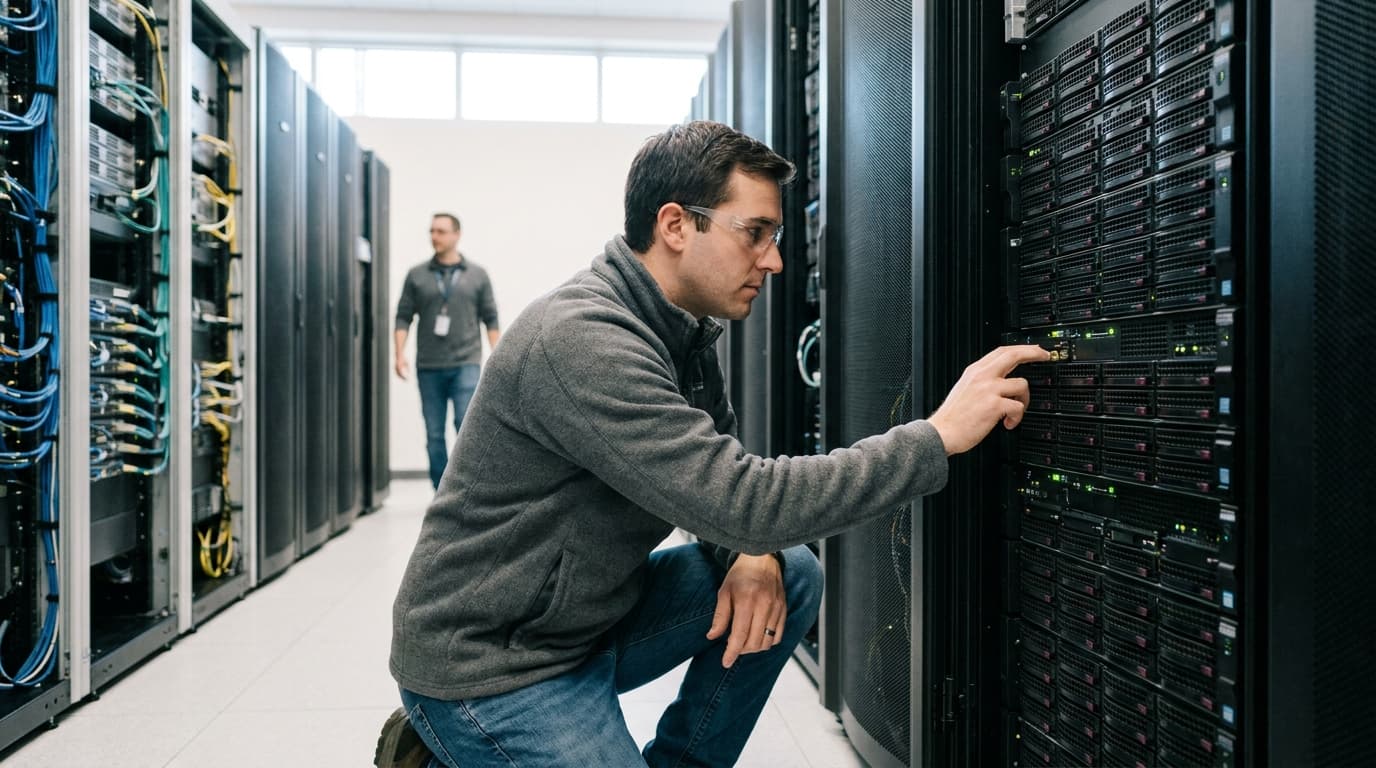
TL;DR: AI's huge data demands are turning storage into an active part of the tech stack, not just a place to keep files. This architectural shift is now a critical factor for AI performance, cost, and data strategy.
Key facts
- Category
- AI
- Impact
- High
- Published
- Source
- TechRadar
Full summary
The intense data demands of AI are transforming storage from a passive box into an active, critical component of the modern tech stack.
While GPUs and high-speed networking dominate conversations about artificial intelligence infrastructure, a quiet but critical transformation is happening in data storage. According to analysis from TechRadar, the massive data requirements of modern AI are forcing a fundamental reinvention of primary storage. For decades, storage was treated as a passive repository—a place to simply keep information until it was needed. AI workloads, however, require constant, high-speed access to enormous datasets for training, inference, and retrieval-augmented generation (RAG). This intense demand is elevating storage from a simple commodity to an active, intelligent, and performance-critical component of the entire AI stack, changing how companies must design and invest in their core infrastructure.
The core architectural shift is a move away from traditional, monolithic storage systems toward models inspired by cloud-native design. Legacy systems like Storage Area Networks (SANs) and Network-Attached Storage (NAS) were built for more predictable workloads and can struggle to feed data to thousands of parallel GPU cores at once. The new approach disaggregates storage from compute, allowing each to scale independently. It relies on high-performance, distributed systems like parallel filesystems and advanced object storage that can deliver massive throughput with very low latency. This is more than just using faster flash drives; it is a complete rethinking of how data is organized, accessed, and moved across a network. The goal is to create an intelligent data pipeline that can stage, prepare, and stream information to hungry AI models without delay.
For CTOs, infrastructure teams, and data scientists, this transformation is not just a technical detail—it is a crucial factor for success. A storage system that cannot keep pace with the compute layer becomes a severe bottleneck, leaving expensive GPU clusters idle while they wait for data. This directly undermines the return on investment for multi-million dollar AI hardware deployments and can dramatically slow down model development. Training times can extend from days to weeks, and the latency added to real-time inference applications can render them unusable. This forces a change in perspective: leaders can no longer evaluate storage on a simple cost-per-terabyte basis. The more relevant metric is how effectively the storage system enables the entire AI workflow and maximizes the utilization of costly compute resources.
The business implications are profound. Companies that recognize and adapt to this shift will gain a significant competitive advantage. An optimized AI storage strategy enables organizations to train more sophisticated models faster, accelerate the pace of innovation, and operate AI services more cost-effectively. The practical takeaway for business and technology leaders is to treat storage as a strategic investment rather than a background utility. This requires moving beyond retrofitting legacy systems and instead evaluating modern storage platforms designed specifically for the unique I/O patterns of AI. The key question to ask is no longer "how much data can we store?" but rather "can our storage saturate our GPUs with data at scale?"
Looking ahead, the evolution of AI storage is toward even greater intelligence and integration. The next generation of storage platforms will be "data-aware," with built-in capabilities to understand AI data formats, manage data lineage, and automatically optimize data placement for different stages of the machine learning lifecycle. We can also expect to see a tighter convergence of storage, networking, and compute fabrics, creating a more cohesive and efficient system architecture. This ongoing development solidifies storage's new role not as a passive digital filing cabinet, but as an active and indispensable partner in the process of creating and deploying artificial intelligence.
Related on Notifire
Related stories
Primary source: TechRadar