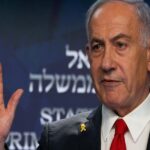
US President Joe Biden has confirmed Israel’s right to respond to Tuesday’s Iranian missile attack, while the Israeli Cabinet has postponed its retaliation to align with Washington’s strategy.
Source: Business Standard

US President Joe Biden said on Wednesday that he is against Israel launching strikes on Iran’s nuclear sites in response to the recent ballistic missile attack from Iran, according to the Times of Israel. While Biden agreed that Israel has the right to respond, he stressed that the response should be “proportional.”
Biden also confirmed that sanctions will be imposed on Iran and mentioned that this was a key topic during a call with the G7 leaders earlier on Wednesday. “We’ll discuss with the Israelis what actions they’ll take, but all seven of us agree that they have the right to respond, but it should be a proportional response,” Biden told reporters before boarding Air Force One.
Israel is reportedly considering targeting Iran’s nuclear or oil facilities in retaliation for the missile attack, in which nearly 200 ballistic missiles were fired at Israel.
The attack forced much of Israel to take cover in bomb shelters, causing significant damage across the country. Despite the severity of the assault, only one death was reported—a Palestinian man in the West Bank.
Following the missile strike, Israeli Prime Minister Benjamin Netanyahu stated that Iran had made “a big mistake” and vowed that they would “pay the price.”
In Washington, President Biden reiterated his stance, urging Israel to respond “proportionally.” When asked directly if he supported an Israeli strike on Iran’s nuclear facilities, Biden firmly responded, “The answer is no.”
Following the Iranian missile attack, the Israeli Cabinet held a meeting on Tuesday evening and decided to respond with force. However, they chose to first coordinate with Washington, as reported by local media. Israel’s Kan public broadcaster noted that diplomatic sources suggested the response would avoid escalating into a regional war, considering the upcoming US presidential election as a key factor in the decision-making process.
Following the G7 meeting, the White House confirmed that President Biden coordinated the multilateral imposition of new sanctions on Iran, with the G7 nations “unequivocally condemning” Iran’s missile attack.
Meanwhile, The Times of Israel reported that Israel Defense Forces (IDF) Chief of Staff, Lt. Gen. Herzi Halevi, declared on Wednesday that Israel would respond to the attack. He emphasized that the Israeli military is fully capable of “reaching and striking any point in the Middle East.” Halevi asserted, “We will respond; we know how to identify key targets and strike them with precision and force.”
In the US, Deputy Secretary of State Kurt Campbell noted that the Biden administration seeks to align with Israel on any response to Iran’s missile attack, while also cautioning that the Middle East is on a “knife’s edge.” He warned that a broader escalation could threaten both Israeli and American interests.
Speaking at a virtual event hosted by the Carnegie Endowment, Campbell emphasized that Iran’s actions required a firm “return message.”
Echoing this sentiment, US Ambassador to the United Nations Linda Thomas-Greenfield, during a UN Security Council briefing, warned, “The Iranian regime will be held accountable for its actions,” and cautioned Iran and its proxies against taking further steps against the US or Israel.
On Tuesday, US National Security Adviser Jake Sullivan warned Iran of “severe consequences” for its missile attack on Israel, stating that the US would coordinate closely with Israel to ensure this, although specific details were not provided.

At an emergency UN Security Council meeting on Wednesday, Israeli UN Ambassador Danny Danon declared that “the time for empty calls for de-escalation is over,” emphasizing that Iran poses a “very real and present danger” to global security. He warned that the next wave of Iranian missiles might not be directed solely at Israel if action isn’t taken.
In response, Iranian Ambassador Amir Saeid Iravani justified Iran’s missile attack as a necessary move to “restore balance” after Israeli strikes targeting Iran’s regional allies. He claimed that Iran’s restraint had emboldened Israel to commit more acts of aggression.
Iran stated that the missile strike was retaliation for the recent deaths of key figures such as Hezbollah leader Hassan Nasrallah and Iranian General Abbas Nilforoushan, both killed in Israeli airstrikes.
Meanwhile, Russia’s UN envoy Vassily Nebenzia praised Iran’s restraint and suggested that Tuesday’s attack could not be viewed in isolation from the broader conflict.
The attack, which caused some damage in Israel, resulted in the death of a Palestinian man and injuries to two Israelis. However, the IDF downplayed the strike, noting that the damage to its airbases was minimal and “ineffective.”
During a press conference in Qatar on Wednesday, Iranian President Masoud Pezeshkian stated that Tehran is “not seeking war” but warned of a stronger response if Israel retaliates for the missile attack.
Iran conducted its first direct attack on Israel during the night of April 13-14, launching over 300 drones and missiles, most of which were intercepted by Israel and its allies, particularly the US. This attack was in response to an alleged Israeli airstrike on an Iranian diplomatic facility in Damascus on April 1.
Shiite militias within Iran’s “Axis of Resistance” have also launched attacks on Israel from Iraq and Yemen, alongside Hezbollah in Lebanon. These assaults intensified after the conflict in Gaza escalated when Hamas-led militants attacked southern Israel on October 7, resulting in nearly 1,200 deaths and 251 hostages taken. Hamas, a Sunni Palestinian militant group, is part of the Axis of Resistance.
Amid fears of a wider regional conflict, the situation in Gaza remains dire. Nearly a year of Israeli airstrikes has led to over 41,500 deaths, nearly 100,000 injuries, and thousands still missing under the rubble of destroyed buildings.
Follow us for more