As part of the SBS III initiative, the Modi government aims to enhance land and maritime domain awareness for both military and civilian applications.
Source: Hindustan Times
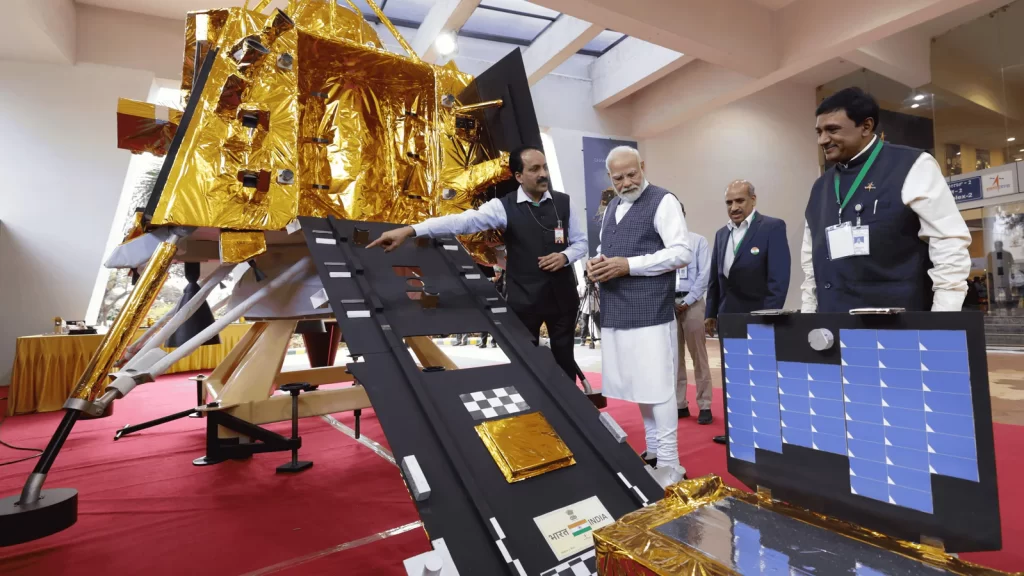
New Delhi: The Cabinet Committee on Security (CCS), led by Prime Minister Narendra Modi, has given the green light to Phase III of the Space Based Surveillance (SBS) mission. This phase aims to enhance land and maritime domain awareness for both civilian and military purposes. The project is being managed collaboratively by the National Security Council Secretariat and the Defence Space Agency under the integrated headquarters of the Defence Ministry.
Although the Modi government has not officially commented on the approval, sources indicate that the CCS has cleared a proposal involving the launch of at least 52 surveillance satellites in low Earth and geostationary orbits. With a budget of ₹26,968 crore, the project includes the construction and launch of 21 satellites by ISRO, while the remaining 31 will be developed and launched by private companies.

SBS 1, initiated by the Vajpayee government in 2001, saw the launch of four surveillance satellites: Cartosat 2A, Cartosat 2B, Eros B, and Risat 2. This was followed by SBS 2 in 2013, which added six more satellites, including Cartosat 2C, Cartosat 2D, Cartosat 3A, Cartosat 3B, Microsat 1, and Risat 2A. With the approval of SBS 3, India is set to launch 52 satellites over the next decade. According to HT sources, each of the three armed services will have dedicated satellites for their respective land, sea, or air-based missions.
In January, the Modi government signed a letter of intent with France for the joint construction and launch of military satellites. This collaboration aims to bolster India’s capabilities to detect enemy submarines in the Indo-Pacific region and monitor infrastructure developments by its adversaries along its land and sea borders.
The SBS 3 mission will also benefit from India’s acquisition of 31 Predator drones from US-based General Atomics, which offer powerful surveillance capabilities in addition to their advanced weapons systems. India previously demonstrated its anti-satellite capabilities on March 29, 2019, by successfully test-firing a missile that destroyed a live satellite in orbit.
Follow us for more