AI Requires A New Data Layer
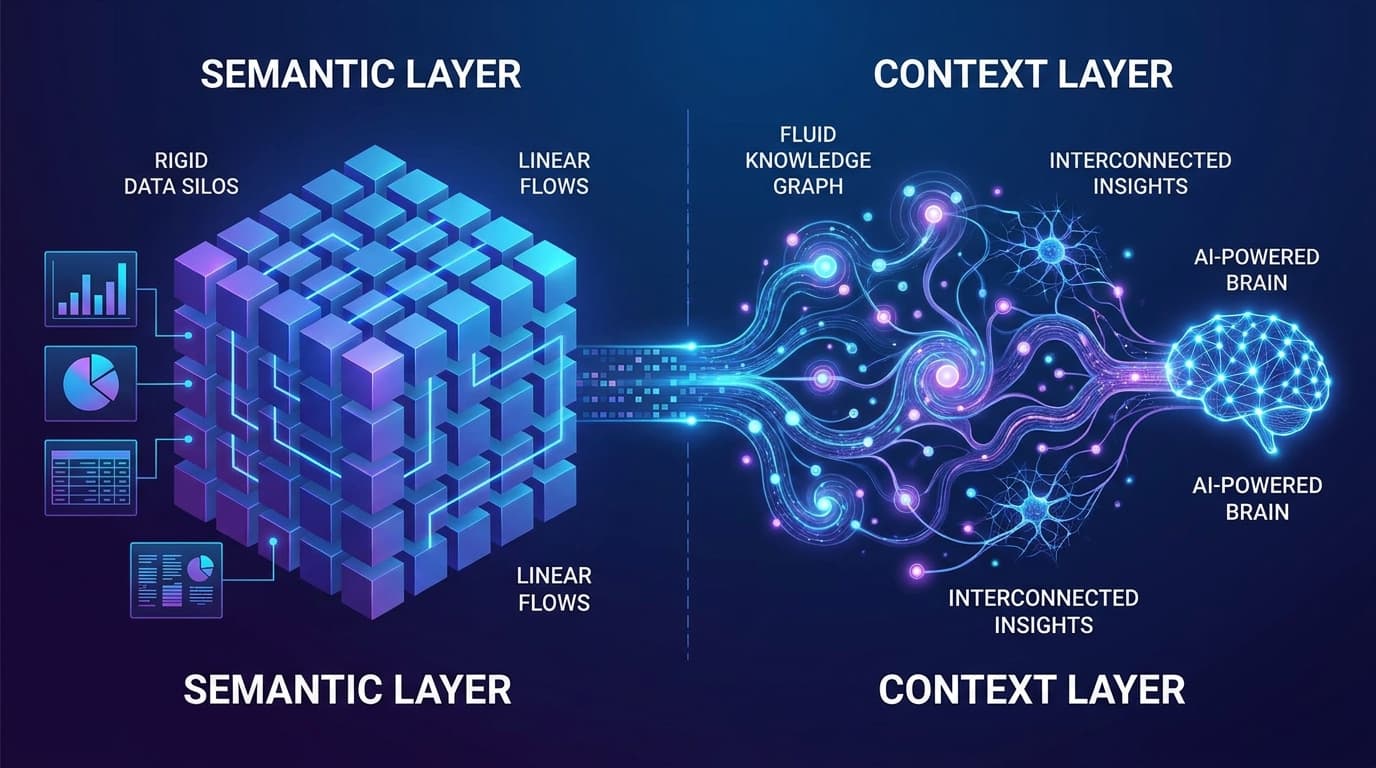
TL;DR: Traditional BI semantic layers standardize business metrics for reports and dashboards. However, to ground AI models effectively, a new 'context layer' is needed. This layer provides deeper business context, relationships, and operational data, ensuring AI applications generate accurate and reliable insights.
Key facts
- Category
- Database
- Impact
- High
- Published
- Source
- Redis Blog
Full summary
The semantic layers that power your BI dashboards are not enough to ground AI models. A new 'context layer' is becoming essential.
For years, business intelligence (BI) has relied on the semantic layer to create a single source of truth. This layer standardizes definitions for key metrics like "revenue" or "customer acquisition cost," ensuring everyone from analysts to executives sees the same numbers on dashboards and reports. While effective for human interpretation, this model is proving insufficient for artificial intelligence. AI models require more than just static definitions; they need to understand the intricate relationships, hierarchies, and business logic that connect different data points. This gap has led to the emergence of the "context layer," a new architectural component designed specifically to feed AI models the rich, structured information they need to function correctly.
The shift from a semantic layer to a context layer is critical for any organization building AI-powered products. Without this deeper context, AI applications are more likely to generate inaccurate or nonsensical results, a phenomenon often called hallucination. A context layer grounds the AI in the specific reality of the business, providing it with the necessary information to answer complex questions and perform tasks reliably. For CTOs and data teams, this means evolving their data strategy from simply modeling metrics for reporting to modeling the entire business ecosystem for AI consumption. This ensures that AI-driven insights are not just plausible, but accurate and actionable.
Why it matters
Without a 'context layer' to ground AI models in business reality, AI-powered applications are more prone to generating inaccurate or nonsensical answers. This architectural shift is crucial for building reliable and trustworthy AI products.
Business impact
Implementing a context layer enables businesses to build more accurate and reliable AI-powered features. It reduces the risk of costly errors from AI 'hallucinations' and allows companies to leverage proprietary data to create a competitive advantage through smarter, context-aware AI applications.
Tags
Related on Notifire
Related stories
Primary source: Redis Blog