Making the Perfect Espresso with a Modern Data Stack
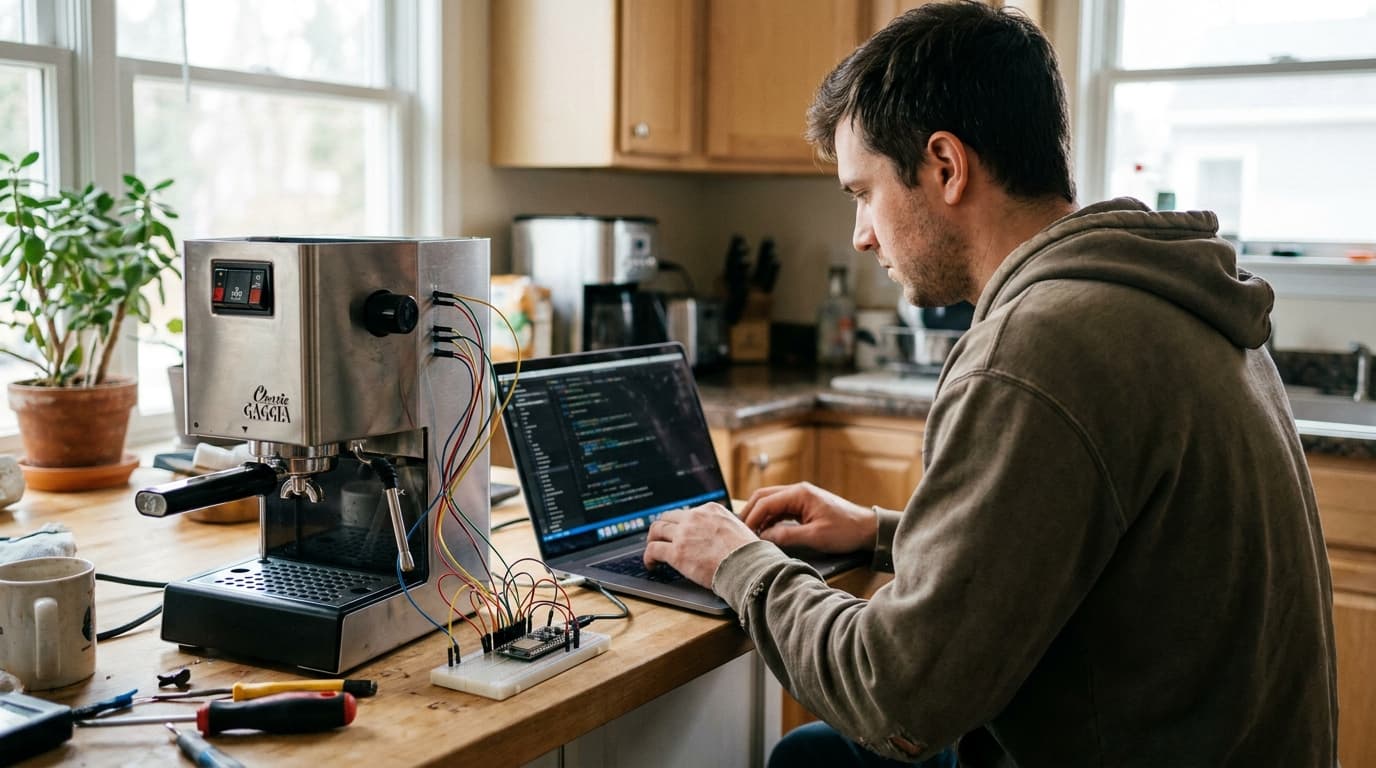
TL;DR: A developer treated an espresso machine like a distributed system, using OpenTelemetry and ClickHouse to analyze every shot. The project is a creative case study on applying observability principles to real-world, unconventional systems.
Key facts
- Category
- Database
- Impact
- High
- Published
- Source
- ClickHouse Blog
Full summary
A developer instrumented an espresso machine with OpenTelemetry, streaming shot data into ClickHouse to be queried by an LLM agent.
In a creative project highlighted by the ClickHouse Blog, an engineer transformed a standard Gaggia espresso machine into a fully instrumented, data-streaming device. By equipping the machine with an ESP32 microcontroller and various sensors, the developer set out to treat the daily ritual of making coffee as if it were a complex, distributed software system. The goal was to capture detailed telemetry for every single espresso shot, including data points like water temperature, pressure, and duration. This raw sensor data was then streamed in real-time directly into ClickHouse Cloud, a high-performance analytical database. The project effectively turned a common kitchen appliance into a source of rich, queryable data, demonstrating a practical application of Internet of Things (IoT) principles in an everyday context. This novel approach provides a tangible example of how modern data tools can be used to monitor and understand the performance of physical systems, not just digital ones.
The technical architecture behind the project combines several modern technologies into a cohesive data pipeline. At the heart of the system is the ESP32 microcontroller, which acts as the edge device collecting sensor readings. The most innovative aspect is the use of OpenTelemetry, an open-source observability framework typically used for monitoring microservices and cloud-native applications. Here, it was adapted to treat each step of the coffee-making process—like grinding beans or pulling a shot—as a “span” within a larger “trace.” This structured the messy, analog process of making coffee into clean, machine-readable events. These telemetry signals were then sent to ClickHouse Cloud. Because ClickHouse is a column-oriented database optimized for time-series data and fast analytical queries, it was perfectly suited for storing and analyzing the high-volume sensor streams from the machine. To complete the stack, the engineer implemented an LLM-powered agent, allowing them to ask natural language questions like, “What was the average shot time this week?” and receive immediate, data-backed answers.
This experiment is significant because it demystifies the often abstract concepts of IoT and observability. For developers, engineers, and CTOs, it serves as a powerful and accessible case study on applying software monitoring principles to the physical world. It shows that powerful frameworks like OpenTelemetry are not limited to server environments but are flexible enough to instrument nearly any process or device. By using a relatable example like an espresso machine, the project makes the value of collecting high-resolution operational data immediately obvious. It provides a clear, practical blueprint for anyone looking to get started with hardware instrumentation, data streaming, and real-time analytics. This moves the conversation around observability from theoretical benefits to a hands-on demonstration of what’s possible with today’s open-source and cloud technologies.
The business implications of this approach extend far beyond the kitchen. The project provides a model for how companies in any industry can achieve low-cost, high-impact operational intelligence. By instrumenting physical assets—whether they are manufacturing robots, delivery vehicles, or agricultural sensors—organizations can gather the data needed to optimize performance, enable predictive maintenance, and improve quality control. This methodology, which combines affordable hardware with scalable cloud data platforms, democratizes access to sophisticated analytics that were once the exclusive domain of large corporations with massive budgets. Small and medium-sized businesses can now adopt similar strategies to turn their physical operations into a data-driven competitive advantage, identifying inefficiencies and opportunities that would otherwise remain hidden. It’s a template for building a real-time digital twin of physical business processes.
Ultimately, the instrumented espresso machine highlights a powerful convergence of several key technology trends: ubiquitous IoT sensors, edge computing, standardized observability, and accessible AI. This combination points toward a future where nearly any object or system can become a fully queryable data source. The integration of an LLM agent to interact with the data is particularly forward-looking. It signals a shift away from complex dashboards and specialized query languages toward natural, conversational interfaces for data exploration. This could empower non-technical stakeholders, from factory floor managers to business executives, to directly ask questions of their operational data. As these technologies continue to mature and become even more integrated, the ability to monitor, analyze, and interact with the physical world in real-time will become a fundamental driver of efficiency and innovation.
Why it matters
This project demonstrates how modern observability tools like OpenTelemetry can be applied beyond traditional software systems. It provides a practical, accessible blueprint for developers to instrument physical devices and turn real-world processes into queryable data streams, making complex IoT concepts tangible.
Business impact
The approach showcases a low-cost method for businesses to gain real-time operational intelligence from physical assets. By instrumenting equipment, companies in manufacturing, logistics, or agriculture can optimize performance, predict maintenance, and improve quality using standard cloud and open-source data tools.
Tags
Related on Notifire
Related stories
Primary source: ClickHouse Blog