Oracle Unlocks a Path Off Old IBM Mainframes
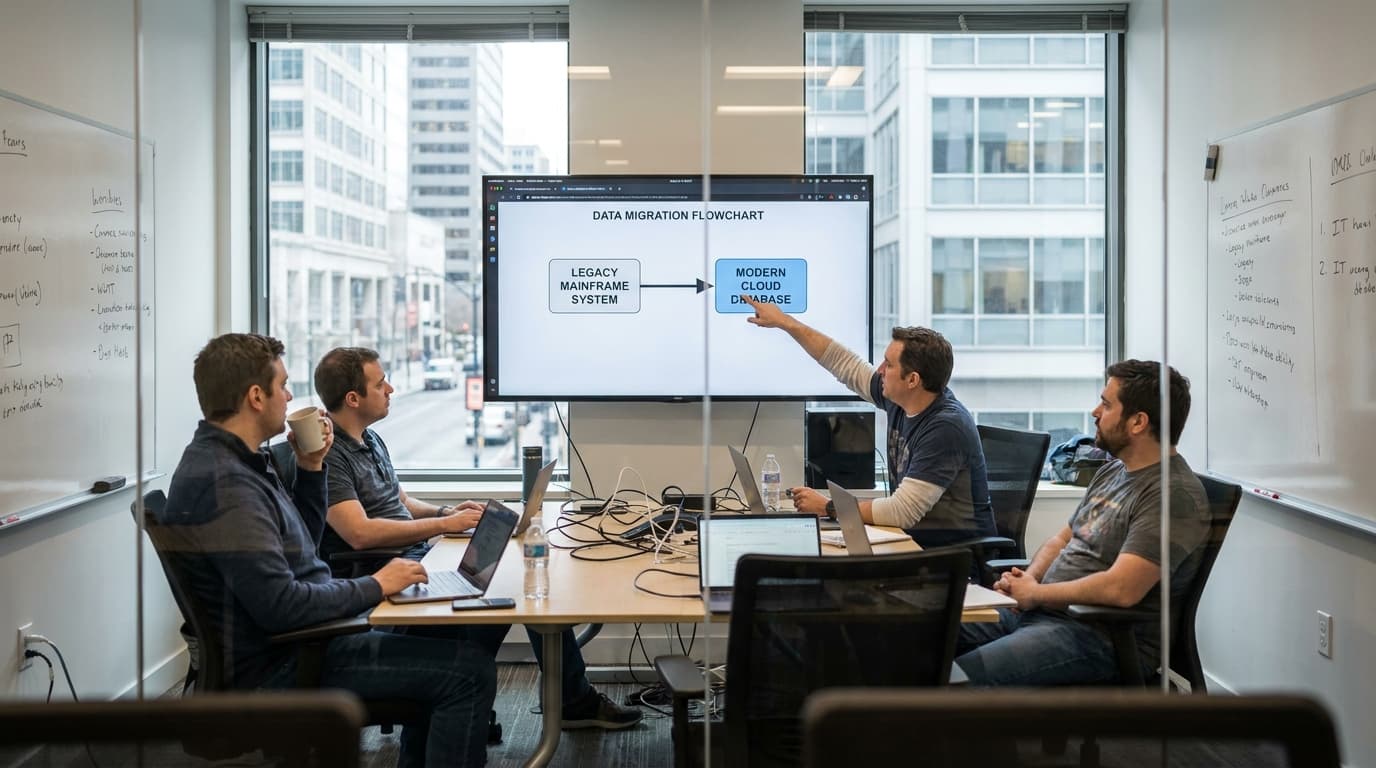
TL;DR: Oracle's AI Database now supports the EBCDIC character set used by IBM mainframes. This removes a major technical barrier, making it significantly easier for large enterprises to migrate their legacy applications to modern infrastructure.
Key facts
- Category
- Database
- Impact
- High
- Published
- Source
- CIO.com
Full summary
Oracle's database now supports the native character set of IBM mainframes, removing a huge roadblock for companies looking to modernize.
Oracle has introduced a critical new feature in its AI Database that directly addresses a decades-old challenge for large enterprises: migrating off IBM mainframes. According to a company announcement highlighted by CIO.com, the database now offers native compatibility with the EBCDIC character set. This seemingly technical update is a significant development for any organization with core business applications running on legacy mainframe systems. For years, the incompatibility between mainframe data formats and those of modern systems has been a primary source of risk, cost, and complexity in modernization projects, often preventing them from even getting started. By building a bridge at the database level, Oracle is aiming to simplify one of the most difficult steps in this high-stakes transition.
At the heart of the problem is a fundamental difference in how computers store and interpret text. IBM mainframes use a character encoding standard called EBCDIC (Extended Binary Coded Decimal Interchange Code), while virtually all modern computing systems use ASCII or its successor, Unicode. This is not just a minor difference; it’s like trying to read a book written in an entirely different alphabet. Without proper translation, migrating data from an EBCDIC system to an ASCII-based one results in widespread data corruption. Historically, solving this required building complex, custom data transformation pipelines that were expensive to develop, difficult to maintain, and introduced significant risk of error. Oracle’s new feature internalizes this translation process. By supporting EBCDIC natively, the database can ingest and correctly interpret mainframe data without the need for an external, error-prone conversion layer, streamlining the entire migration workflow.
This development matters most to Chief Technology Officers and IT leaders at large, established companies, particularly in finance, insurance, logistics, and government. These sectors often rely on mainframe applications for core transaction processing—systems that are highly reliable but also incredibly expensive to maintain and difficult to integrate with modern cloud services, analytics platforms, and AI tools. The high risk and cost associated with data conversion have kept many of these organizations locked into their legacy hardware, limiting their ability to innovate. Oracle's update directly lowers this migration risk, potentially turning previously shelved modernization projects into viable initiatives. It provides a clearer, more predictable path for moving critical workloads to a more flexible and cost-effective infrastructure, without the fear of crippling data integrity issues.
From a business perspective, this is a strategic move by Oracle to capture a valuable segment of the enterprise market. By solving a persistent and costly pain point, Oracle makes its database a much more compelling destination for high-value mainframe workloads, increasing its competitive advantage against other cloud database providers and specialized modernization firms. For businesses, the impact is a potential unlocking of significant value. Moving core applications off mainframes allows them to harness the scalability of the cloud, reduce operational overhead, and finally connect their most critical data to modern analytical and AI-driven tools. The practical takeaway for IT decision-makers is that the calculus for mainframe modernization has changed. Projects that were once deemed too risky or complex should be re-evaluated, as a major technical barrier has now been substantially lowered.
Why it matters
This update significantly de-risks and simplifies one of the most challenging aspects of IT modernization for large enterprises. Companies previously locked into expensive IBM mainframes due to data incompatibility now have a more direct path to the cloud.
Business impact
Oracle's move is a strategic play to capture high-value legacy workloads, putting pressure on competitors. For businesses, it unlocks the potential to modernize core systems, reduce operating costs, and leverage modern cloud and AI capabilities that were previously inaccessible.
Tags
Related on Notifire
Related stories
Primary source: CIO.com