The landscape of higher education in India has never been free from challenges, but recent developments between Delhi University (DU) and its affiliated St. Stephen’s College have brought these issues to the forefront. With a long-standing history of collaboration and conflict, the relationship between the two institutions is now marred by disputes over policy implementation, particularly regarding student admissions and university regulations.
The Current Situation: A Tussle for Control
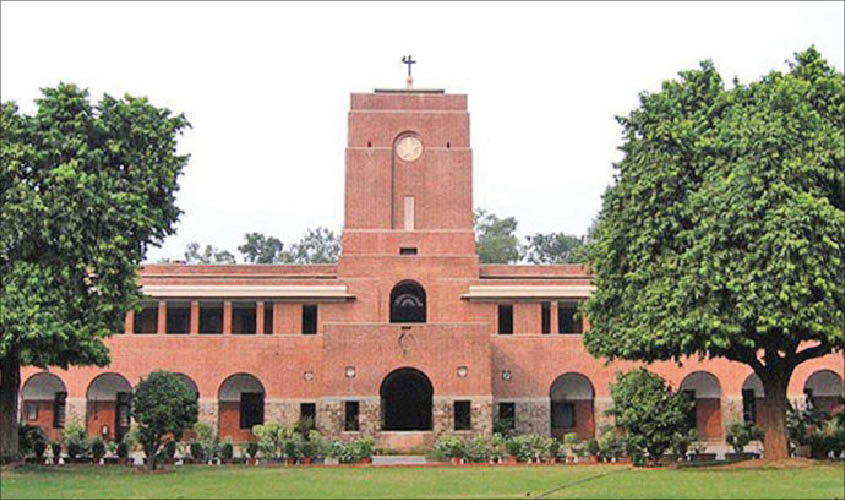
At the heart of this ongoing conflict is the appointment of a three-member panel by DU’s Vice-Chancellor, Yogesh Singh. This panel comprises Academic Council members tasked with communicating with St. Stephen’s College principal John Varghese regarding allegations that the college has disregarded university rules. This scrutiny follows a recent episode where the college denied admission to 12 students due to its sanctioned seat limit under DU’s newly introduced single-girl child quota. In doing so, St. Stephen’s not only refused to admit eligible students but also overlooked the additional allocations set by DU for optimal seat filling, leaving many students in a state of uncertainty.
The situation escalated to a legal battle, resulting in the Delhi High Court intervening. Following its orders, some students who had initially been denied admission were eventually allowed to enroll at the college. This controversy serves as a reminder of the complexities surrounding college admissions, particularly within a framework that is supposed to promote inclusivity and equal opportunities for all students.
A Meeting of Minds: DU’s Academic Council
During an Academic Council meeting held on Thursday, Vice-Chancellor Singh’s decision to form a committee aimed at resolving the ongoing disputes was met with mixed reactions. The committee, which includes Professors Harendra Nath Tiwari, Alok Pandey, and Maya John, has been tasked with liaising with St. Stephen’s administration to reach an amicable resolution. This step is indicative of DU’s commitment to resolving internal conflicts, but it also underscores the broader challenges facing educational institutions in implementing new policies effectively.
In the same meeting, DU’s Institutional Development Plan (IDP) 2024 and Strategic Plan—two crucial documents outlining the university’s vision for the future—were approved despite objections from a segment of the faculty. These plans include a wide range of objectives aimed at enhancing the university’s infrastructure, academic offerings, and overall operational efficiency.
Concerns About the Institutional Development Plan
However, the passage of the IDP was not without controversy. Several faculty members voiced their dissent regarding its implications. Maya John, one of the Academic Council members, expressed concern that the proposed revisions to the IDP seemed to prioritize self-financing over government funding, which could potentially undermine the university’s educational mission. She characterized the plan as “anti-teacher, anti-student, and anti-education,” citing its push for a self-financing model and proposals for lateral entry into administrative roles that could bypass standard recruitment norms set by the University Grants Commission (UGC).
One particularly contentious aspect of the IDP involves the suggestion of implementing drone-based surveillance on students and staff, which raised significant ethical and privacy concerns. Such measures, if put into practice, could create an atmosphere of distrust and anxiety among students, potentially undermining the university’s educational environment.
The Role of Political Influences
The role of political influences in this saga cannot be overlooked. The Aam Aadmi Party’s teachers wing, AADTA, also submitted a dissent note against the IDP, further complicating the narrative surrounding these proposed changes. This intersection of politics and education has historically been a source of friction in Indian universities, and the current situation is no different. It raises questions about the autonomy of educational institutions and their ability to navigate internal and external pressures effectively.
The Way Forward: A Call for Collaboration
As discussions continue between DU and St. Stephen’s College, it is essential for both institutions to prioritize the needs and interests of their students. The long-standing relationship between DU and St. Stephen’s has produced generations of scholars and leaders, but it is crucial to ensure that this partnership evolves in a manner that supports inclusivity and transparency.
The formation of the three-member panel is a step in the right direction, but it must be coupled with a commitment to open dialogue and collaboration. The university administration must engage with faculty, students, and external stakeholders to foster a sense of community and shared purpose.
Both DU and St. Stephen’s have a responsibility to uphold their values of academic integrity and inclusivity, and navigating these turbulent waters will require leadership, empathy, and a commitment to finding common ground. The challenges faced by these institutions are not unique; they reflect broader societal issues surrounding education in India. By addressing these disputes transparently and constructively, DU and St. Stephen’s can pave the way for a more collaborative future, ensuring that their legacy continues to flourish.
Conclusion: The Importance of Dialogue
In conclusion, the ongoing tensions between Delhi University and St. Stephen’s College highlight the complexities of policy implementation in higher education. While both institutions have distinct identities and missions, they share a common goal: to provide quality education and foster a supportive environment for their students.
As the three-member panel initiates dialogue with St. Stephen’s College, it is imperative that all parties involved remain focused on the ultimate objective—serving the best interests of students and promoting an inclusive educational experience. With thoughtful collaboration and a willingness to adapt, both Delhi University and St. Stephen’s College can navigate these challenges successfully, reinforcing their commitment to academic excellence and social responsibility.
Follow us for more insights.