In a significant bureaucratic reshuffle, Dharmendra, a senior Indian Administrative Service (IAS) officer from the 1989 AGMUT (Arunachal Pradesh-Goa-Mizoram and Union Territory) cadre, has been appointed as the new Chief Secretary of Delhi. This appointment comes as a notable change in the administrative leadership of Delhi, following the tenure of Naresh Kumar, a 1987-batch IAS officer, who served as Chief Secretary with two extensions.
Background of IAS Officer Dharmendra
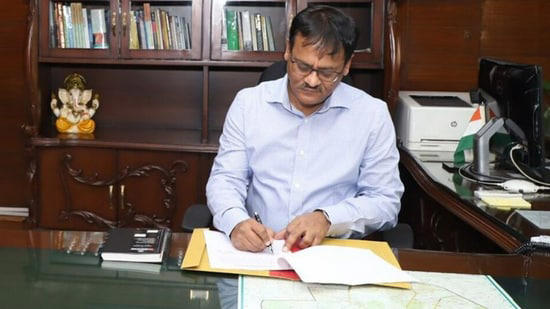
Dharmendra is a seasoned bureaucrat with extensive experience in various administrative roles. Before his appointment as Delhi’s Chief Secretary, he was serving as the Chief Secretary of Arunachal Pradesh. His career spans over three decades, during which he has held several key positions in different states and union territories under the AGMUT cadre. His experience in handling diverse administrative challenges and his familiarity with the region’s governance dynamics made him a suitable choice for the role of Delhi’s Chief Secretary.
Throughout his career, Dharmendra has been recognized for his effective management skills and his ability to handle complex administrative issues. His leadership in Arunachal Pradesh was marked by significant improvements in governance and public administration, reflecting his dedication to public service and his commitment to effective governance.
The Appointment Process and Context
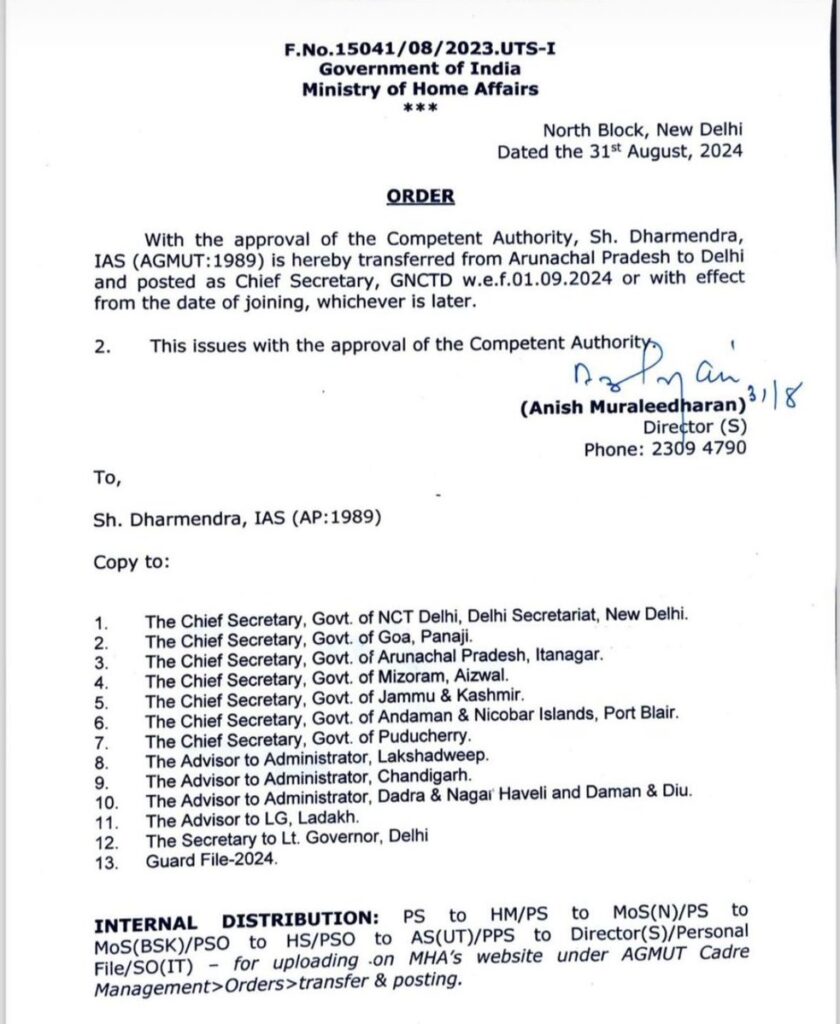
Dharmendra’s appointment as the new Chief Secretary of Delhi was officially announced by the Ministry of Home Affairs (MHA) on August 31, 2024. He is expected to assume his new role on September 1 or upon joining, succeeding Naresh Kumar, whose extended tenure ended on August 31. The decision to appoint a new Chief Secretary came after Kumar had been given two consecutive extensions by the central government, with his last extension being a three-month period from May to August 2024.
The Centre’s decision to extend Kumar’s tenure and subsequently appoint Dharmendra has been subject to political and administrative scrutiny. There were debates surrounding the central government’s authority over such appointments, especially concerning the governance of the National Capital Territory of Delhi. This move is seen as an effort by the Centre to ensure a stable and experienced administrative setup in Delhi, particularly at a time when the city is navigating several governance and policy challenges.
Challenges and Expectations
As the new Chief Secretary, Dharmendra is expected to address several pressing issues facing Delhi. These include managing the city’s complex governance framework, which often involves navigating the dynamics between the Delhi state government and the central government. Additionally, he will have to address urban planning and development challenges, public health management, particularly in light of Delhi’s pollution levels and ongoing public health initiatives, and the implementation of key government policies and programs.
Given his background, Dharmendra is likely to focus on enhancing bureaucratic efficiency, fostering a more collaborative relationship between the different levels of government in Delhi, and addressing the administrative and governance reforms necessary to meet the city’s evolving needs. His ability to leverage his experience and implement strategic initiatives will be critical in ensuring that Delhi’s administration runs smoothly and effectively.

Dharmendra’s appointment as Delhi’s new Chief Secretary marks a significant administrative transition. His extensive experience, particularly his recent tenure as Chief Secretary of Arunachal Pradesh, positions him well to tackle the challenges ahead in one of India’s most complex and politically significant territories. As he steps into this pivotal role, the focus will be on how he manages to balance the demands of governance, implement effective administrative reforms, and enhance the overall functioning of Delhi’s bureaucratic machinery.
Dharmendra’s leadership and administrative acumen will undoubtedly play a crucial role in shaping the future of Delhi’s governance, particularly in ensuring that the city’s administration remains responsive, efficient, and capable of addressing the needs of its diverse population.