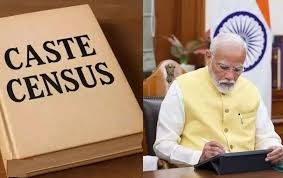
Government’s Landmark Decision on Caste Enumeration
The Indian government has officially approved the inclusion of India caste census in the upcoming national census, marking the first such data collection in nearly a century. This historic move aims to provide a comprehensive understanding of India’s socio-economic landscape and help policymakers address caste-based inequalities. The decision has sparked intense political debates, reflecting its far-reaching implications for governance, social justice, and affirmative action policies.
Historical Background of India Caste Census
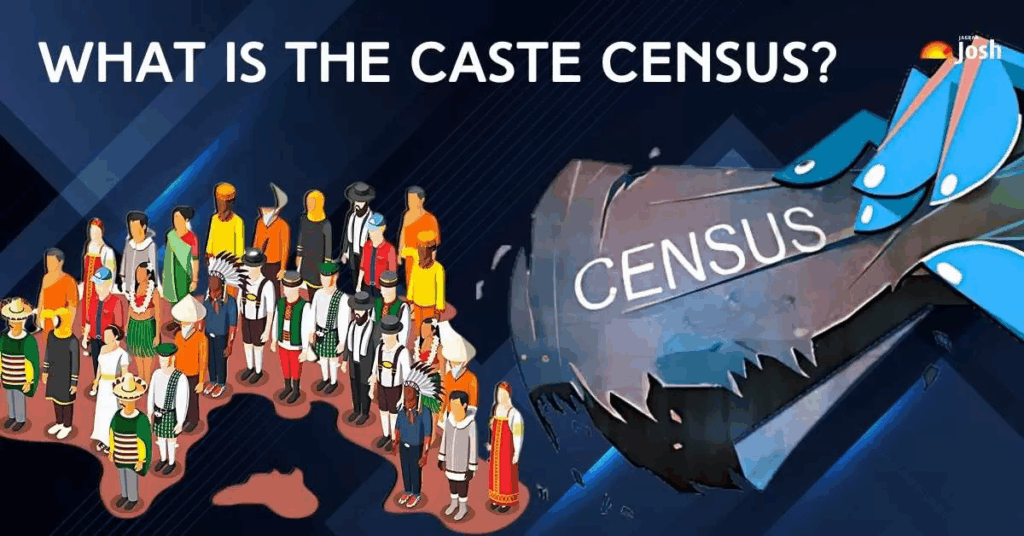
The last full-scale India caste census was conducted in 1931 during British rule. After independence, caste enumeration was discontinued except for Scheduled Castes (SCs) and Scheduled Tribes (STs), whose data was collected for reservation policies. However, this exclusion left a major gap in understanding the socio-economic conditions of Other Backward Classes (OBCs) and other marginalized groups.
Successive governments have debated the reintroduction of a caste-based census,but concerns about its political and social impact delayed any concrete decision. Now, after decades of demand from various political and social groups, the government has finally decided to include caste enumeration in the national census.
Why India Caste Census is Important?
The India caste census is a crucial step in ensuring equitable policy-making and resource allocation. Here’s why it matters:
1. Data-Driven Policy Making
Accurate caste data will help the government develop targeted welfare programs for underprivileged communities. Without such data, policymakers rely on outdated estimates, leading to inefficient allocation of resources.
2. Equitable Distribution of Resources
Caste has long been a factor in socio-economic disparity. A comprehensive India caste census will provide clarity on which communities require more support, leading to better distribution of government funds, scholarships, and employment schemes.
3. Political and Electoral Impact
Many political parties have supported caste enumeration, arguing that it will ensure fair representation in government and electoral constituencies. The data could influence reservation policies and affirmative action programs.
4. Strengthening Social Justice Initiatives
The implementation of caste-based reservations for education and jobs relies on estimated data. An updated India caste census will ensure that policies are based on real numbers rather than assumptions.
Political Reactions to India Caste Census Approval
The decision to approve a nationwide caste census has received mixed reactions across the political spectrum.
- Supporters: Opposition parties like the Congress and regional parties such as the Rashtriya Janata Dal (RJD) and Samajwadi Party (SP) have welcomed the move, stating that it will help achieve social justice. Congress leader Rahul Gandhi emphasized that an updated India caste census will expose the real economic and social status of OBCs, helping shape inclusive policies.
- Government’s Stand: The ruling Bharatiya Janata Party (BJP) has supported the decision but cautioned that data collection should be conducted in a way that does not deepen caste divisions in society.
- Critics’ Concerns: Some experts and politicians fear that a caste-based census might reinforce caste identities, leading to further polarization in society. Others worry about the technical challenges of collecting and analyzing such a vast amount of data.
Challenges in Conducting India Caste Census
While the India caste census is a positive step, its implementation will require careful planning to address key challenges:
- Data Accuracy and Classification
- India has a complex caste structure with thousands of sub-castes. Ensuring accurate classification without discrepancies will be difficult.
- Avoiding Political Manipulation
- Some critics argue that political parties might use caste data to influence electoral strategies rather than focusing on policy improvements.
- Administrative and Logistical Hurdles
- Conducting a caste-based census for a population of over 1.4 billion will be a massive logistical challenge, requiring additional resources and trained personnel.
- Privacy and Ethical Concerns
- Ensuring that the data is used responsibly and does not lead to discrimination or misuse will be crucial.
What Happens Next?
The government is expected to release detailed guidelines on how the India caste census will be conducted. The census process, initially delayed due to the COVID-19 pandemic, is now likely to commence in late 2026 or early 2027.
Next Steps Include:
- Developing a clear framework for data collection and verification.
- Addressing concerns related to privacy and data security.
- Ensuring that the census results lead to effective policy changes for marginalized communities.
Conclusion
The approval of India caste census after nearly a century is a significant milestone in India’s governance and social justice framework. While it promises to provide accurate data for better policymaking, it also brings challenges that must be carefully managed.
As the country prepares for this monumental data collection effort, staying informed about the latest updates is crucial.
Stay connected with Notifire.in for in-depth analysis, expert opinions, and real-time updates on the India caste census.
Stay connected with below platform for fastest updates
Instagram – Notifire instagram profile
Facebook – Notifire facebook profile