Source: INDIA TODAY
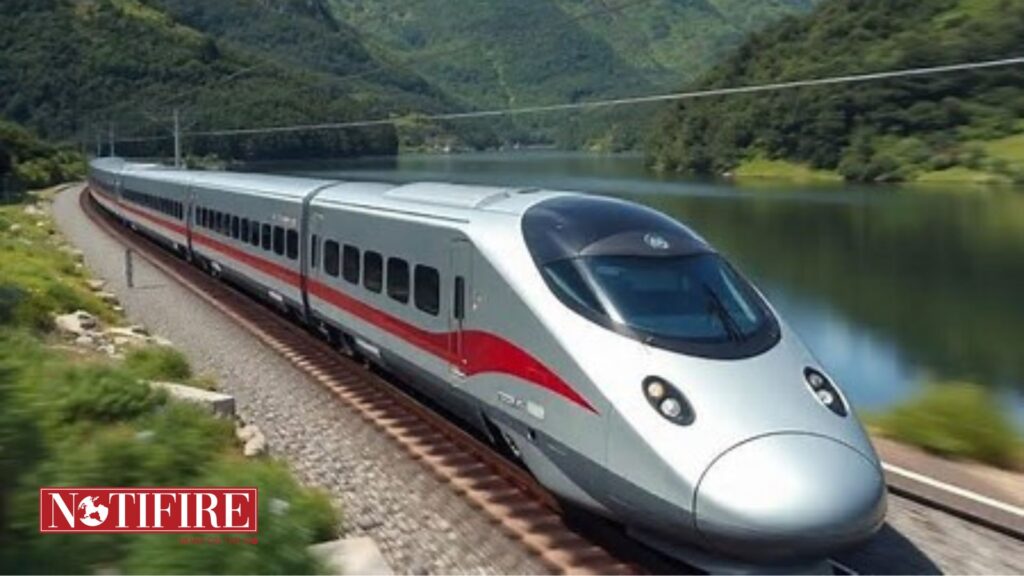
India’s first indigenous bullet train is set to begin operations by 2026, marking a major milestone in the country’s transportation infrastructure. The ambitious Mumbai-Ahmedabad High-Speed Rail Corridor, a flagship project under the National High-Speed Rail Corporation Limited (NHSRCL), is designed to introduce the first high-speed trains in India. The initial stretch of the bullet train will cover a 50-km section between Surat and Bilimora, with full operations planned on the 508-kilometer route connecting Mumbai and Ahmedabad.
Key Highlights of India’s Bullet Train Project
- High-Speed Rail Corridor:
The bullet train will drastically reduce travel time between Mumbai and Ahmedabad. The train is expected to cover this distance in just three hours, compared to the current six-hour journey by conventional trains. This high-speed service will significantly improve connectivity between the two bustling economic hubs. - Advanced Technology and Partnerships:
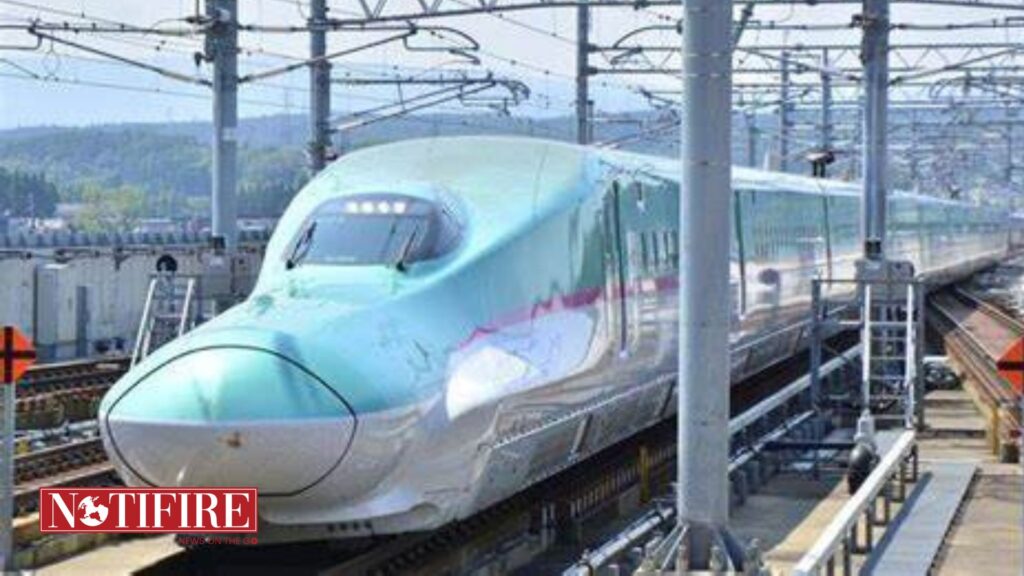
The project has been made possible through a partnership with Japan, which is providing both technical expertise and financial backing. The Japanese International Cooperation Agency (JICA) is funding 81% of the total project cost, which is estimated to exceed ₹1.1 lakh crore. Japan’s Shinkansen technology, renowned for its reliability and efficiency, will be adapted to Indian conditions for this project. - Indigenous Development and Manufacturing:
In a major boost for India’s ‘Make in India’ initiative, the bullet trains will feature significant indigenous components. BEML, a state-owned Indian company, has been contracted to design and manufacture the bullet trains, furthering India’s capacity in high-speed rail technology. These trains will be equipped with modern amenities, safety features, and cutting-edge technology, ensuring comfort and efficiency. - Infrastructure Development:
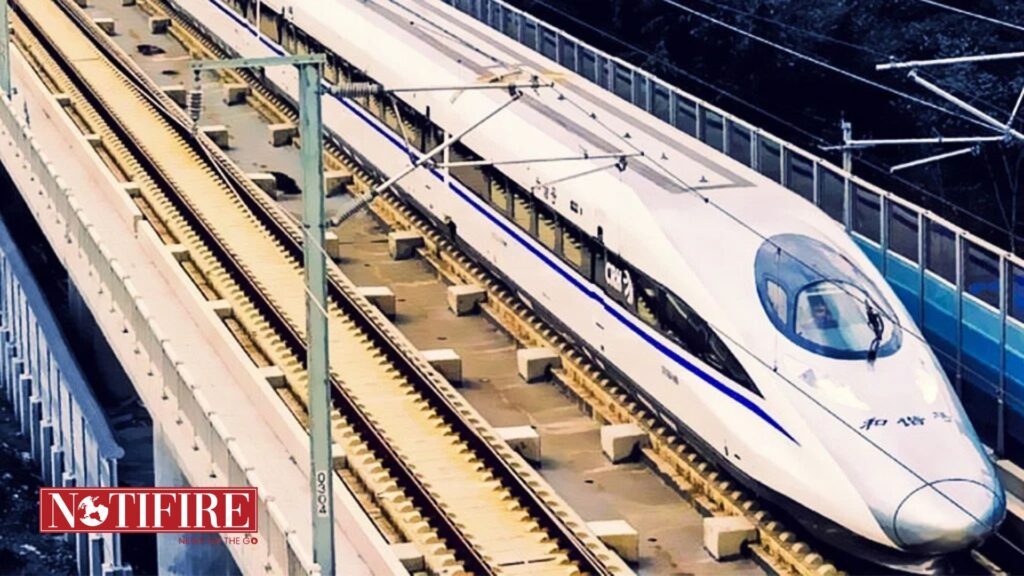
The project involves building sophisticated infrastructure, including India’s first undersea tunnel near Mumbai. This 7-kilometer-long tunnel will run between Bandra-Kurla Complex and Shilphata in Maharashtra, accommodating twin tracks for both up and down trains. Construction of other major bridges and stations is also underway, with more than 300 kilometers of pier work already completed on the corridor. - Economic and Environmental Impact:
The bullet train project is expected to bring significant economic benefits by improving transportation efficiency and creating thousands of jobs in construction and maintenance. Additionally, the train will be powered by electricity, helping reduce carbon emissions and supporting India’s transition toward greener transportation solutions.
Challenges and Future Prospects
While the project has faced delays due to land acquisition issues, particularly in Maharashtra, the central government remains confident that the first train will roll out by 2026. The bullet train’s introduction is expected to be a game-changer for Indian railways, bringing it on par with global high-speed networks.
As India prepares for its first-ever bullet train, the project symbolizes the country’s growing infrastructure capabilities and ambition to modernize its transportation systems for the future.
Key Features and Impact of India’s First Bullet Train: Speed, Connectivity, Safety, and Economic Growth
Train Speed: The bullet train is expected to travel at a speed of 320 km/h, making it the fastest train in India. This will significantly reduce the journey time and offer an efficient alternative to air travel for the Mumbai-Ahmedabad route.
Stations and Connectivity: The route will have 12 stations, with major stops in cities like Surat, Vadodara, and Ahmedabad. Each station is being designed to integrate with the local transport systems to ensure seamless connectivity for passengers.
Passenger Capacity: Each train is expected to carry around 750 passengers in multiple classes, including economy and business, ensuring affordability and comfort for a wide range of travelers.
Safety Features: The bullet train will incorporate Japan’s advanced safety mechanisms, including earthquake detection systems that can bring the train to a halt in case of seismic activity. Additionally, the rail tracks will have automatic train protection (ATP) systems to prevent collisions.
Economic Boost: Apart from reducing travel time, the project is expected to boost real estate, tourism, and commerce along the corridor, with numerous economic zones planned near major stations. It is estimated to generate over 90,000 jobs during construction and 1,500 permanent jobs during operation.
Follow for more updates.