Source: Republic Business
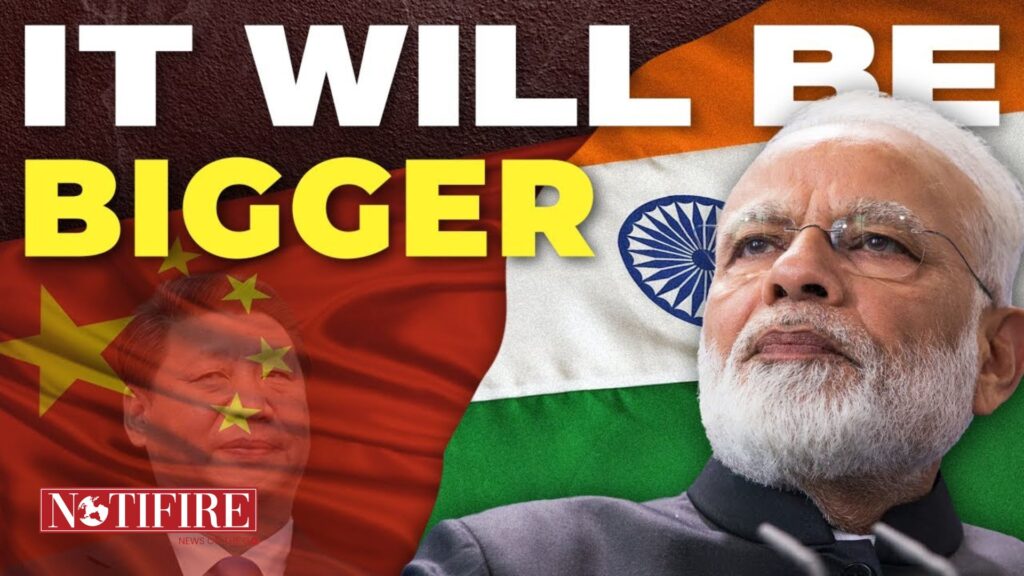
The bold prediction made by John Chambers, Chairman Emeritus of Cisco and founder of JC2 Ventures, that India’s GDP and economy will be larger than China’s by the end of this century, reflects a combination of optimism and strategic insights into the nation’s economic trajectory. Chambers has highlighted several key factors that place India on a path to surpass China economically, including its demographic advantage, growing innovation ecosystem, strategic partnerships, and robust leadership under Prime Minister Narendra Modi.
Key Factors Behind India’s Predicted Economic Growth
- Demographic Dividend and Workforce Expansion:
One of the strongest advantages India holds over China is its demographic structure. While China’s population is aging and shrinking, India’s population remains youthful and is projected to continue growing for the foreseeable future. This young, dynamic workforce is expected to drive innovation, increase productivity, and provide a strong consumer base. By 2100, Chambers believes that India’s per capita income will grow nearly 100% larger than China’s, further elevating the nation’s economic stature. - Innovation and Technological Growth:
India’s economy has seen significant technological advancements, particularly in sectors like digital infrastructure, AI, and startups. According to Chambers, India’s position as a leader in the unicorn startup ecosystem and IPO activities exemplifies its rapid economic evolution. The digital transformation within India is happening at an unprecedented pace, as businesses leverage vast amounts of data to innovate and create solutions in areas like healthcare and AI. Chambers notes that India’s ability to capitalize on AI-driven opportunities is just beginning, and this technological edge will propel its economic growth beyond that of China. - Strategic Global Partnerships:
Chambers emphasizes the growing importance of the India-US partnership as a critical enabler of India’s rise. Both nations have committed to fostering collaboration across various fields, including defense, technology, and semiconductor investment. The mutual trust and cooperation between India and the US, particularly in emerging sectors like drone technology and AI, are expected to add 2% to India’s GDP annually. This partnership is poised to strengthen regardless of political changes in either country, ensuring long-term stability and growth. - Political Leadership and Economic Policy:
Chambers attributes much of India’s recent success to the stable leadership of Prime Minister Modi, whose policies have laid the groundwork for sustained economic growth. Modi’s initiatives, such as promoting data ownership and fostering innovation, are central to Chambers’ confidence in India’s future. With Modi securing a third term, the continuity of policy frameworks aimed at inclusive growth and job creation will reinforce India’s path toward becoming the world’s second-largest economy within the next 30 to 40 years.
Challenges Ahead for China
While China remains an economic powerhouse, it faces several structural challenges that could slow its growth in the coming decades. China’s aging population, coupled with its declining birth rate, is expected to reduce its labor force and consumer demand. Additionally, China’s centralized, top-down approach to innovation may limit its ability to foster the same level of entrepreneurial growth seen in democratic nations like India. Chambers argues that this rigid structure could hinder China’s ability to capitalize on new technological opportunities, creating a window for India to surpass it.
Conclusion
Chambers’ prediction that India’s economy will be 90-100% larger than China’s by the end of the century might seem ambitious, but it is rooted in significant economic trends and advantages. India’s demographic strength, technological innovation, strategic partnerships, and consistent political leadership provide a strong foundation for continued economic expansion. As India and the US deepen their collaboration, and as global shifts create new opportunities, India is positioned to emerge as a dominant economic force by 2100. However, realizing this potential will require ongoing reform, investment in human capital, and leveraging technological advancements to address future challenges.
Follow for more updates.