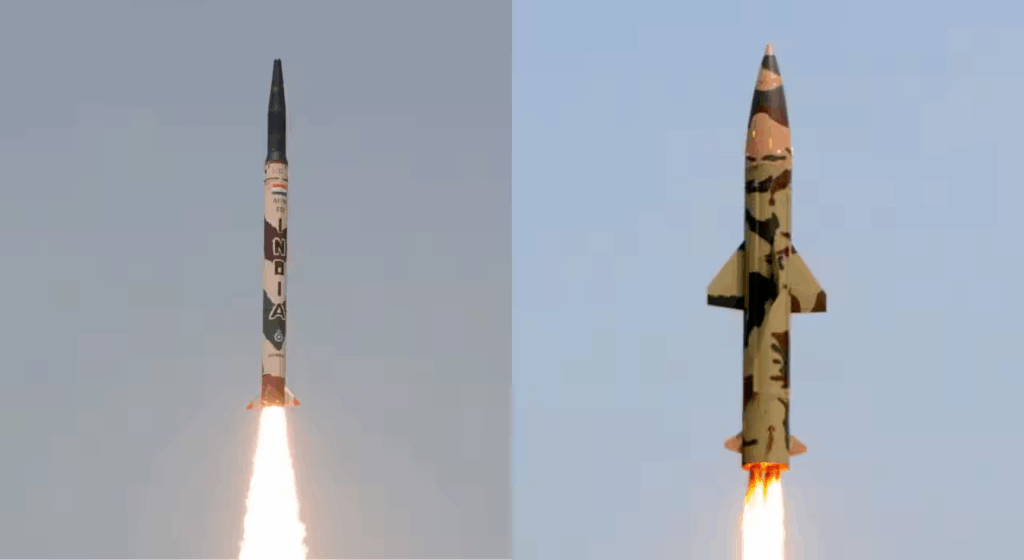
India has successfully conducted night trials of the Prithvi-II and Agni-I ballistic missiles as part of routine strategic readiness exercises. These missile tests were carried out under the supervision of the Strategic Forces Command (SFC). The purpose of these tests is to confirm the operational effectiveness of India’s missile systems. With regional tensions rising, these trials also send a strong message about India’s defence capabilities.
Why India Fired Prithvi-II and Agni-I Now
Missile tests showcase India’s defence preparedness and strengthen its regional deterrence. India conducts missile tests regularly to maintain its strategic deterrence and validate its delivery systems. However, the recent testing of Prithvi-II and Agni-I missiles gains importance due to increasing regional instability. These successful trials demonstrate India’s capability to respond effectively to threats and reaffirm the country’s policy of maintaining credible minimum deterrence. They also reflect the Indian armed forces’ readiness to act swiftly in case of an emergency.
Prithvi-II Short‑Range Missile Details
Prithvi-II is India’s battlefield missile, capable of quick strikes with high accuracy. The Prithvi-II missile is a short-range surface-to-surface ballistic missile developed by the Defence Research and Development Organisation (DRDO). It has a range of approximately 350 kilometers and can carry a payload of up to 1,000 kilograms, including both conventional and nuclear warheads. Powered by liquid fuel, Prithvi-II is designed for high-precision attacks and is part of India’s first-generation missile arsenal. It was inducted into the armed forces in the early 2000s and remains an essential part of India’s tactical strike capability.
Agni‑I Range and Payload Explained
Agni-I enhances India’s medium-range strike capabilities and plays a key role in nuclear deterrence. The Agni-I missile is a medium-range ballistic missile and the first in the Agni series. It has a strike range of 700 to 900 kilometers, making it capable of reaching deep into hostile territories. Unlike Prithvi-II, Agni-I uses solid fuel, allowing faster and safer deployment. It can carry a warhead weighing up to 1,000 kilograms, and its inertial navigation system gives it high accuracy. The missile strengthens India’s second-strike nuclear policy and is crucial to its strategic arsenal.
Tests Done Under Strategic Forces Command
These tests confirm the readiness of India’s nuclear command structure. Both Prithvi-II and Agni-I were tested under the supervision of the Strategic Forces Command, which is responsible for managing India’s nuclear weapons and delivery systems. These user training launches are part of regular checks to ensure the reliability of missiles in real-world conditions. The missiles were fired from mobile platforms, and the trajectories were tracked by radar, electro-optic systems, and naval ships.
Read full report on GKToday about the missile tests
Defence Boost Amid Regional Tensions
Successful missile trials highlight India’s resolve to stay defence-ready at all times. With tensions continuing along India’s borders and across the Indo-Pacific region, these tests serve multiple purposes. They not only validate India’s technological capabilities but also act as a psychological deterrent against adversaries. By showcasing readiness, India reinforces the strength of its strategic command and builds public confidence in national security.
What This Means for India’s Deterrence
Strategic missile trials strengthen India’s standing in the global defence community. The back-to-back successful tests of Prithvi-II and Agni-I represent India’s commitment to maintaining a robust and reliable nuclear deterrent. They ensure that all missile systems are functioning correctly and can be deployed quickly if needed. These tests also underline India’s technological progress in defence, helping the country maintain peace through strength.
Stay tuned with Notifire for more updates.