Source: Republic World
India’s economy has been in the global spotlight, and its growth trajectory is drawing considerable attention. According to Ajay Banga, President of the World Bank, India’s growth rate stands out as one of the brightest spots in the world economy. With robust growth even during uncertain times, the country has established itself as a key player in the global economic landscape.
In recent years, India has become a beacon of growth and resilience, outpacing several developed and developing nations in terms of economic performance. This blog delves into the various factors propelling India’s growth, the challenges it faces, and how it compares to other leading economies.
India’s Growth Trajectory: An Overview
India’s economy, the fifth-largest in the world by nominal GDP, has seen consistent growth over the past decade. Despite facing significant challenges from global economic downturns, the COVID-19 pandemic, and geopolitical uncertainties, India has managed to maintain a growth rate that surpasses many of its global peers. According to data from the International Monetary Fund (IMF), India’s GDP growth rate for 2023-2024 is expected to be around 6.5%, higher than the global average of 3%.
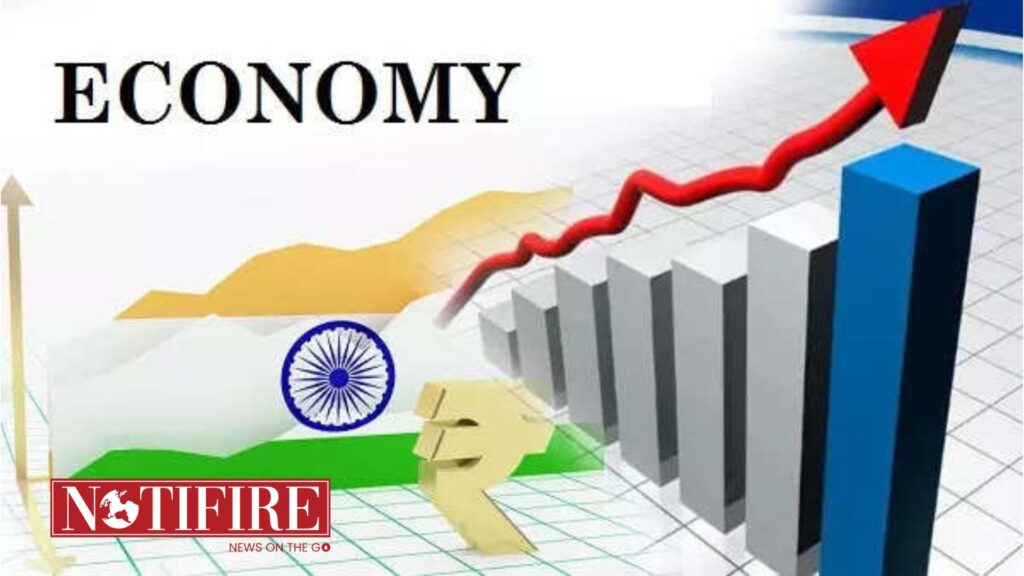
Ajay Banga’s statement that India is a “shiny” spot in the global economy reflects the country’s strong macroeconomic fundamentals, expanding industries, and robust consumer demand. The World Bank’s forecast is optimistic, signaling that India is on a path to sustain its growth momentum.
Key Factors Driving India’s Economic Growth
1. Demographic Dividend
India’s young and growing population is one of its greatest assets. The country has the largest working-age population in the world, providing a steady supply of labor and driving consumption. This demographic dividend is projected to last until 2055, giving India a significant advantage over aging economies like Japan and some European nations.
The youth-driven workforce is fueling innovation, entrepreneurship, and productivity, particularly in industries like technology, manufacturing, and services.
2. Digital Revolution and Technology Adoption
India has made significant strides in digital infrastructure, with widespread adoption of digital payment systems, e-governance, and online services. The country is home to a thriving technology sector, with companies like Infosys, TCS, and Wipro leading the charge. Additionally, initiatives like Digital India, which aim to provide broadband internet to all corners of the country, have played a pivotal role in transforming the economy.
The startup ecosystem in India is also flourishing. In 2023, India became the third-largest startup ecosystem in the world, trailing only the U.S. and China. These startups are contributing to job creation, innovation, and economic growth.
3. Strong Domestic Consumption
India’s massive population, coupled with rising income levels and an expanding middle class, has led to increased domestic consumption. The country’s domestic market is vast, and sectors such as retail, e-commerce, and fast-moving consumer goods (FMCG) have benefitted from this surge in demand.
Urbanization is also playing a role in boosting consumer demand. As more people migrate to cities for better opportunities, there is an increased demand for housing, infrastructure, and services, all of which contribute to economic growth.
4. Government Initiatives and Reforms
The Indian government has introduced several policies aimed at fostering economic growth, industrialization, and innovation. Key initiatives include:
- Make in India: Launched in 2014, this program aims to turn India into a global manufacturing hub by encouraging domestic and foreign investment in various industries. The initiative focuses on key sectors like electronics, automobiles, and textiles.
- Atmanirbhar Bharat (Self-reliant India): Introduced in response to the COVID-19 pandemic, this policy seeks to reduce India’s dependence on imports and boost local production.
- Infrastructure Development: Massive investments in infrastructure, such as the development of highways, railways, airports, and smart cities, are transforming the country’s logistics and transportation networks, boosting economic productivity.
- Goods and Services Tax (GST): The implementation of GST in 2017 simplified the tax system and promoted ease of doing business. It replaced multiple indirect taxes with a single, streamlined tax structure.
5. Resilient Financial Sector
India’s financial sector has shown resilience in the face of global headwinds. The Reserve Bank of India (RBI) has taken proactive measures to stabilize the banking system and control inflation. The government has also promoted financial inclusion through schemes like Jan Dhan Yojana, which brought millions of previously unbanked citizens into the formal banking system.
Moreover, India’s stock markets have performed remarkably well, with foreign investors continuing to pour funds into the country. The Indian equity market is among the best performers in the world, reflecting investor confidence in the country’s growth prospects.
Challenges Ahead
While India’s growth story is impressive, it is not without challenges. The country faces several obstacles that could potentially hinder its progress if not addressed effectively:
- Income Inequality: Despite economic growth, income inequality remains a significant issue in India. A large portion of the population still lives below the poverty line, and there is a stark contrast between urban and rural income levels.
- Job Creation: While India’s population is an asset, it also poses a challenge in terms of job creation. The country needs to generate millions of new jobs each year to accommodate its growing workforce. The agricultural sector, which employs a significant portion of the population, is still relatively unproductive.
- Education and Skill Development: To fully leverage its demographic dividend, India needs to invest heavily in education and skill development. There is a growing demand for skilled labor in industries like technology, healthcare, and manufacturing, but the education system needs to evolve to meet these needs.
- Infrastructure Bottlenecks: While India is making progress in infrastructure development, challenges such as inadequate public transportation, power shortages, and poor sanitation remain in many parts of the country.

India’s economic growth, as highlighted by Ajay Banga, is undoubtedly one of the brightest spots in the global economy. With a young population, robust domestic consumption, technological advancements, and supportive government policies, the country is well-positioned to sustain its growth momentum in the coming years. However, to fully capitalize on its potential, India must address key challenges such as inequality, job creation, and infrastructure bottlenecks.
As the world looks to diversify supply chains and seek out new growth markets, India stands out as a country poised to play an increasingly important role in shaping the future of the global economy. The nation’s growth story is one of resilience, opportunity, and immense potential, making it a critical player on the world stage.
Follow for more updates.