AMD Just Launched a Monster 256-Core CPU
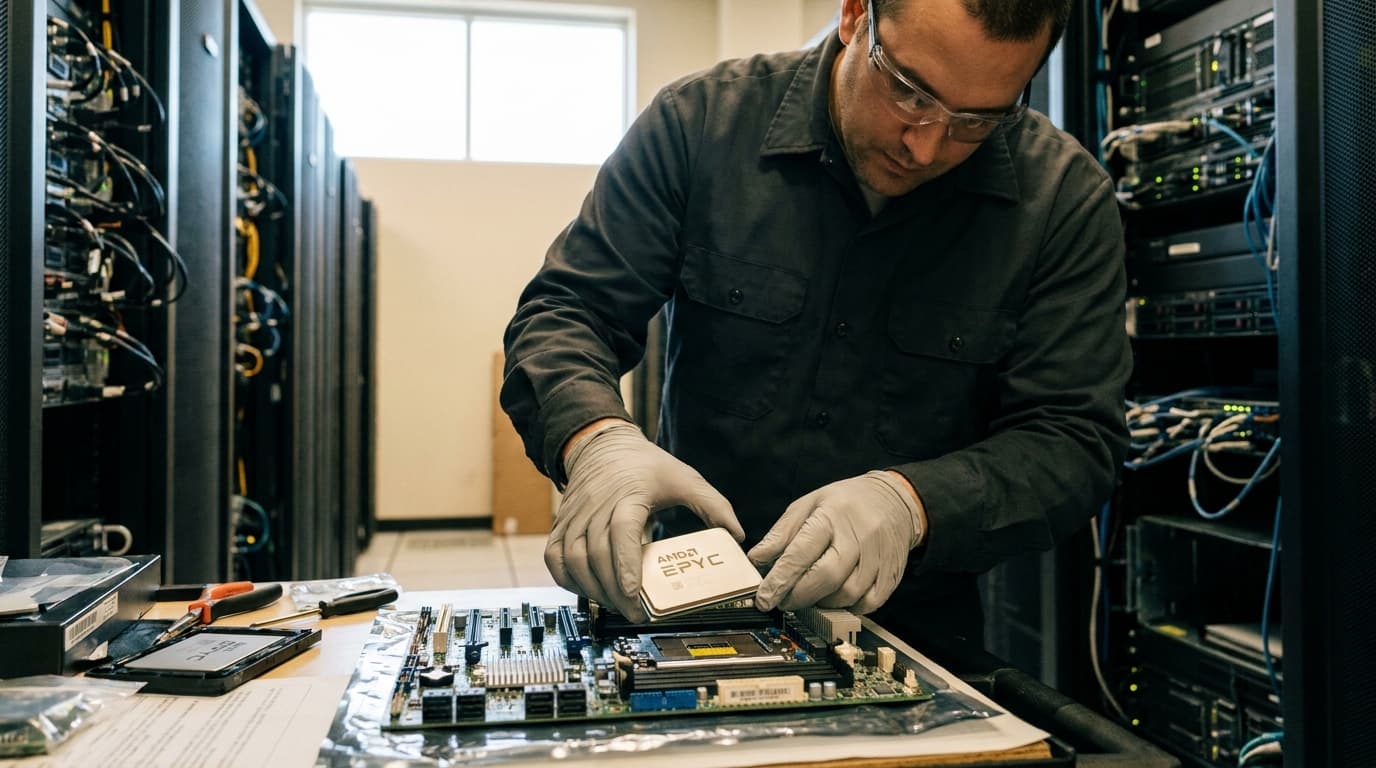
TL;DR: AMD has released its most powerful and expensive server CPU ever, the EPYC 9996. It packs 256 cores, consumes 600W of power, and supports next-generation technologies like PCIe 6.0, targeting high-performance computing and AI workloads.
Key facts
- Category
- Infrastructure
- Impact
- High
- Published
- Source
- TechRadar
Full summary
AMD's new flagship server CPU packs a record 256 cores, consumes 600W, and costs nearly $15,000 to power next-gen AI workloads.
AMD has officially launched its most powerful and expensive server processor to date, the EPYC 9996. According to reporting from TechRadar, this new flagship CPU sets a new standard for core density in a single chip. It features a record-breaking 256 cores and 512 threads, designed for the most demanding data center workloads. This immense processing power comes with significant requirements, including a thermal design power (TDP) of 600 watts and a price tag of $14,904 per unit in bulk orders. The launch solidifies AMD's focus on the high-performance computing (HPC) and artificial intelligence markets, where parallel processing capabilities are paramount. This processor, codenamed 'Venice', is not just an incremental update but a major leap in computational density, signaling a new era for server architecture and performance potential.
Beyond the headline-grabbing core count, the EPYC 9996 introduces support for two cutting-edge, enterprise-focused technologies. The first is PCIe 6.0, the next generation of the peripheral component interconnect standard. This effectively doubles the data transfer bandwidth compared to the current PCIe 5.0, which is critical for connecting high-speed components like GPUs, network cards, and storage accelerators without creating bottlenecks. The second key feature is support for MRDIMM (Multi-Ranked Buffered Dual In-line Memory Module), a new type of server memory designed to dramatically increase memory bandwidth. This is particularly important for AI and data-intensive applications that are often limited by how quickly they can feed data to the processor. With a massive 1 GB of L3 cache, the chip is engineered to keep its 256 cores fed with data, minimizing latency and maximizing throughput for complex, parallel tasks.
This launch represents the latest move in the fierce competition between AMD and Intel for dominance in the lucrative data center market. For years, AMD's EPYC line has challenged Intel's Xeon processors by leveraging a chiplet-based architecture to deliver higher core counts and gain market share. The 256-core EPYC 9996 is a significant escalation in this "core war," pushing the boundaries of what can be achieved in a single socket. This trend is directly fueled by the explosive growth of AI. Training and running large language models (LLMs) and other complex algorithms require an enormous amount of parallel computation. While GPUs are the primary workhorses for AI training, powerful CPUs are essential for data preparation, inference, and overall system management. AMD is positioning this processor as a foundational component for the next generation of AI infrastructure.
For CTOs and infrastructure managers, the EPYC 9996 presents both a powerful opportunity and a significant challenge. While the performance potential is immense, integrating a 600W processor into a data center is not a simple upgrade. It demands robust power delivery and advanced cooling solutions, potentially requiring facility-level modifications. The nearly $15,000 price per chip means its deployment must be carefully justified for specific, high-value workloads where maximum performance translates directly to revenue or research breakthroughs. The key takeaway is that this CPU is a specialized tool for the extreme end of the computing spectrum. Looking ahead, the industry will be watching for Intel's response with its upcoming Granite Rapids and Sierra Forest Xeon processors. Furthermore, real-world performance benchmarks from major cloud providers and enterprise users will be crucial in determining how the EPYC 9996's on-paper specifications translate to tangible gains in AI and scientific computing.
Why it matters
This CPU sets a new benchmark for core density and power in a single socket, directly impacting data center design and TCO calculations. For engineers and architects, it enables unprecedented parallel processing capabilities for AI training, scientific computing, and large-scale simulations.
Business impact
AMD's new flagship intensifies its competition with Intel in the lucrative data center market, particularly for AI infrastructure. For businesses, this means more powerful options for consolidating workloads, but also requires careful planning around power, cooling, and a nearly $15,000 per-unit cost.
Tags
Related on Notifire
Related stories
Primary source: TechRadar