Building a Private Cloud AI Service
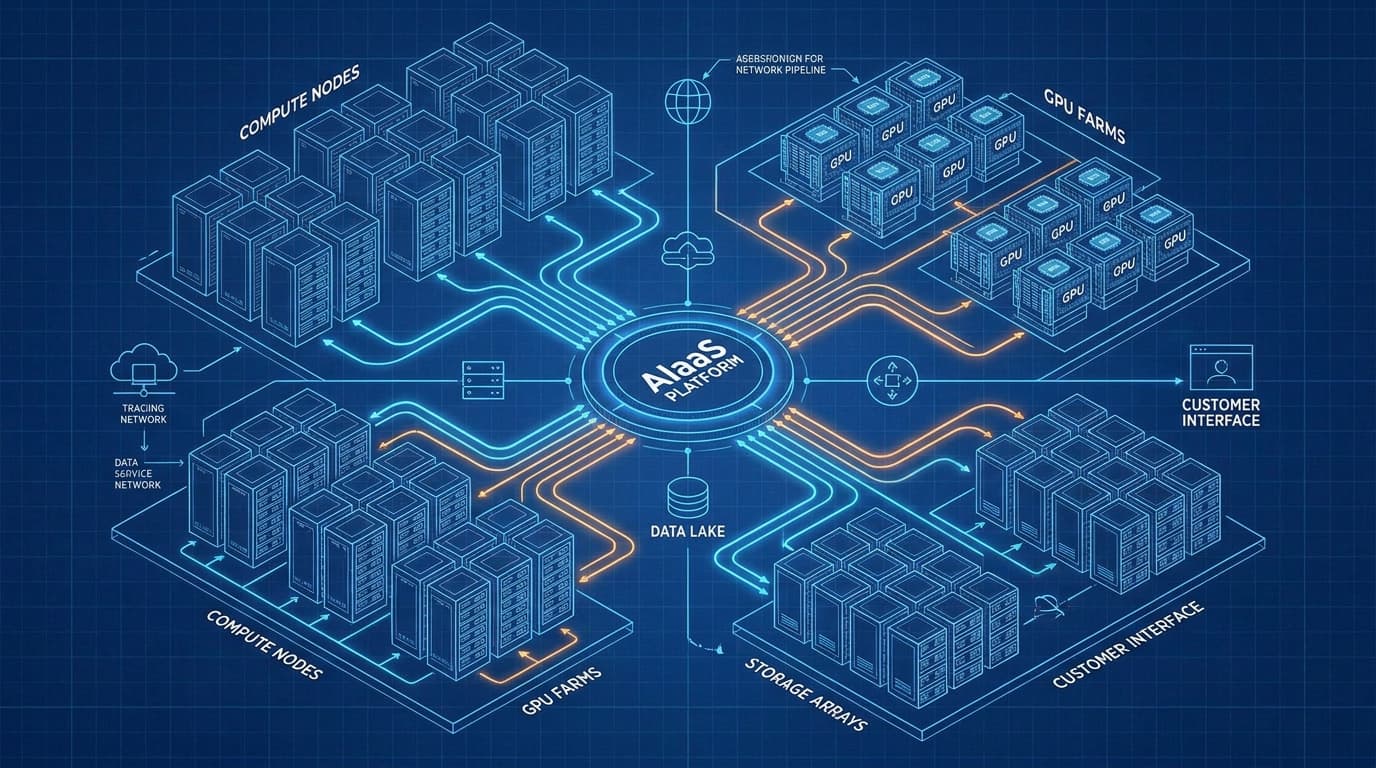
TL;DR: An engineer outlines a practical blueprint for building a secure and efficient AI-as-a-Service platform in a private cloud. The guide covers maximizing GPU usage, managing workloads with Valkey, securing LLMs against OWASP risks, and scaling data pipelines for enterprise use.
Key facts
- Category
- Infrastructure
- Impact
- Medium
- Published
- Source
- InfoQ
Full summary
A practical guide to building a secure, efficient AI-as-a-Service platform using private cloud infrastructure and open-source tools.
A recent presentation from InfoQ detailed a technical guide for engineering an enterprise-grade AI-as-a-Service platform within a private cloud. The approach focuses on solving several key challenges that organizations face when building internal AI capabilities. The strategy outlines a method for maximizing the use of expensive, often underutilized GPU resources through multi-namespace scheduling. It also explains how to manage real-time and batch processing workloads effectively. This involves using tools like Valkey, a fork of Redis, combined with Lua scripting for creating atomic priority queues and managing backpressure to prevent system overloads. The architecture also includes a custom proxy to scale data pipelines, efficiently moving data from S3-compatible storage to Kafka for processing.
This technical blueprint is highly relevant for CTOs, developers, and infrastructure teams tasked with building internal AI platforms. It provides practical solutions to common problems like low GPU utilization, which directly impacts the return on investment for expensive hardware. For security teams, the strategy to mitigate the OWASP Top 10 risks for Large Language Models (LLMs) by using a central proxy gateway is a critical insight. This centralized approach simplifies security management and policy enforcement. For business leaders, understanding these architectural patterns is crucial for planning scalable, secure, and cost-effective AI initiatives that offer greater control over data and infrastructure compared to relying solely on public cloud providers.
Why it matters
Provides a practical guide for building internal AI platforms, addressing common challenges in GPU utilization, workload management, and LLM security. It helps teams build cost-effective and secure AI infrastructure.
Business impact
This blueprint can help companies reduce costs by maximizing GPU usage, improve security for internal AI applications, and build scalable data pipelines. It enables greater control over AI infrastructure compared to relying on public cloud services.
Tags
Related on Notifire
Related stories
Primary source: InfoQ