How Cognition Made Its AI Coder 10x Faster
TL;DR: Cognition, a leader in AI agents, released an "Ultrafast" version of its SWE-2.1 coding model that runs 10 times faster. The breakthrough highlights the growing importance of specialized hardware for achieving major performance gains in AI.
Key facts
- Category
- Infrastructure
- Impact
- High
- Published
- Source
- The New Stack
Full summary
Cognition's new AI coding model runs 10 times faster by using specialized hardware, a major leap in AI agent performance.
Cognition, the company behind the AI software engineer Devin, has announced a major performance breakthrough. According to reporting from The New Stack, the company released an "Ultrafast" version of its new SWE-2.1 coding model. This variant achieves a remarkable 10x increase in token processing speed compared to its standard counterpart without compromising the model's capabilities. The new base model, SWE-2.1, is built upon Moonshot AI’s Kimi K3 and trained using reinforcement learning, showing significant improvements on coding benchmarks over its predecessor. However, the speed enhancement of the Ultrafast version is the key development, signaling a new frontier in the performance of AI agents designed for complex software engineering tasks. This is not a minor update; it is a step-change in how quickly an AI can process and generate code, pushing it closer to real-time, interactive use.
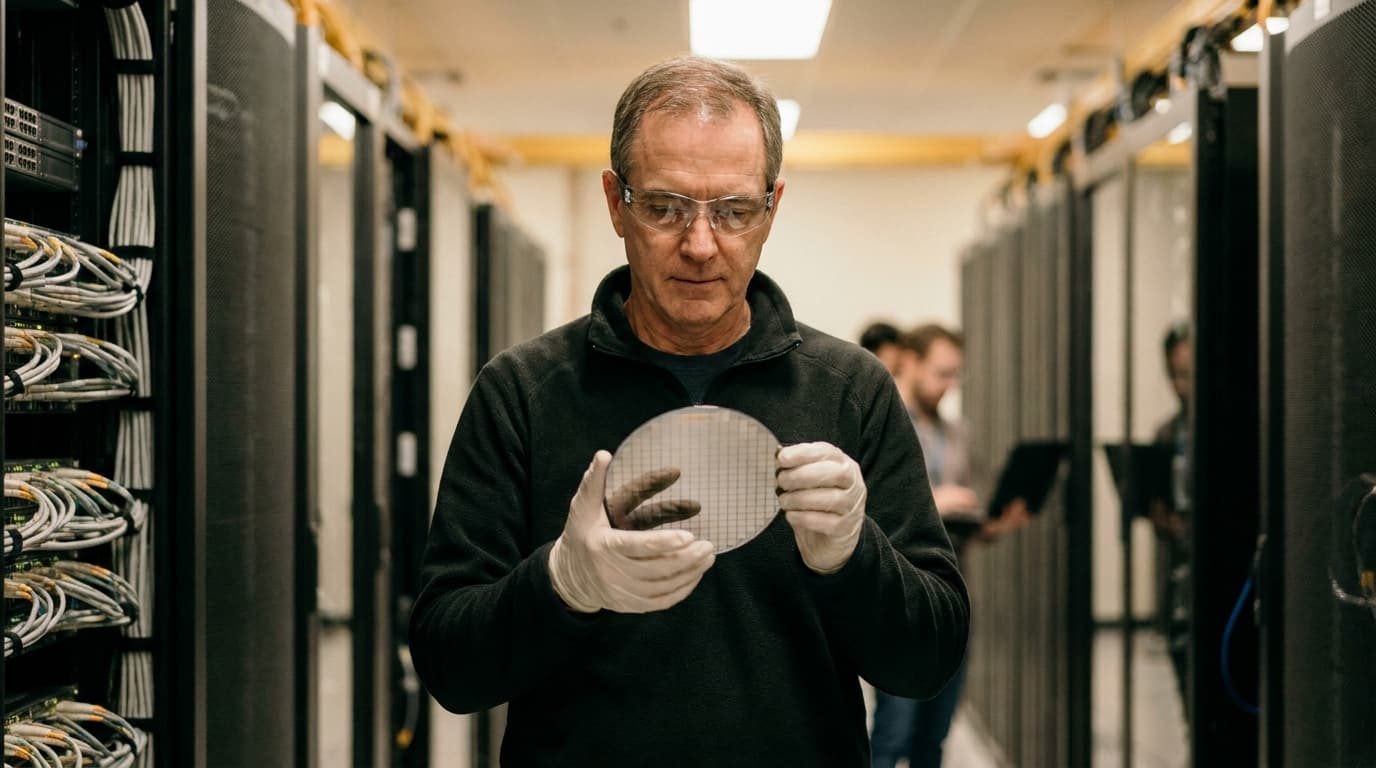
The secret to this 10x speedup lies not in a new algorithm but in the underlying hardware. Cognition achieved this performance by running its model on specialized AI hardware from Cerebras Systems. Unlike traditional GPUs, which are powerful but general-purpose processors, Cerebras builds massive, wafer-scale engines designed from the ground up for AI workloads. These chips integrate an enormous number of cores and high-speed memory onto a single piece of silicon. This unique architecture virtually eliminates the communication bottlenecks that slow down computation on distributed clusters of GPUs, where data must constantly be shuffled between different chips. By keeping the entire model on one chip with extremely high-bandwidth memory, data transfer delays are minimized, allowing for the massive acceleration Cognition is reporting for its SWE-2.1 Ultrafast model.
This move highlights a crucial trend in the technology industry: software innovation is becoming increasingly dependent on hardware co-design. For years, the AI world has relied heavily on NVIDIA's GPUs, but as models grow larger and the demand for faster, cheaper inference skyrockets, companies are actively seeking alternatives to gain a competitive edge. We have seen this with the development of Google's TPUs, Amazon's Trainium and Inferentia chips, and the emergence of startups like Groq, which also focuses on delivering unparalleled inference speed. Cognition's decision to leverage Cerebras hardware is a prime example of an AI application company looking beyond the standard hardware stack to deliver a superior product. It underscores a fundamental shift where the biggest performance gains are found by optimizing the entire system, from the silicon up to the application layer.
For developers, CTOs, and infrastructure teams, the practical takeaway is that the future of high-performance AI is specialized. A 10x speedup transforms AI coding assistants from slow, batch-processing tools into truly interactive partners. This could fundamentally change developer workflows, making AI assistance a seamless, real-time part of the coding and debugging process. Looking ahead, we should watch for two key developments. First, expect more AI companies to announce partnerships with specialized hardware vendors to differentiate their products on performance and cost-per-token. Second, this will intensify competition in the AI chip market, pushing hardware designers to create even more efficient and powerful processors tailored for specific AI tasks like code generation, language translation, or scientific modeling. The era of one-size-fits-all hardware for demanding AI workloads is rapidly coming to a close.
Why it matters
For developers and infrastructure teams, this 10x speedup demonstrates a critical trend: software performance is now deeply tied to hardware specialization. Achieving real-time, interactive AI assistance at scale may require moving beyond general-purpose GPUs and embracing custom silicon like wafer-scale engines.
Business impact
The ability to run powerful AI models at 10x speed without sacrificing quality creates a significant competitive advantage. This could lower inference costs, enable new real-time applications, and pressure competitors to form their own hardware partnerships to keep pace with performance expectations.
Tags
Related on Notifire
Related stories
Primary source: The New Stack