How Netflix Scaled Payments From DVDs to Global Streaming
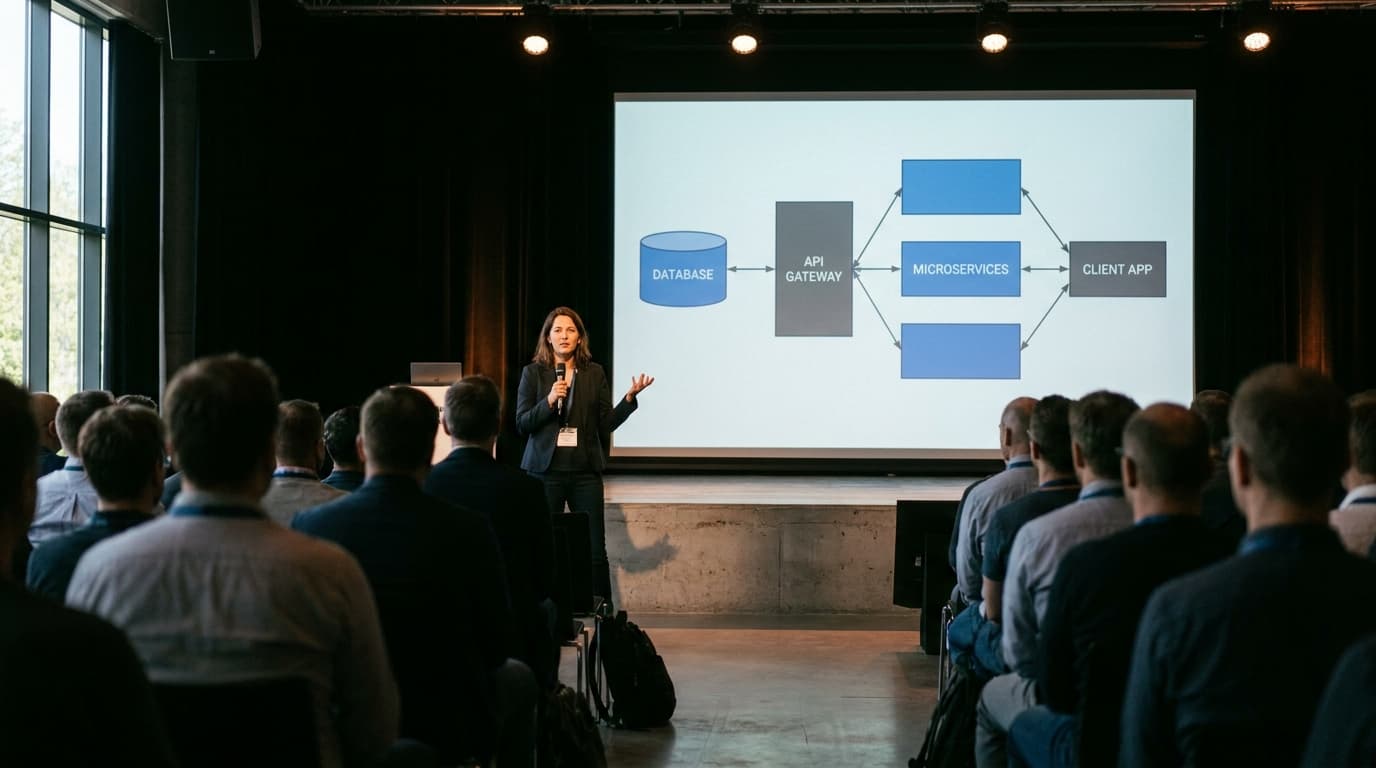
TL;DR: Netflix detailed its commerce platform's evolution from a US DVD service to a global streaming giant. The key was breaking down its monolithic system to handle diverse international payments, regulations, and massive live event demand.
Key facts
- Category
- Infrastructure
- Impact
- High
- Published
- Source
- InfoQ
Full summary
Netflix shared how it evolved its commerce platform from a simple DVD service into a global infrastructure handling complex international payments.
Based on a presentation by Kasia Trapszo at InfoQ, Netflix has shared key insights into the evolution of its commerce architecture. The talk detailed the platform's transformation from a system designed for a U.S.-based DVD rental service into a sophisticated global infrastructure capable of handling millions of streaming subscribers worldwide. This journey involved overcoming significant technical and business hurdles, including navigating a complex web of international payment systems, adapting to diverse and strict regulatory mandates in different countries, and re-architecting for the massive, sudden demand of live events. The story is a powerful case study in how critical infrastructure must continuously adapt to support and enable a company's ambitious growth strategy, proving that a system's ability to evolve is fundamental to its long-term survival and success.
At the heart of Netflix's technical evolution was the strategic decision to decompose its original monolithic architecture. A monolith is a single, large, and tightly integrated application where all components are interdependent. While effective for the initial DVD service, this structure became a major bottleneck as the company expanded globally. It was slow to update, difficult to scale, and a single failure could impact the entire system. To solve this, Netflix re-architected its platform by breaking the monolith down into smaller, independent services organized around specific business domains, such as customer subscriptions, billing cycles, and payment processing. This approach, often called a microservices architecture, allowed dedicated teams to develop, deploy, and scale their specific services independently. This modularity was crucial for integrating dozens of different international payment methods and adapting to unique regional financial regulations without disrupting the core platform.
For developers, architects, and technology leaders, Netflix's journey offers a valuable and practical blueprint for managing architectural change at scale. The story moves the concept of monolith decomposition from a theoretical best practice to a proven, real-world strategy executed by one of the world's largest tech companies. It demonstrates that as a business grows in complexity, its underlying technology must also evolve from a single, unified codebase to a more flexible, distributed system. This case study provides validation for teams advocating for similar architectural shifts within their own organizations. It highlights the long-term benefits of investing in modular design, such as increased development velocity, improved fault isolation, and the ability to scale specific parts of an application to meet targeted demand, offering crucial lessons for any company struggling with the limitations of a legacy system.
The transformation of Netflix's commerce platform was not merely a technical exercise; it was a fundamental enabler of its global business strategy. Without this architectural flexibility, the company's rapid international expansion would have been severely constrained, if not impossible. The original U.S.-centric system could not have handled the sheer diversity of global payment methods, currencies, and tax laws. By building a system that could easily adapt to local market conditions, Netflix was able to unlock new revenue streams and acquire customers in over 190 countries. This ability to localize its commerce experience is a significant competitive advantage. The key takeaway for business leaders is that technical architecture is inextricably linked to business agility. Investing in a scalable and adaptable infrastructure is a direct investment in the company's ability to enter new markets, launch new products, and respond quickly to changing customer needs.
The evolution of Netflix's commerce system is far from over, as highlighted by the recent challenge of supporting massive live events. This new product category introduces a different scaling problem compared to on-demand streaming. Instead of predictable, distributed traffic, live events generate enormous, simultaneous demand spikes as millions of users attempt to join at the same moment. This requires a different approach to system design, focusing on extreme concurrency and low-latency processing. This ongoing adaptation underscores the core message of the presentation: great systems are never "finished." They must be in a constant state of evolution, with engineering teams continuously re-evaluating and re-architecting to meet the next wave of business challenges, whether it's a new market, a new regulation, or a new type of content.
Why it matters
Netflix's journey provides a real-world blueprint for CTOs and developers on how to break down a monolithic system. It validates the microservices approach for achieving global scale and handling complex, region-specific business rules, offering valuable lessons for any company facing growth-related architectural challenges.
Business impact
The architectural evolution was critical to Netflix's global expansion and market dominance. By adapting its commerce platform for diverse payment systems and regulations, the company unlocked new revenue streams and built a resilient infrastructure that serves as a key competitive advantage, demonstrating that technical flexibility directly enables business strategy.
Tags
Related on Notifire
Related stories
Primary source: InfoQ