How Weka Fits an Exabyte in One Server Rack
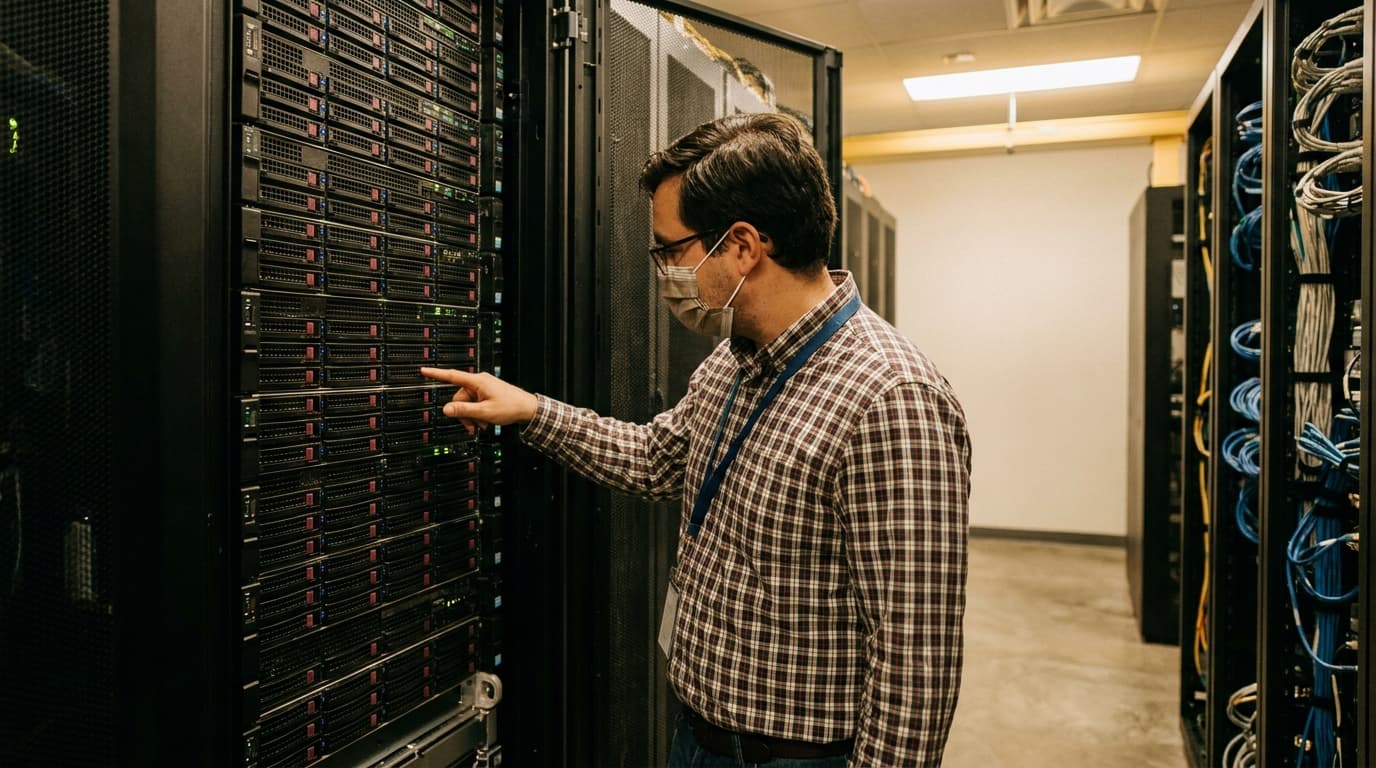
TL;DR: Weka has launched a new storage system that packs a claimed exabyte of data into a single server rack. It combines ultra-dense SSDs with powerful software compression to dramatically increase storage capacity for AI and big data workloads.
Key facts
- Category
- Infrastructure
- Impact
- High
- Published
- Source
- TechRadar
Full summary
A new storage system from Weka claims to fit an entire exabyte of data into a single server rack using advanced software.
Storage company Weka has announced a new product that marks a significant milestone in data density. According to reporting from TechRadar, the new WEKApod 3 system can deliver what Weka claims is over an exabyte of effective storage capacity within a single, standard 56U server rack. An exabyte is equivalent to one thousand petabytes, or one billion gigabytes. This achievement is not the result of a single hardware breakthrough, but rather the combination of extremely dense solid-state drives (SSDs) and sophisticated software designed to maximize their utility. The system is specifically aimed at organizations building infrastructure for the massive data demands of artificial intelligence, machine learning, and other high-performance computing (HPC) applications.
The system achieves this remarkable density through two key components. First, it uses an enormous number of cutting-edge, high-capacity SSDs from Micron—reportedly 1,800 drives, each holding 245.76 terabytes. This hardware alone provides a raw physical capacity of roughly 441.5 petabytes. The second, and arguably more critical, component is Weka's new NeuralMesh 6 software. This software platform is what bridges the gap from the physical capacity to the claimed effective capacity of an exabyte. It employs advanced data reduction techniques, primarily compression, to shrink the size of the data before it is written to the drives. This means the system can store more than double its raw physical capacity, depending on how compressible the data is.
For Chief Technology Officers and IT infrastructure teams, this development directly addresses one of the biggest challenges in scaling AI operations: the physical constraints of the data center. Storing an exabyte of data traditionally requires sprawling arrays of hardware that consume vast amounts of floor space, power, and cooling. By consolidating that capacity into a single rack, companies can dramatically reduce their data center footprint and the associated operational costs. This makes building and managing the massive storage environments required for training large language models and processing petabyte-scale datasets more practical and economically viable. It removes a significant physical barrier to scaling up data-intensive computing.
The launch of the WEKApod 3 highlights a crucial trend in the enterprise storage industry: the increasing importance of software in defining the value of hardware. While the density of the Micron SSDs is impressive on its own, it is the intelligence of the software layer that unlocks their full potential. This software-defined approach allows for greater efficiency and performance than hardware alone can provide. For businesses, this means the cost per terabyte of high-performance storage continues to fall, enabling them to retain and analyze more data than ever before. This can unlock new competitive advantages, as companies that can effectively manage massive datasets are better positioned to lead in the age of AI.
Looking forward, the industry will be watching for real-world performance benchmarks and adoption case studies. The term "effective capacity" is key, as the actual storage gains from compression vary significantly based on the type of data being stored. Highly-structured text or database files compress well, while pre-compressed video or image files do not. Early adopters in AI research and financial services will likely put these systems to the test, and their results will determine how this new density benchmark influences the broader market. Competitors will also be under pressure to respond with their own solutions that blend hardware density with software intelligence.
Why it matters
This massive leap in storage density allows companies to manage exabyte-scale data for AI and HPC workloads within a single server rack, dramatically reducing physical footprint, power, and cooling costs. It makes building massive data infrastructure more feasible and affordable.
Business impact
The solution lowers the barrier to entry for large-scale AI by tackling a major infrastructure bottleneck. By making exabyte-scale storage more economical, it enables more companies to pursue data-intensive strategies, potentially accelerating innovation in fields that rely on massive datasets.
Tags
Related on Notifire
Related stories
Primary source: TechRadar