LinkedIn Solves Mysterious System Freezes
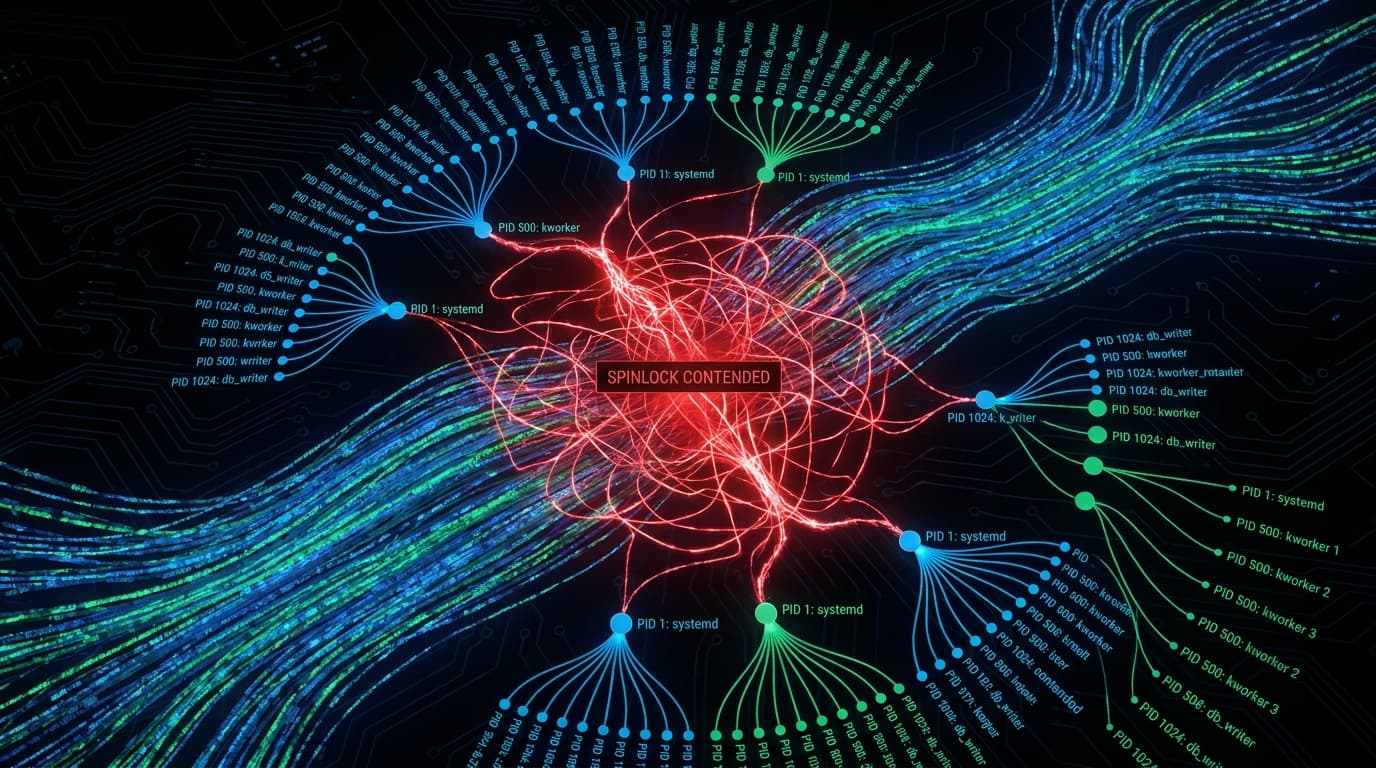
TL;DR: LinkedIn engineers faced recurring, short-lived outages where a key database would freeze and recover without leaving logs. Using advanced off-CPU profiling with eBPF, the team identified a subtle kernel lock contention issue as the root cause, resolving the mysterious system-wide freezes.
Key facts
- Category
- Infrastructure
- Impact
- High
- Published
- Source
- InfoQ
Full summary
LinkedIn's engineers used advanced eBPF profiling to uncover the root cause of recurring, short-lived system freezes that left no trace.
LinkedIn's engineers faced a perplexing issue: a critical database powering the user feed was experiencing brief, recurring outages. During these events, the entire system would freeze for a short period and then recover automatically, leaving behind no crash dumps or useful error logs. This lack of evidence made traditional debugging methods ineffective. The team hypothesized that the problem was at a very low level, likely within the Linux kernel itself, causing a system-wide pause. The core challenge was to diagnose these fleeting freeze events without any clear starting point or reproducible failure scenario.
To uncover the root cause, the Site Reliability Engineering (SRE) team adopted an advanced technique using eBPF, a powerful kernel observability tool. They implemented off-CPU profiling, which analyzes why threads are idle or waiting, rather than what code they are actively running. This approach allowed them to capture detailed system state during the brief freezes. The profiling data revealed that numerous threads were simultaneously getting stuck waiting to acquire the same kernel lock, a classic lock contention problem. This bottleneck was causing the system-wide stalls. The case demonstrates how modern tools like eBPF are essential for debugging complex, transient performance issues in large-scale production environments, providing a valuable blueprint for other engineering teams.
Tags
Related on Notifire
Related stories
Primary source: InfoQ