Node.js Moves to Annual Releases
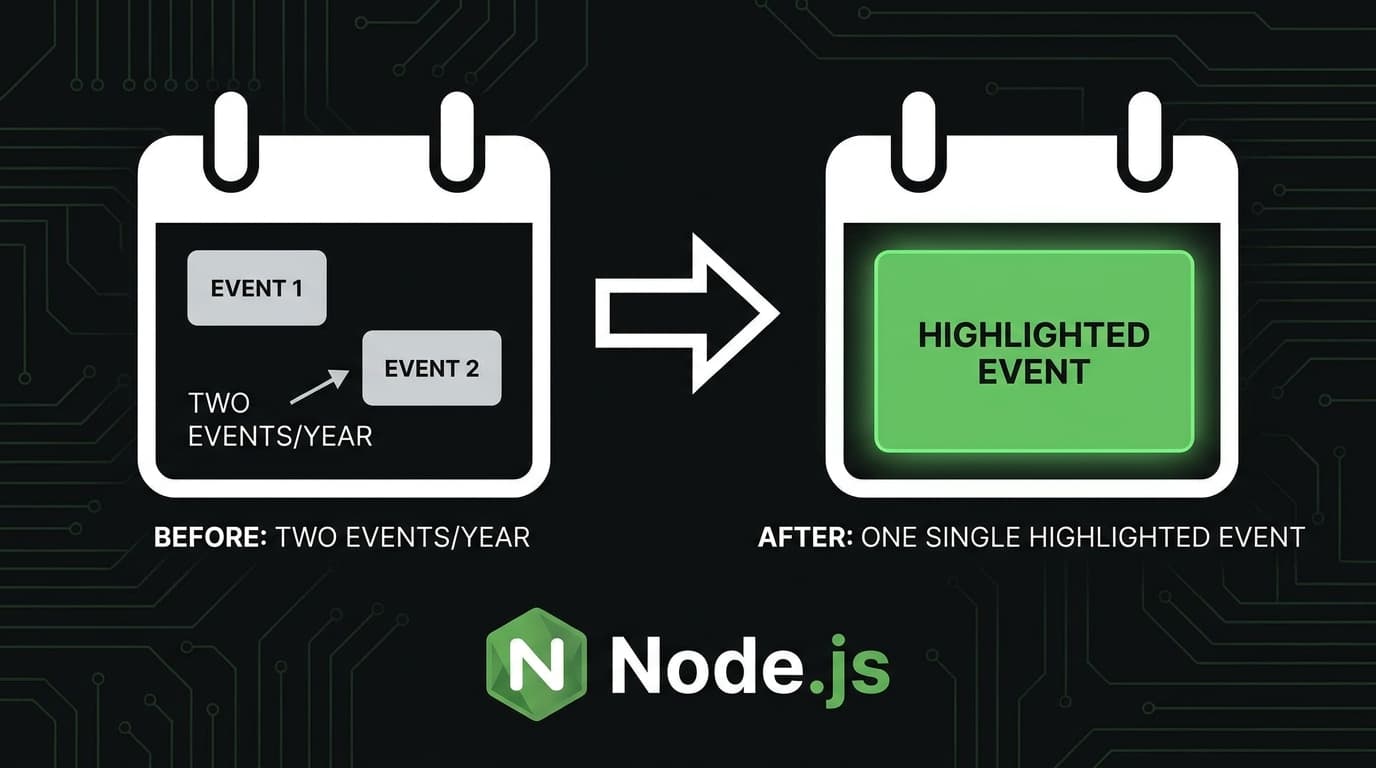
TL;DR: Starting in October 2026 with version 27, Node.js will switch to one major release per year. All future releases will be Long-Term Support (LTS), simplifying the support model. An early-access Alpha channel will also be introduced for testing new features, addressing maintenance challenges.
Key facts
- Category
- Infrastructure
- Impact
- High
- Published
- Source
- InfoQ
Full summary
Starting in 2026, Node.js will move to a single major release per year, with all versions receiving long-term support for greater stability.
The Node.js project is overhauling its release schedule, moving from two major versions per year to just one. This change will take effect starting with Node.js 27, which is scheduled for release in October 2026. A key part of this new model is that every major release will now be a Long-Term Support (LTS) version. This eliminates the current distinction between short-term 'Current' releases (odd-numbered versions) and LTS releases (even-numbered versions). To facilitate early testing and feedback on upcoming features, the project will also introduce a new Alpha release channel for developers.
This new cadence is designed to provide a more predictable and stable development lifecycle for the vast ecosystem of developers and companies relying on Node.js. By making every release an LTS version, the project simplifies long-term planning and reduces the pressure on teams to perform frequent, disruptive upgrades. The annual cycle allows organizations to better align their own maintenance schedules, ensuring they can stay on a supported version with a clear path for security patches. The change directly addresses feedback from the community and enterprise users who prioritize stability and a lower maintenance burden over a faster feature release cycle.
Why it matters
This change simplifies long-term planning for developers and IT teams by providing a more predictable and stable release schedule. Every major version will now be a Long-Term Support (LTS) release, reducing maintenance overhead and ensuring a clear path for security updates.
Business impact
The move to a single annual LTS release for Node.js enhances stability and predictability, which is crucial for enterprise applications. This reduces the risk associated with frequent upgrades, simplifies compliance, and lowers the total cost of ownership by streamlining maintenance and support cycles.
Tags
Related on Notifire
Related stories
Primary source: InfoQ