In a significant development amid political tensions, the Enforcement Directorate (ED) conducted extensive raids on 17 locations across Jharkhand and West Bengal in connection with a money laundering investigation linked to alleged illegal infiltration by Bangladeshi nationals. These raids come at a crucial time as Jharkhand prepares for assembly elections set to commence on November 13, with byelections in neighboring West Bengal also scheduled for the following day.
The ED, India’s premier financial investigation agency, launched this operation under the Prevention of Money Laundering Act (PMLA) in response to claims of illegal border crossings and trafficking activities involving Bangladeshi nationals. This operation marks an intensified approach to tackle concerns of illegal immigration, reportedly encouraged by local networks who facilitate the entry of foreign nationals into Indian territory. These activities have raised concerns over potential demographic shifts in specific tribal-dominated areas of Jharkhand, particularly in regions like Santhal Pargana and Kolhan, where such infiltrations could alter the cultural and electoral.
The ED’s Money Laundering Probe and Initial Investigations
This case, filed by the ED in September, is rooted in an FIR lodged by the Jharkhand Police at Ranchi’s Bariyatu police station earlier in June. The complaint that initiated the investigation originated from a woman who had allegedly entered India from Bangladesh with the assistance of intermediaries. She reportedly listed several other women involved in the operation, some of whom were apprehended during a police raid at a resort in Jharkhand. Among these detainees, one was found in possession of a forged Aadhaar card, an Indian identification document, indicating an effort to establish illegal residency within the country.
According to sources within the ED, the investigation aims to trace the financial transactions and slush funds generated from these activities. The agency suspects that illicit funds from human trafficking have been funneled through local businesses or real estate, potentially influencing local economic and social structures. The Prevention of Money Laundering Act (PMLA), under which the case has been filed, mandates stringent penalties for activities involving illegal profits derived from criminal conduct, such as human trafficking and illegal immigration.
Political Implications in Poll-Bound Jharkhand
The issue of illegal immigration has taken center stage in Jharkhand’s political discourse, particularly as the assembly elections draw near. Prime Minister Narendra Modi and other BJP leaders have been vocal in their accusations against the ruling state government, alleging that it has turned a blind eye to the influx of illegal immigrants from Bangladesh. They argue that this demographic shift could alter the cultural fabric of tribal areas, posing a threat to the traditional communities and their ways of life.
During his recent election rallies, PM Modi emphasized the need to curb illegal infiltration to protect the local population’s rights and cultural heritage. His rhetoric has resonated with certain segments of the population, especially in areas where local customs and tribal identities are at the heart of community life. Some BJP leaders have also called for stricter border control and policies that would deter illegal immigration, viewing these actions as necessary for the preservation of both regional integrity and national security.
The Jharkhand High Court also recently intervened in the matter, suggesting the formation of an impartial panel to assess the extent of Bangladeshi immigration into the state. However, this suggestion was met with resistance from the state government, which has dismissed concerns of illegal infiltration as politically motivated exaggerations. The ruling party in Jharkhand argues that such allegations are intended to polarize voters, particularly in tribal-dominated constituencies.
The ED’s Focus on Illegal Immigration Networks
The ongoing raids underscore the ED’s resolve to dismantle organized networks that enable illegal immigration. According to preliminary findings, these networks consist of intermediaries who assist individuals from Bangladesh in crossing the border and obtaining Indian identification documents, allowing them to integrate and seek employment in various states, particularly Jharkhand and West Bengal. The Indian authorities believe that this activity is not isolated but rather part of a larger cross-border nexus involving human trafficking, forged documentation, and exploitation of vulnerable individuals.
In addition to conducting raids, the ED is investigating bank records, property transactions, and other financial indicators that could reveal a money trail linked to the alleged illegal immigration network. This financial tracking could help uncover potential collaborators within India who support these networks by providing shelter, employment, or false identification. The ED is also coordinating with local law enforcement agencies to bolster its efforts in identifying suspects and understanding the extent of the network’s reach.
Security Measures and the Role of Central Armed Forces
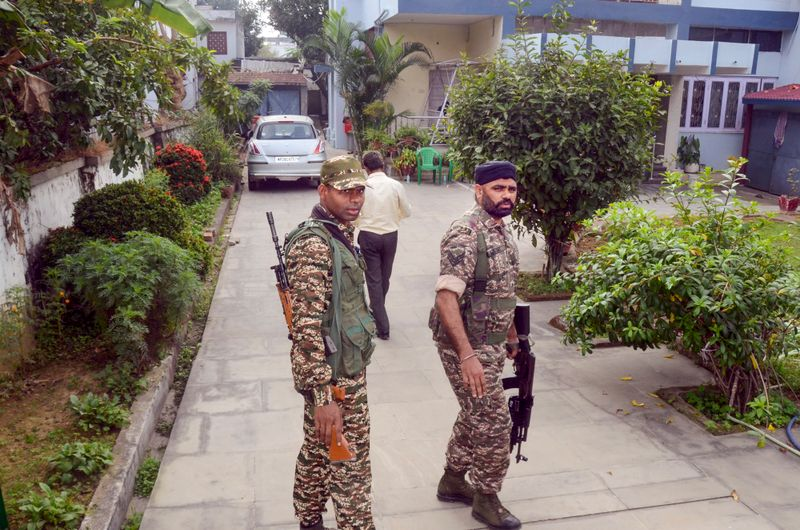
Given the sensitive nature of these raids, the ED has coordinated with local police and Central Industrial Security Force (CISF) personnel to ensure security during operations. Photographs from the scene in Ranchi show a heavy security presence outside the ED’s zonal office, underscoring the federal agency’s concerns about potential disruptions or attempts to hinder the raids. This visible show of security also signals the seriousness with which the ED is approaching the investigation, especially in light of the looming elections and heightened public scrutiny.
The role of central armed forces is particularly significant in such operations, as they provide essential support to ensure that raids are conducted smoothly without interference from local entities that may have vested interests. Their presence reassures the public and demonstrates the government’s commitment to tackling illegal immigration and its associated issues decisively.
Social and Cultural Ramifications in Jharkhand and West Bengal
The demographic shifts attributed to illegal immigration have raised social and cultural concerns among native populations in both Jharkhand and West Bengal. Tribal communities, which form a significant portion of Jharkhand’s demographic, have voiced concerns over the preservation of their traditional ways of life and cultural heritage. The influx of non-native populations, if left unchecked, could potentially lead to the erosion of tribal identities, which have been closely guarded by the community for generations.
Some cultural activists and local leaders have expressed fears that the gradual integration of Bangladeshi immigrants could shift the voting dynamics in certain regions, ultimately influencing political representation and decision-making at local levels. This sentiment is echoed in West Bengal, where the question of illegal immigration has historically been a divisive topic. In both states, some residents feel that a stronger stance on immigration is essential to safeguard their socio-cultural landscape.
Legal Framework and Future Prospects
The PMLA underpins the legal framework for the ED’s ongoing investigation, empowering the agency to pursue cases involving economic offenses with cross-border implications. However, the challenge lies in translating these laws into effective deterrents against illegal immigration. For Jharkhand, the findings of this investigation could lead to more stringent border control measures and policies aimed at regulating entry and residency requirements for foreign nationals. On a broader scale, these developments highlight the importance of collaboration between local authorities, central agencies, and border security forces to address complex issues of illegal immigration comprehensively.
As the assembly elections approach, the ED’s investigation into illegal immigration and human trafficking will continue to be a focal point of public discourse in Jharkhand. The outcome of the elections, combined with the findings of the investigation, could have far-reaching consequences on how the state addresses demographic changes and upholds its cultural and social integrity. This probe not only underscores the need for robust anti-trafficking and immigration laws but also highlights the significance of protecting vulnerable populations from exploitation and preserving the cultural fabric of India’s diverse regions.
Follow us for more