Sector: The Times of India(TOI)
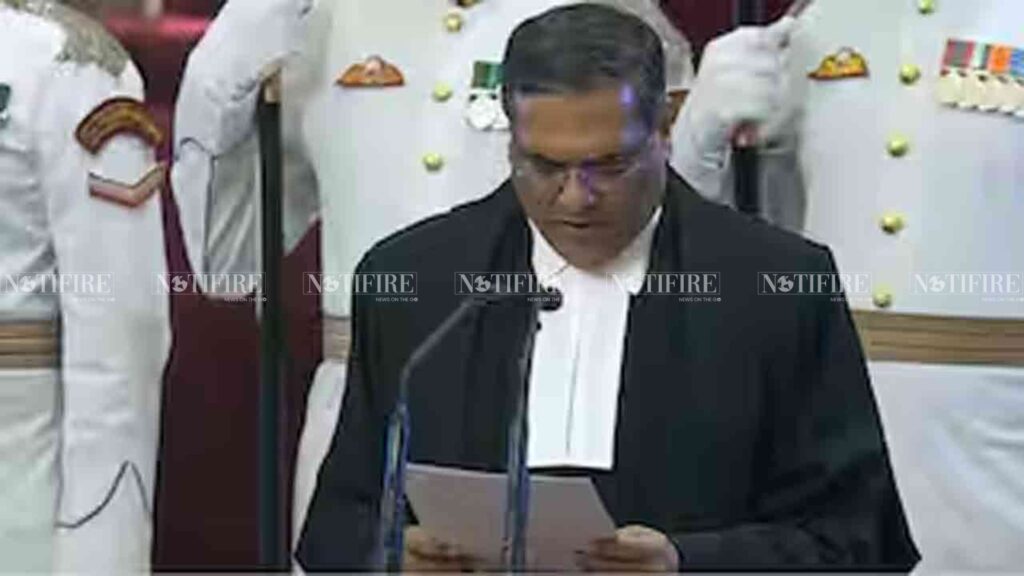
Justice Sanjiv Khanna’s recent appointment as the 51st Chief Justice of India (CJI) marks a pivotal moment for India’s judiciary. Sworn in on November 11, 2024, Justice Khanna succeeds Justice D.Y. Chandrachud, who left a legacy of landmark judgments focused on civil rights and digital privacy. Justice Khanna brings with him a deep-seated commitment to progressive values, social justice, and the rule of law. His prior rulings and legal philosophy indicate that his tenure, though brief—expected to last until May 2025—could significantly impact India’s legal landscape, particularly in upholding individual rights and addressing systemic challenges in the judiciary.
Background and Legal Journey
Justice Khanna, the son of Justice Dev Raj Khanna and nephew of former Supreme Court Judge Justice Hans Raj Khanna, comes from a distinguished legal lineage. His uncle, in particular, was known for his courageous dissent in the landmark 1976 ADM Jabalpur case during the Emergency period, a judgment that has since become emblematic of judicial independence in India. Sanjiv Khanna’s own career has been similarly marked by bold judgments and an unwavering dedication to constitutional values.
Initially practiced law in Delhi, working in areas like corporate and commercial law, arbitration, and civil matters. He served as a judge in the Delhi High Court before being elevated to the Supreme Court in 2019. His tenure on the Supreme Court has been marked by significant judgments, many of which focused on balancing state powers with individual rights. His decisions have reflected a nuanced understanding of complex legal and economic issues, such as corporate governance, privacy rights, and environmental regulations.
Judicial Philosophy and Key Judgments
Justice Khanna is widely regarded for his progressive interpretations of constitutional law, frequently highlighting the importance of individual liberties, accountability, and transparency. His dissent in the Aadhaar case (2018) is particularly noteworthy. In this landmark case, the Supreme Court examined the constitutionality of the Aadhaar scheme, a biometric identification program. Although the majority upheld the program, Justice Khanna voiced concerns over privacy implications and potential misuse of citizens’ data, citing it as a breach of personal freedom.
His rulings in corporate law have also underscored the importance of responsible business practices. For instance, he has emphasized Corporate Social Responsibility (CSR) as an essential aspect of corporate accountability, encouraging companies to engage with and support the communities in which they operate. Additionally, Justice Khanna has contributed to landmark decisions concerning gender equality and the environment, advocating for sustainable practices and equitable treatment.

Challenges and Priorities as Chief Justice
Justice Khanna assumes office during a period of critical challenges for India’s judiciary. The Indian judicial system is burdened by an extensive backlog of cases, with over four crore (40 million) cases pending across various courts. Improving the judiciary’s efficiency is a pressing concern, and Justice Khanna has expressed support for reforms aimed at reducing delays and streamlining judicial processes. Leveraging technology, such as expanding virtual hearings and adopting digital case management systems, is expected to be a priority during his tenure.
Moreover, judicial transparency and accountability are pressing issues. In recent years, the judiciary has faced growing scrutiny over its independence and impartiality, particularly regarding the appointment of judges. Justice Khanna’s approach to these issues may reflect his belief in a more transparent and open judiciary, an area where he has voiced support for reforms in the past. His stance on judicial appointments aligns with the need for a fair and merit-based selection process, balancing transparency with the autonomy of the judiciary.
Expectations and Legacy
Although Justice Khanna’s tenure as CJI will be short, his leadership could have lasting implications for the Supreme Court and the broader judicial system. His prior judgments suggest that he will continue to champion individual freedoms, social justice, and an independent judiciary, upholding the principles enshrined in the Indian Constitution. Legal experts anticipate that Justice Khanna may focus on high-impact cases concerning civil liberties, environmental rights, and corporate accountability, setting legal precedents that future courts may rely on.
In addition, Justice Khanna’s tenure may build upon the legacy of his predecessor, Justice Chandrachud, who brought a progressive outlook to the Supreme Court. Justice Chandrachud’s focus on rights-based jurisprudence and his openness to digital innovation in the judiciary have set a foundation that Justice Khanna can expand upon. His decisions in the coming months may influence debates on key socio-legal issues, including privacy rights, free speech, and digital governance.

Conclusion
Justice Sanjiv Khanna’s appointment as the 51st Chief Justice of India is a significant development for the country’s judicial system. His legal acumen, progressive views, and commitment to constitutional principles have established him as a distinguished figure in the Indian judiciary. While his term is brief, Justice Khanna’s approach to critical issues like judicial reform, individual rights, and corporate responsibility could leave a lasting legacy. His tenure is expected to reinforce the independence of the judiciary, promote greater transparency, and address some of the most pressing legal issues facing contemporary India.
Follow for more updates.