National Education Day, observed annually on November 11, honors the birth anniversary of Maulana Abul Kalam Azad, India’s first education minister and a formidable leader in the country’s independence movement. Revered as one of the key architects of modern India, Azad envisioned an inclusive, knowledge-based society and laid the groundwork for an educational framework that continues to shape the nation’s intellectual and cultural landscape.
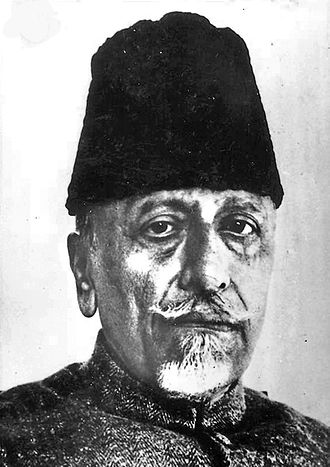
Early Life and Influences of Maulana Abul Kalam Azad
Maulana Abul Kalam Azad was born on November 11, 1888, in Mecca, Saudi Arabia, as Abul Kalam Ghulam Muhiyuddin. His family relocated to India when he was a child, and Azad was raised in a deeply religious and scholarly environment. His father, Maulana Khairuddin, was a renowned Islamic scholar, and young Azad was immersed in Islamic education from an early age. However, his intellectual curiosity and exposure to various thinkers inspired him to broaden his perspectives beyond traditional religious teachings.
Azad was profoundly influenced by the modernist ideas of Sir Syed Ahmed Khan, an educationist who advocated for Muslim education and social reform. Inspired by Khan’s vision of modern India, Azad pursued a progressive approach, seeking to combine traditional Islamic principles with Western educational ideals. This blend of influences shaped Azad’s vision for India, motivating him to champion an system that emphasized critical thinking, cultural inclusivity, and scientific advancement.
Azad’s Role in the Freedom Movement and Political Life
Azad’s intellectual journey as a young leader began with his founding of Al-Hilal, an Urdu weekly newspaper based in Calcutta, which he used as a platform to criticize British policies and inspire revolutionary ideas among Indians. However, Al-Hilal was soon banned by the British due to its bold anti-colonial stance. Undeterred, Azad continued his journalistic endeavors with another publication, Al-Balagh, which further fueled the nationalist spirit and prompted his frequent imprisonment by British authorities.
Azad became actively involved in the Khilafat Movement, a campaign launched by Indian Muslims to protest against the disintegration of the Ottoman Caliphate, which held great symbolic importance in the Islamic world. During this period, Azad also grew closer to Mahatma Gandhi and adopted his principles of non-violence and civil disobedience, aligning himself with the Indian National Congress.
Throughout the 1920s and 1940s, Azad participated in key national movements such as the Non-Cooperation Movement, the Civil Disobedience Movement, and the Quit India Movement. He held the position of president of the Indian National Congress twice, in 1923 and again in 1940. His leadership played a crucial role in India’s fight for freedom, and he became known for his steadfast opposition to the partition of India. In the years leading up to independence, Azad participated in negotiations with the British, arguing passionately for a united India where Hindus and Muslims could coexist peacefully.
Vision in Post-Independence India
With independence in 1947, Azad was appointed as India’s first education minister in the cabinet of Prime Minister Jawaharlal Nehru. This was a crucial period for the country, as it was emerging from centuries of colonial rule with a pressing need to build a self-sufficient and forward-looking nation.
Azad’s tenure as education minister from 1947 to 1958 laid the foundation for many critical educational institutions and policies. He firmly believed that education should be accessible to all citizens, regardless of social background or economic status. His policies focused on fostering intellectual growth, scientific research, and cultural preservation. Azad was a strong proponent of a secular and inclusive educational system, which he believed would promote national unity and strengthen India’s democratic ideals.
Establishment of Key Educational Bodies: UGC, AICTE, and IITs
One of Azad’s most enduring legacies is his instrumental role in establishing some of India’s premier educational institutions. He recognized that an independent India needed a structured system to regulate and promote higher education, so he helped to create the University Grants Commission (UGC) in 1953. The UGC became the apex body responsible for overseeing standards in Indian universities and encouraging research and innovation across academic disciplines.
Azad also saw the potential of technical in fueling India’s industrial and technological progress. To this end, he established the AICTE to standardize and promote technical and vocational education in the country. Under his leadership, India’s first Indian Institute of Technology (IIT) was established in Kharagpur in 1951, laying the foundation for a network of IITs that would become renowned worldwide for their excellence in engineering and technology.
Pioneering Efforts in Cultural and Scientific Advancement
In addition to his work in higher education, Azad was passionate about promoting cultural heritage and fostering creativity in the arts and sciences. He believed that education was not limited to technical and academic knowledge but extended to cultural understanding and artistic expression. To support this holistic view of education, Azad played a pivotal role in the formation of the Indian Council for Cultural Relations (ICCR), an institution aimed at fostering cultural exchanges between India and other nations.
Azad also laid the groundwork for institutions such as the Sahitya Academy, Lalit Kala Academy, and Sangeet Natak Academy to promote literature, fine arts, and performing arts, respectively. These institutions helped establish India as a cultural powerhouse and preserved its rich artistic heritage. Additionally, he encouraged the development of scientific research through the Council of Scientific and Industrial Research (CSIR), which played a key role in advancing scientific knowledge in various fields.
Honoring a Visionary Leader
In 2008, the Indian government officially declared November 11 to honor Azad’s immense contributions to Indian education. The celebrations are a tribute to his vision and dedication to building a strong educational foundation for India. Schools, colleges, and universities across the nation observe this day by organizing seminars, workshops, and educational events to raise awareness about the importance of education and the legacy of Maulana Abul Kalam Azad.
Azad’s vision for education remains relevant today as India strives to improve educational access, quality, and inclusivity. His emphasis on secularism, cultural diversity, and scientific inquiry resonates with the principles of modern education and underscores the importance of nurturing well-rounded individuals who can contribute meaningfully to society.
Maulana Azad’s Legacy: A Call to Action for the Future
Maulana Abul Kalam Azad passed away on February 22, 1958, but his ideas and contributions continue to inspire generations. In 1992, he was posthumously awarded the Bharat Ratna, India’s highest civilian honor, acknowledging his role in shaping the nation’s intellectual and cultural landscape. His legacy challenges us to uphold the values of inclusivity, unity, and progressiveness in our educational endeavors.
On this day, we are reminded of Azad’s unwavering commitment to education as a force for social change and national unity. His work laid the foundation for an India that values knowledge and empowers its citizens through learning. As we reflect on Azad’s legacy, we are called to renew our dedication to making quality education accessible to all, fostering a spirit of inquiry, and cultivating a sense of responsibility toward society.
In remembering Maulana Abul Kalam Azad, we honor a visionary who believed that education could transform lives and unite a nation. As we celebrate this day, let us recommit ourselves to his ideals and work toward an India where every individual has the opportunity to learn, grow, and contribute to the progress of the nation.
Follow us for more