Source : Business Today
Ratan Tata, a name synonymous with visionary leadership and global business acumen, has left an indelible mark on the Indian corporate world. His extraordinary journey as the Chairman of the Tata Group turned the conglomerate into a global powerhouse. Under his stewardship, the Tata Group evolved from being primarily an Indian-centered organization into a worldwide entity with presence across numerous industries. This transformation has cemented Ratan Tata’s place not just as a leader but as a legend in the annals of corporate history.
Early Life and Entry into the Tata Group
Born on December 28, 1937, Ratan Tata was born into one of India’s most influential business families. He was raised by his grandmother after his parents’ separation and was educated at prestigious institutions, including Cornell University and Harvard Business School. After completing his education, Tata joined the family business in 1962, where he initially faced skepticism and challenges. The Tata Group, established in 1868 by Jamsetji Tata, was already a well-respected Indian company, but Ratan Tata had greater ambitions—to take the brand to a global scale.
A Visionary Leader
Ratan Tata took over the reins as Chairman of Tata Sons in 1991, at a time when the Indian economy was going through liberalization. This period offered significant opportunities for growth, and Tata was quick to capitalize on them. Under his leadership, the company diversified its portfolio by venturing into new industries, including technology, telecommunications, retail, and even global automotive manufacturing.
One of Ratan Tata’s most notable moves was the acquisition of Tetley Tea in 2000, a British brand, which became the first major global acquisition by an Indian company. This was followed by the acquisition of other iconic brands like Jaguar and Land Rover in 2008, marking a new chapter in the globalization of the Tata Group. These bold acquisitions positioned Tata Motors on the global map, allowing the company to compete with the world’s leading automotive brands.
Focus on Innovation and Ethics
What distinguishes Ratan Tata from many of his peers is his commitment to innovation, social responsibility, and ethical business practices. Tata Group companies have always been at the forefront of technological advancements, often being the first Indian companies to adopt cutting-edge solutions. For instance, Tata Consultancy Services (TCS), under his leadership, became one of the largest IT services companies in the world, playing a pivotal role in the global tech revolution.
Moreover, Ratan Tata’s leadership emphasized the Tata Group’s commitment to philanthropy. The Tata family has always been involved in charitable work, and under his direction, this culture was further strengthened. A significant portion of Tata Sons’ profits goes toward social causes through the Tata Trusts, which invest in healthcare, education, and rural development initiatives.
Navigating Challenges
Like any great leader, Ratan Tata faced numerous challenges throughout his career. From economic downturns to fluctuating markets, the Tata Group was not immune to the pressures of global business. Yet, through it all, Tata exhibited an unparalleled calm and resilience. His decision-making during the 2008 global financial crisis, which impacted the group’s overseas businesses, showcased his strategic thinking. Ratan Tata’s ability to maintain the group’s stability during these turbulent times is often hailed as one of his greatest strengths.
The Nano Dream
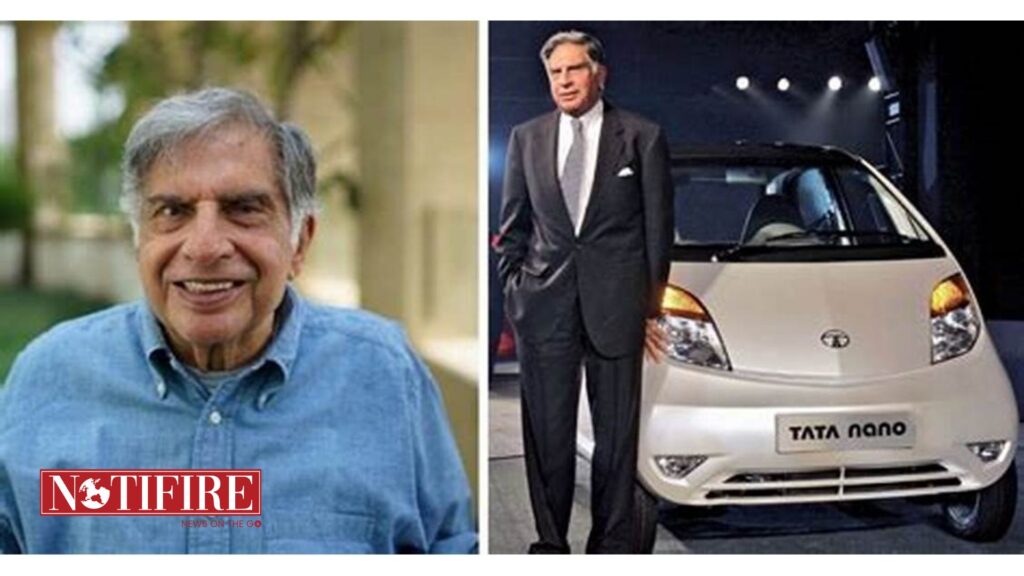
One of Ratan Tata’s most ambitious projects was the Tata Nano, which was envisioned as the world’s cheapest car, aimed at making affordable transportation accessible to the Indian middle class. Launched in 2008, the Nano generated global buzz. Although the car did not meet its commercial expectations, it remains an example of Tata’s visionary outlook. The Nano project was not just about building a car; it was about transforming how Indians commute. While the product faced hurdles, Ratan Tata’s willingness to take such bold risks speaks volumes about his leadership style.

Legacy Beyond Business
In 2012, Ratan Tata stepped down as Chairman of the Tata Group, leaving behind a lasting legacy. His leadership transformed Tata from a national player to a global entity, with revenues of over $100 billion and operations in more than 100 countries. But perhaps more importantly, Tata’s leadership set the standard for how business can be done ethically and with a commitment to improving society.
Even after his retirement, Ratan Tata continues to inspire through his philanthropic work, startup investments, and as an advisor to global leaders. His humility, despite his towering achievements, endears him to people worldwide.
Ratan Tata’s undying legacy is a testament to his vision, ethical values, and relentless drive to make the Tata Group a global business empire. His impact goes beyond financial success; he has redefined what it means to be a business leader. Through innovation, compassion, and a global outlook, Ratan Tata has not only transformed the Tata Group but has also left an indelible mark on global business, one that will be remembered for generations.
Follow for more updates.