Hackers Target Refrigeration to Cause Physical Damage
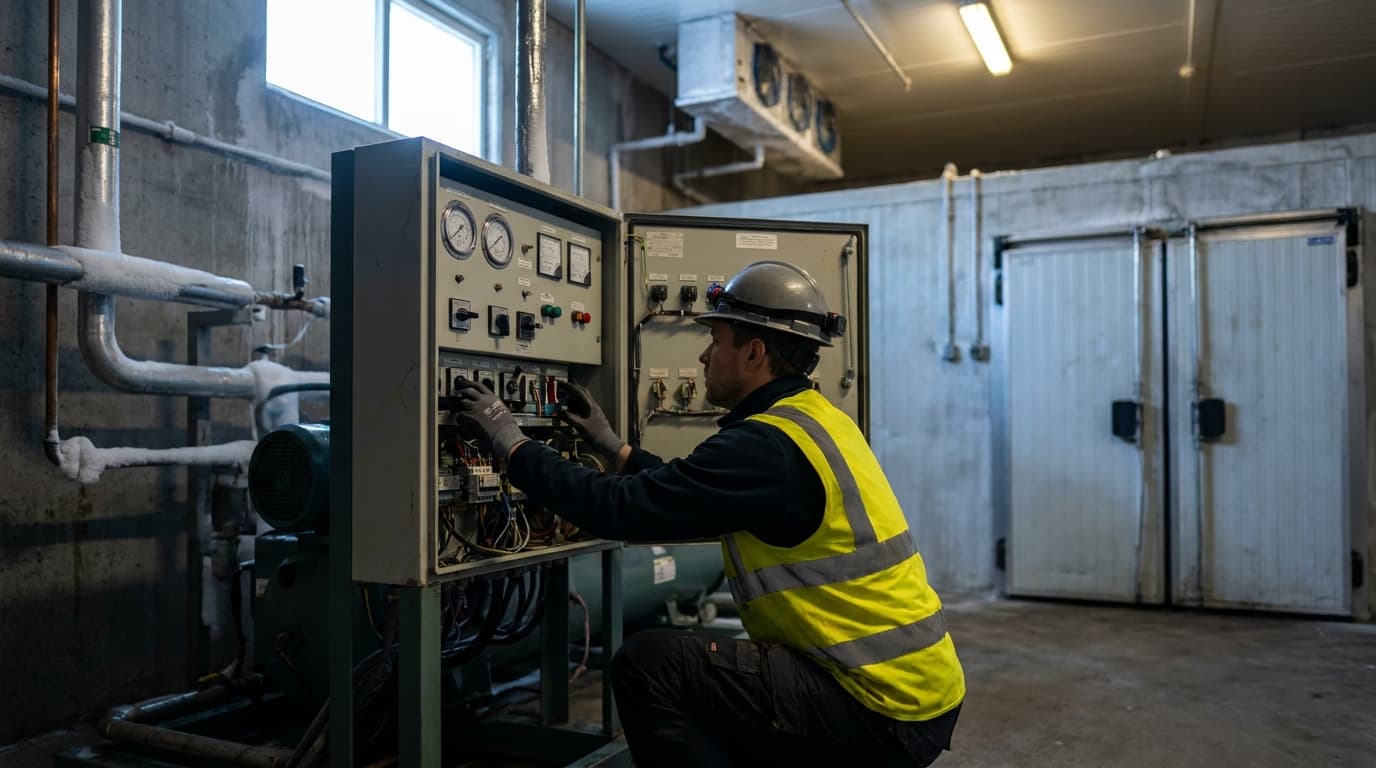
TL;DR: The FBI and CISA are warning that hackers are actively targeting industrial refrigeration systems. These attacks can lead to spoiled food, damaged equipment, and even fire hazards, disrupting critical supply chains and causing physical harm.
Key facts
- Category
- Cybersecurity
- Impact
- Critical
- Published
- Source
- BleepingComputer
Full summary
The FBI and CISA warn that hackers are targeting industrial refrigeration systems, which could lead to food spoilage and equipment damage.
The FBI and the Cybersecurity and Infrastructure Security Agency (CISA) have issued a joint advisory warning of active cyberattacks against industrial refrigeration systems. According to the alert, malicious actors are specifically targeting the infrastructure critical to the global cold chain, which includes food and beverage manufacturing, cold storage warehouses, and transportation. The agencies warn that a successful attack could have severe physical consequences, including the spoilage of temperature-sensitive goods, costly equipment damage from manipulated system settings, and even potential fire hazards. This represents a significant escalation, moving beyond typical data theft to attacks that can cause tangible, real-world harm and disrupt essential supply chains for food and pharmaceuticals.
These attacks are often not technically complex, instead exploiting common security weaknesses in Operational Technology (OT) environments. Attackers are scanning the internet for exposed Human-Machine Interfaces (HMIs)—the control panels used by operators to manage industrial equipment. Many of these systems are secured with weak, default, or easily guessable passwords, providing a straightforward entry point. Once inside, an attacker can gain control over critical functions, such as compressor speeds, temperature setpoints, and defrost cycles. By disabling safety alarms and pushing the equipment beyond its operational limits, they can cause catastrophic mechanical failures or shut down systems entirely, leading to massive product loss. The core issue is that many devices designed for isolated industrial networks are now connected to the internet for remote monitoring without adequate security hardening.
The CISA and FBI warning is part of a much broader and concerning trend: the convergence of Information Technology (IT) and Operational Technology (OT). For decades, industrial control systems (ICS) that manage physical processes were kept on separate, isolated networks, a practice known as creating an “air gap.” This physical separation was their primary defense. However, the drive for efficiency, remote access, and data analytics has led companies to connect these OT networks to their corporate IT networks and the internet. While this connectivity provides business benefits, it also dissolves the air gap, exposing critical physical infrastructure to the same cyber threats that IT networks have faced for years. Attackers who compromise a corporate network can now potentially move laterally into the OT environment to cause physical disruption, a tactic seen in attacks on other critical sectors like energy and water treatment.
For any organization that relies on cold-chain logistics, this alert should serve as an urgent call to action. The immediate priority is to conduct a thorough audit of all industrial control systems to identify any internet-facing devices. Security teams must enforce basic cyber hygiene principles that are standard in IT but often overlooked in OT, including changing all default credentials, implementing strong password policies, and enabling multi-factor authentication wherever possible. Network segmentation is also crucial; by creating firewalls between IT and OT networks, companies can prevent an intrusion in one area from spreading to the other. This incident underscores that modern cybersecurity strategy must be holistic, protecting not just data and servers but also the physical machinery that underpins business operations. The line between digital risk and physical risk has effectively disappeared.
Why it matters
This alert highlights a growing trend of cyberattacks targeting operational technology (OT) and industrial control systems (ICS). For engineering and security teams, it's a critical reminder that digital vulnerabilities can now directly cause physical damage, business disruption, and safety hazards in real-world infrastructure.
Business impact
Attacks on cold-chain infrastructure pose a direct threat to any business reliant on refrigeration, from food production to pharmaceuticals. The potential for inventory loss, equipment replacement costs, operational downtime, and reputational damage makes this a significant financial and logistical risk for entire supply chains.
⚡ Action needed
Review and secure all internet-facing industrial control systems (ICS) and operational technology (OT) devices, particularly those managing refrigeration and cold-chain infrastructure.
Action checklist
- 1Identify all internet-exposed industrial control systems (ICS).
- 2Change default passwords on all ICS/OT devices.
- 3Implement multi-factor authentication (MFA) where possible.
- 4Segment your IT and OT networks to limit lateral movement.
- 5Ensure systems are updated with the latest security patches.
Tags
Related on Notifire
Related stories
Primary source: BleepingComputer