Minecraft Malware Spreads Via YouTube
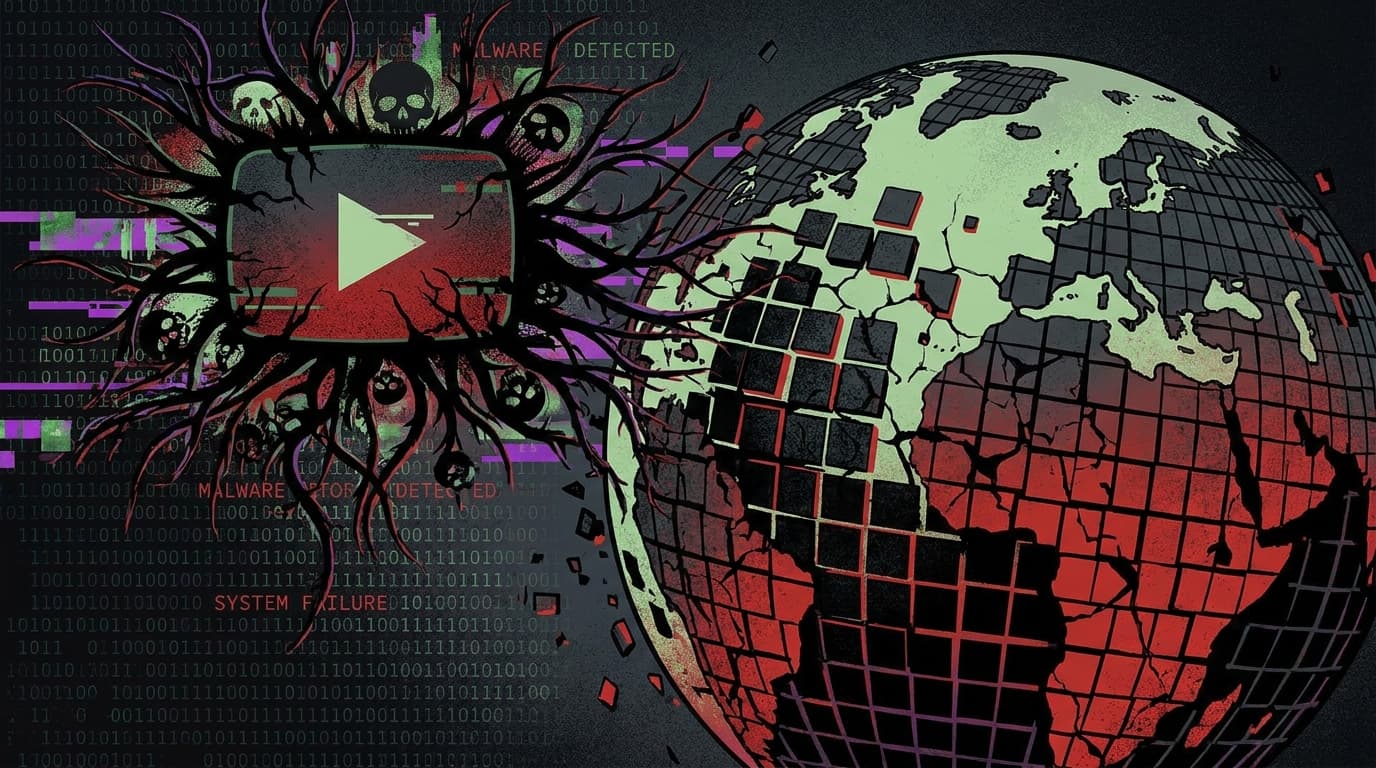
TL;DR: A new malware-as-a-service campaign, codenamed Weedhack, is targeting Minecraft players. The malware spreads via YouTube videos that promote fake Minecraft clients and mods. Once installed, it can take full control of the victim's system, posing a risk to both personal and corporate data.
Key facts
- Category
- Cybersecurity
- Impact
- Low
- Published
- Source
- The Hacker News
Full summary
A new malware campaign is using YouTube to distribute malicious Minecraft clients and mods, aiming to take control of user systems.
Security researchers have identified a new malware campaign targeting the global Minecraft community. Codenamed Weedhack by McAfee Labs, the operation uses YouTube to distribute malicious software disguised as legitimate Minecraft clients and modifications. The campaign, which has been active since at least January, operates on a malware-as-a-service (MaaS) model. This framework allows various attackers to purchase and use the tool to gain remote control over victims' systems, significantly lowering the barrier to entry for cybercriminals. Attackers create videos promoting these fake game enhancements, luring players with promises of new features before tricking them into downloading and executing the malware payload.
The choice of Minecraft and YouTube as vectors is strategic, targeting a massive and often younger demographic that may have lower security awareness. The MaaS model further complicates defense, as it allows the malware to be deployed by numerous independent actors, amplifying its reach and making attribution difficult. While the immediate targets are individual gamers, the implications extend to the enterprise. A compromised personal device used by an employee for remote work can serve as a gateway into a corporate network, potentially leading to data theft, ransomware attacks, or the integration of the device into a larger botnet. This campaign highlights the blurring lines between personal and corporate security, underscoring the need for robust endpoint protection and continuous user education.
Why it matters
The campaign uses a popular game (Minecraft) and platform (YouTube) as a lure, making it highly effective at reaching a broad audience. The malware-as-a-service model allows many attackers to use the tool, increasing the overall risk.
Business impact
Compromised employee devices, even if infected through personal gaming, can create a backdoor into corporate networks. This increases the risk of data breaches, ransomware, and other cyberattacks, highlighting the need for endpoint security on all devices with network access.
Action checklist
- 1Remind employees to only download software and game mods from official sources.
- 2Ensure endpoint protection (antivirus/EDR) is active and updated on all devices.
- 3Educate users on the security risks associated with pirated or unverified software.
- 4Advise caution when clicking links or downloading files from social media platforms like YouTube.
Tags
Related on Notifire
Related stories
Primary source: The Hacker News