The FBI Built a Fake Town to Practice Hacking
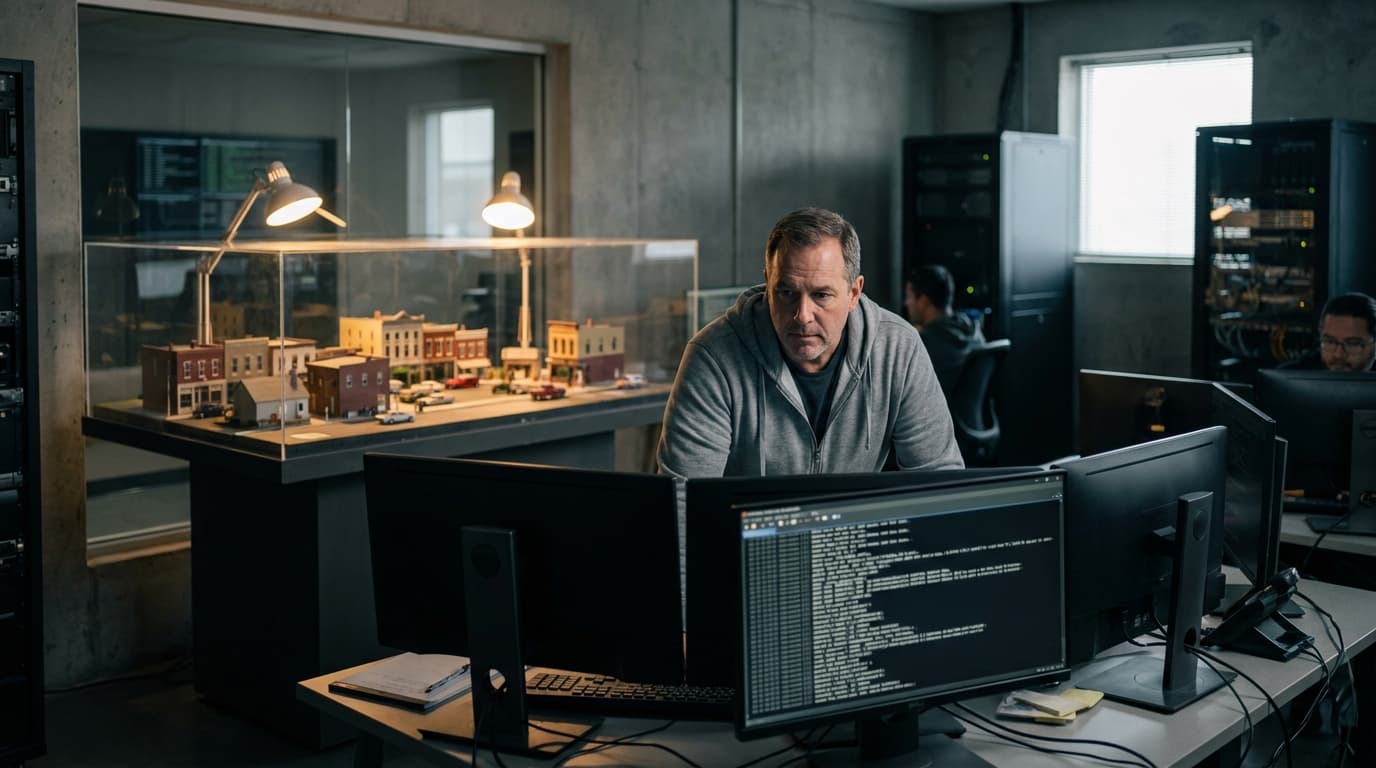
TL;DR: The FBI has opened a 22,000-square-foot replica town in Alabama to simulate cyberattacks on critical infrastructure. This physical-digital training ground helps agents prepare for threats that can cause real-world physical damage.
Key facts
- Category
- Cybersecurity
- Impact
- High
- Published
- Source
- The Verge
Full summary
The FBI is using a massive replica town to simulate how cyberattacks can impact physical infrastructure like hospitals and gas stations.
The FBI has opened a new Cyber Range in Huntsville, Alabama, a 22,000-square-foot facility designed to simulate complex cyberattacks. It is a physical replica of a small town, complete with a convenience store, gas station, hospital, and even a fake power company and data center. This unique training ground allows agents to practice responding to digital crimes in a realistic, hands-on environment. The goal is to move beyond purely digital simulations and understand how cyberattacks can affect the physical world. Agents can run scenarios like disrupting the town's power grid or compromising the hospital's systems to see the cascading real-world consequences of their actions.
This initiative highlights a critical evolution in the cyber threat landscape: the convergence of digital attacks and physical, or kinetic, impact. For CTOs, security teams, and business leaders, the FBI's investment is a clear signal that modern threat modeling must extend beyond protecting data and servers. Organizations now need to consider the physical systems controlled by their digital infrastructure, such as industrial controls, building management systems, or supply chain logistics. The potential for a digital breach to cause tangible harm is no longer a theoretical risk, and defense strategies must adapt to protect against these blended threats.
The creation of this Cyber Range shows a growing focus on the security of critical infrastructure at a national level. As attackers target Operational Technology (OT) that runs essential services, the need for realistic training environments becomes paramount. This facility allows for the study of how an attack on one system can trigger failures across others, providing invaluable insights for developing more resilient systems. For the tech industry, this signals a greater emphasis on the security of physical-digital systems, which will likely influence future regulations, security standards, and the demand for cybersecurity professionals with expertise in this area.
Related on Notifire
Related stories
Primary source: The Verge