The Supreme Court emphasized that India is a secular nation and its directives for bulldozer action and anti-encroachment drives will apply equally to all citizens.
Source: NDTV
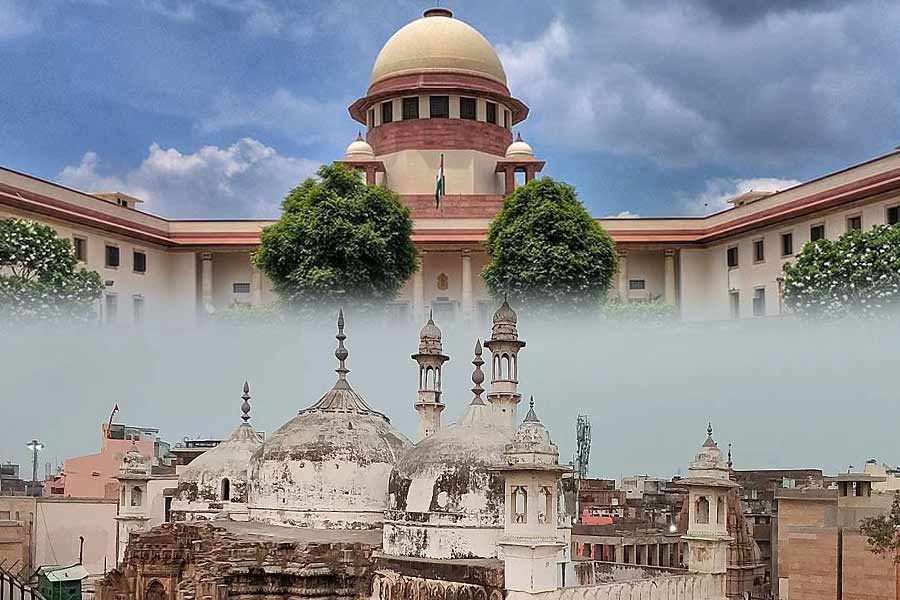
New Delhi: Emphasizing that public safety is paramount, the Supreme Court declared today that any religious structure encroaching on roads, water bodies, or rail tracks must be removed. The court underscored that India is a secular nation, and its orders regarding bulldozer actions and anti-encroachment drives will apply to all citizens, irrespective of their religion.
A bench comprising Justice BR Gavai and Justice KV Viswanathan was hearing petitions challenging the use of bulldozers against individuals accused of crimes, a practice popularly dubbed as ‘bulldozer justice’ in several states. State authorities have maintained that only illegal structures were targeted during such actions.
Solicitor General Tushar Mehta, representing the states of Uttar Pradesh, Gujarat, and Madhya Pradesh, was questioned on whether criminal accusations alone could justify bulldozer action. Mehta clarified, “Absolutely not, even for heinous crimes like rape or terrorism. As noted, notices cannot be served just a day in advance; they must be issued well beforehand. Most municipal laws include provisions for this, ensuring notices are sent via registered post.”
The Supreme Court emphasized today that different laws apply to municipal corporations and panchayats, and suggested the creation of an online portal to keep citizens informed, stating that digitizing the process would ensure transparency and records.
Solicitor General Tushar Mehta raised concerns that the court might be issuing directions based on isolated incidents that suggest a particular community was being targeted. In response, the bench made it clear that India is a secular country, and any directives issued would apply to all, regardless of religion or community. The court reiterated, “For encroachments on public roads, footpaths, water bodies, or railway lines, they must be removed as public safety is paramount. Whether it’s a gurudwara, dargah, or temple, no religious structure should obstruct public pathways.”
Justice BR Gavai further stated that unauthorized constructions should be dealt with under a single law, not influenced by religion, faith, or beliefs.
Senior Advocate Vrinda Grover, representing the UN Rapporteur, raised arguments regarding housing availability. The Solicitor General, however, objected, stating, “I know who they represent. We don’t need this issue to be internationalized. Our Constitutional courts are powerful enough, and our government is offering non-adversarial assistance. There’s no need for international agencies.”
Senior Advocate CU Singh, appearing for one of the petitioners, emphasized that bulldozer action should not be used as a tool for crime prevention. In response, Mr. Mehta clarified that instances of bulldozer action against minorities would be “rare.” The bench countered, pointing out that the figure involved was 4.45 lakh, not just a few individuals.
The court also made it clear that being accused of a crime cannot justify the demolition of property, which can only be done in cases of civic rule violations. Additionally, the court has extended its interim stay on demolitions carried out without its explicit permission.
Follow us for more